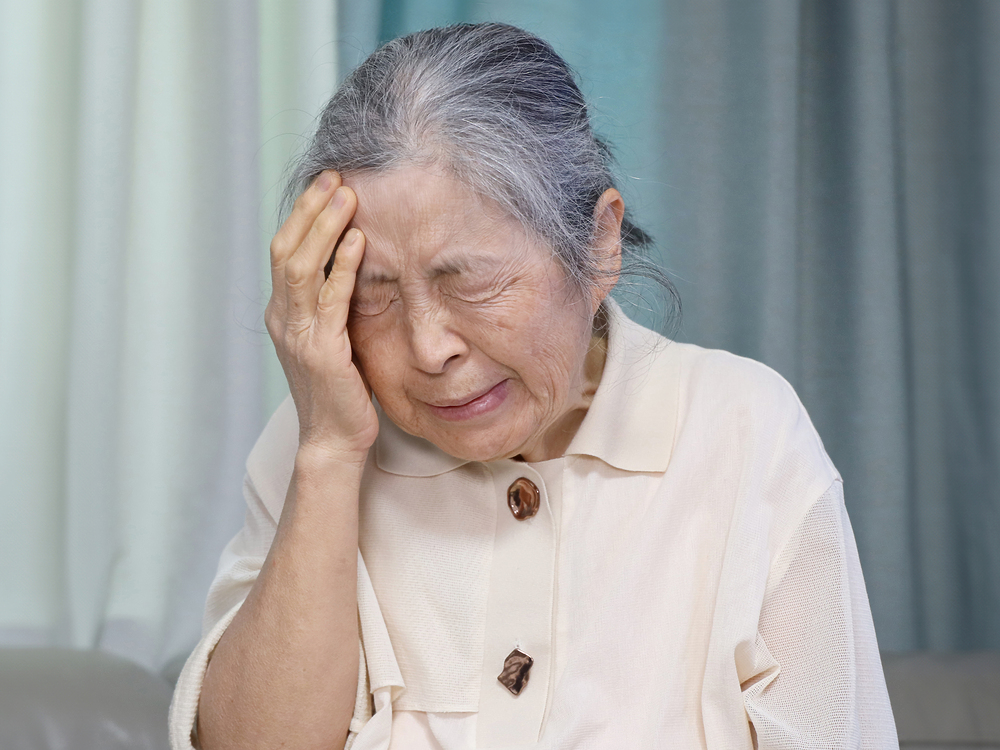
In routine health screenings, 20% to 30% of South Korean women are told they have a breast nodule (a solid lump) or a cyst (a fluid-filled lump). While these findings are common, they often trigger intense anxiety because breast nodules can develop into breast cancer. But does a lump found in the breast always need to be removed?
“Not every lump or nodule found in the breast needs to be removed,” says Park Sung-moon, director of the Noryangjin Yubam Breast Surgery Clinic and a former professor of breast surgery at Samsung Medical Center. “Before deciding whether to remove it, it’s crucial to make an accurate diagnosis of what this lump actually is.”
Park opened his own clinic after years of treating patients at a university hospital. Over time, he explained, he came to see how university hospitals—packed with severe cases—can be difficult for everyday patients to access. “I wanted to help people around me from a little closer,” he says.
Breast screening: What should you get first?
Park notes that screening is the vital first step in treating breast disease. “Mammography, which is included in the national health screening program, is the most basic test with proven effectiveness worldwide in reducing breast cancer mortality,” he says.
But mammography alone has distinct limitations for “dense breasts,” which applies to most South Korean women. With dense breasts, where glandular tissue is highly developed, the entire X-ray image appears white, meaning a cancer mass or nodule can be obscured by the tissue and remain invisible. “In that situation, the additional test we perform is ultrasound,” Park says, recommending mammography and ultrasound together as the standard baseline evaluation.

Chest pain, a lump… what are warning signs of breast cancer?
When people feel pain in their chest or palpate a lump, many immediately worry about breast cancer. However, Park clarifies, “A sharp, tingling pain in both breasts that varies with the menstrual cycle is usually a normal physiological phenomenon.” He adds, however, that “if the pain persists or gradually worsens, it could also indicate malignancy.”
The same principle applies to the physical characteristics of the lumps themselves. If the borders are smooth and round, and the lump feels soft, it is much more likely to be a benign tumor. By contrast, a lump with an uneven surface that feels hard, is fixed to surrounding tissue, and does not move easily should raise immediate suspicion for malignancy.
“It can be difficult for patients to clearly distinguish these traits on their own, which is why it’s vital to see a specialist,” Park says. Unusual discharge from the nipple, dimpling of the breast skin, or skin texture that changes to resemble an orange peel can also be warning signs of a malignant tumor.
Park also stresses the critical importance of early diagnosis. “The later the diagnosis, the lower the cure rate and the higher the recurrence rate. If you have symptoms that worry you and you’re not sure, you should get evaluated quickly,” he says.

If you have a nodule, do you have to have surgery?
Park explains that “nodules that fall below BI-RADS category 3 under the international standard have a very low likelihood of cancer, so periodic follow-up observation alone is entirely sufficient.” He adds that “for lesions in category 4 or higher, where the risk of malignancy is 2% or more, the rule is to first confirm whether it is cancer through a biopsy and then decide on surgery.”
Even if a biopsy shows it is not cancer but a benign tumor, surgical intervention may still be necessary. Park notes, “If it is a lesion with a high likelihood of progressing to cancer, such as ‘atypical cells,’ or if, during follow-up, it grows noticeably and continues to grow, it should be removed with a Mammotome procedure or traditional surgery.”
Beyond clinical criteria, a patient’s personal circumstances also play a significant role. Even with a benign nodule, if anxiety that it might develop into cancer is so severe that it interferes with daily life, removal can be chosen to protect quality of life. He also advises that because pregnancy comes with strict constraints on aggressive testing or treatment, women planning to become pregnant may consider preemptive removal.
What matters most when diagnosing or treating patients?
What is most important in the process of diagnosing and treating breast cancer patients? Park cites two core pillars: “meticulous testing” and “evidence-based care.”
“First, the quality of the test has to be uncompromising,” Park says. He stresses that using excellent equipment is a given, but it is most important to carefully examine every part of the breast without missing anything.
“You have to see 100%, and it should never happen that you only see 95% and miss a lesion in the remaining 5%,” he says. There may be areas that are not perfectly visible due to limitations of equipment or human anatomy, but he maintains there must not be blind spots created by missed areas during the examination process.
Another principle Park emphasizes in clinical practice is care based on guidelines with solid evidence. “Modern medicine does not rely on an individual doctor’s subjective experience or secret tricks,” he says, repeatedly stressing that “it is important to strictly follow treatment recommendations and guidelines recognized by the academic community, grounded firmly in rigorous, evidence-based medicine.”
A message he wants to share with patients
To promote proactive health management, Park notes, “The Korean Breast Cancer Society recommends monthly self-exams for women age 30 and older,” explaining that it is “a simple process: within one week after your period ends each month, stand in front of a mirror before showering to visually check for changes in shape or asymmetry, then carefully feel with your hands to see if there is a lump and whether there is any nipple discharge.”
He also suggests how patients themselves can actively advocate for their own care. “Rather than blindly believing or doubting what a doctor says, it’s better to ask about the ‘criteria,’” he says. For example, ask, “Based on what specific clinical guidelines did you reach this diagnosis about my condition?” Questions like that build lasting trust between patient and doctor.
“If a doctor can clearly explain the criteria, the patient can also accurately understand their condition and come to confidently trust the treatment process going forward.”