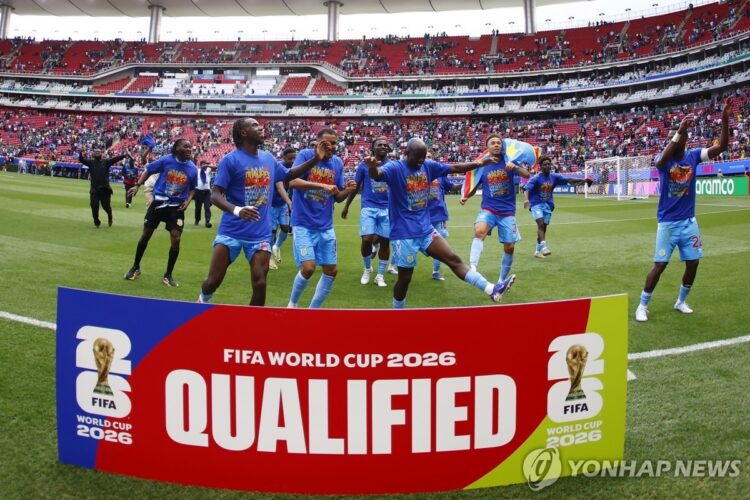
The Democratic Republic of the Congo’s first World Cup appearance in over half a century is facing a sudden crisis. U.S. health authorities have implemented strict border control protocols to prevent the spread of Ebola virus disease following a recent outbreak, throwing the national team's participation into major uncertainty.
On March 31, the Democratic Republic of the Congo (DR Congo) secured its historic spot at the 2026 FIFA World Cup by defeating Jamaica 1–0 in an extra-time thriller during the intercontinental playoffs. It marks the first time the nation has qualified for the global tournament since the 1974 World Cup in West Germany, when they competed as Zaire. The monumental achievement sparked nationwide celebrations, prompting the Congolese government to declare a temporary public holiday to mark the occasion.
However, the euphoria quickly shifted to anxiety following a surge of suspected Ebola cases centered in eastern DR Congo. The World Health Organization (WHO) recently raised the risk level of the rare Bundibugyo strain to "very high," reporting hundreds of suspected infections and rising fatalities, with cases also climbing steadily in neighboring Uganda.
The health crisis has been compounded by localized unrest. In some affected regions, residents opposing strict quarantine measures have clashed with medical workers, leading to incidents where treatment facilities were set on fire and patients fled. Because the United States is a primary host of the upcoming tournament, Washington has responded with extraordinary public safety measures.
According to reports from major media outlets including ESPN, Andrew Giuliani, Executive Director of the White House Task Force on the FIFA World Cup 2026, delivered a firm mandate to the DR Congo government, its national football federation, and FIFA: the entire delegation must complete a strict 21-day self-quarantine before entering the United States.
Giuliani warned that any breach of this 21-day isolation bubble would result in the team being denied entry into the country. Furthermore, he emphasized that if even a single member of the delegation exhibits symptoms of the virus, the U.S. administration could take measures that effectively strip the entire team of its berth in the tournament.
The primary complication lies in the calendar. DR Congo is scheduled to open its Group K campaign against Portugal on June 17 in Houston. Under the U.S. mandate, the team must maintain the integrity of its isolation bubble at its European training camp before arriving in Houston on June 11, leaving virtually no margin for error or typical pre-tournament acclimatization.
Despite the tight restrictions, the Congolese federation intends to push forward with its pre-World Cup schedule. The team is slated to play friendly matches against Denmark on June 3 in Belgium and Chile on June 9 in Spain. A team spokesperson confirmed that these warm-up fixtures will proceed as planned within their European bubble, though a major celebratory send-off ceremony originally scheduled in the capital of Kinshasa was canceled as a precaution.
Team officials have noted to Reuters and other international media that the vast majority of the squad’s star players compete in overseas European leagues and have not been in DR Congo recently. However, concerns remain because several technical staff members and delegates were in the country until quite recently. Traveling supporters from the region are also expected to face severe entry restrictions.
The U.S. stance remains uncompromising, prioritizing public health over the sporting spectacle. The White House has already enacted broader emergency protocols, including a 30-day entry ban on foreign nationals who have recently traveled through high-risk zones in the outbreak area, and has strictly managed the travel of personnel connected to medical missions in the region.
As the clock ticks down, soccer circles are already speculating on contingency plans. If DR Congo is ultimately forced to withdraw or is barred from entry, tournament rules suggest that either Jamaica—their playoff opponent—or Nigeria, the next-highest-ranked African qualifying team, could be called up as a last-minute replacement. For Group K rivals Portugal, Colombia, and Uzbekistan, the prospect of an opponent swap just weeks before kickoff represents a competitive nightmare, setting the stage for potential disputes over tournament fairness.