Gas stoves remain a staple in many kitchens, yet their daily use can impact the body more than many expect. The health risks are particularly pronounced for those who spend long periods cooking in poorly ventilated spaces. For homemakers who frequently stand over a stove, understanding the invisible environmental changes in the kitchen is essential for long-term wellness.
Gas combustion and poor ventilation: Harmful substances accumulate indoors
When gas stoves burn fuel, they release a variety of pollutants, including nitrogen dioxide, carbon monoxide, and particulate matter (PM). In an enclosed kitchen, nitrogen dioxide concentrations can quickly surge to levels several times higher than those found outdoors.
Research indicates that the buildup of these pollutants increases significantly when cooking continuously for 30 minutes or more. Because these substances are invisible, they are easily inhaled, leading to a cumulative exposure that raises concerns over chronic health effects.
Persistent coughing and shortness of breath: Red flags for asthma and bronchitis
Nitrogen dioxide is a known irritant that affects the bronchial lining and triggers inflammatory responses. Even brief exposure can result in coughing, phlegm, and respiratory discomfort. Over the long term, repeated exposure is linked to a higher risk of chronic bronchitis and asthma.
Studies have consistently shown that households using gas stoves frequently face a higher prevalence of respiratory disease. Children, the elderly, and those with pre-existing lung conditions are particularly vulnerable, as their systems may react more severely to the same environmental triggers.
Deep-frying and stir-frying: Ultrafine particles reach deep into the lungs
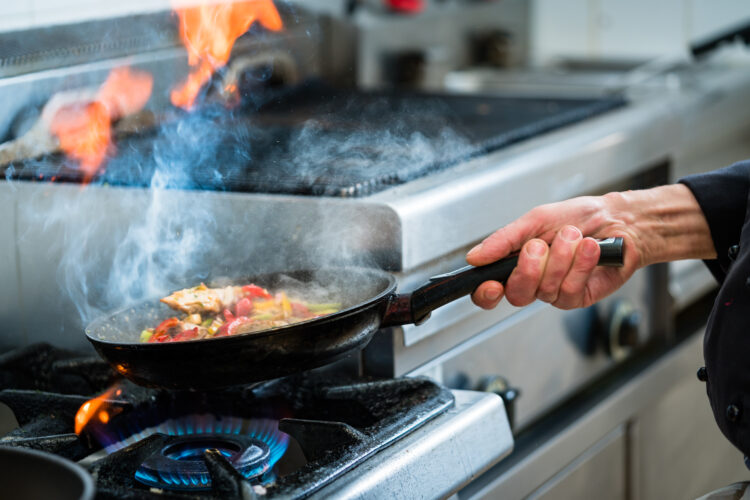
Beyond the gas itself, the cooking fumes—or "cooking oil fumes" (COFs)—generated during meal preparation pose a major threat. Frying or stir-frying at high temperatures produces significant amounts of fine particulate matter (PM2.5). These particles are small enough to penetrate deep into the pulmonary system, causing inflammation and potentially increasing cardiovascular strain over time. Because emissions spike at higher temperatures, the choice of cooking method is a critical variable in indoor air quality.
Safety first: Essential ventilation and cooking habits
Protecting your health does not necessarily require abandoning the gas stove, but it does require a change in habits. The most effective defense is consistent ventilation:
Prioritize Airflow: Open windows before turning on the burner and always run the exhaust hood during cooking. Creating cross-ventilation is the most efficient way to clear the air.
Modify Techniques: Reduce the time spent cooking at extreme temperatures and use lids whenever possible to trap smoke and grease.
Maintain Equipment: Ensure your range hood is clean and functioning at peak performance to maximize its extraction power.
By shifting how we interact with our kitchen environment, it is possible to minimize these invisible risks and maintain a healthier home.