A powerful robotic wave is sweeping through the joint replacement market. For knee replacements, robot-assisted procedures have already become a mainstream option for both patients and clinicians. However, despite both being joint replacements, the adoption of robotics in hip surgery has been notably slower. If robotic knees are common, why are hips only now beginning to take their first steps?
Technical Barriers and Patient Volume: Why Robotic Hip Surgery is Gaining Traction Now
Global market trends show robot-assisted knee surgery leading mainstream adoption, with hip surgery trailing behind. According to the 2025 American Joint Replacement Registry (AJRR) report, robotic knee surgery accounts for 16.1% of procedures in the U.S., while hip surgery remains in the 6% range. In Korea, approximately one in five joint replacement hospitals has introduced robotics, yet most remain focused on knees.
This gap stems largely from patient volume. In Asia, including Korea where floor-sitting lifestyles are traditional, patients with knee osteoarthritis far outnumber those with hip disease. This higher demand naturally led to earlier technological development and clinical research in the knee field.
Technical difficulty is also a significant factor. The hip is a "ball-and-socket" joint located deep within the pelvis, making the surgical field both narrow and deep. The process—from "registration" (matching CT data to the patient’s actual bone position) to the high-impact fixing of the implant cup into the pelvic bone—requires robotic sensors to withstand substantial physical shock. Consequently, hip surgery demands much more precise and robust technology than knee surgery.
Knees focus on ‘accurate cutting,’ Hips focus on ‘accurate placement’
The physical role of the robot differs fundamentally between the two surgeries. The core of knee surgery is how accurately the femur and tibia can be "cut" to planned angles. Success depends on aligning the mechanical axis of the leg in a straight line and balancing the ligaments. The robot acts as a precise guide, ensuring the surgeon does not cut bone beyond the planned boundaries.
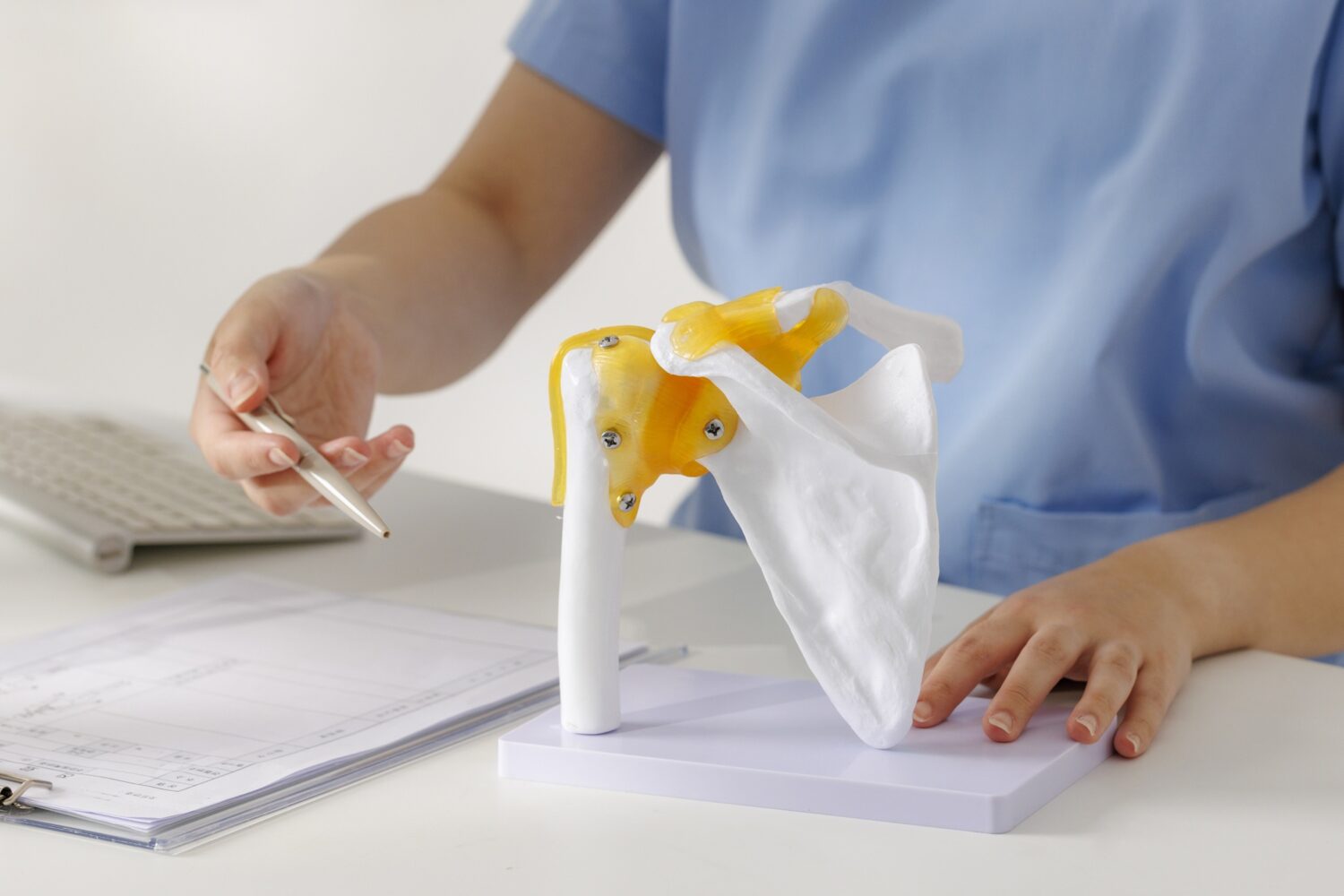
Hip surgery, by contrast, is the art of "insertion." The depth and angle at which the acetabulum (the socket receiving the femoral head) is prepared and the cup is placed determine the postoperative risk of dislocation and gait stability. Even a 1 mm error or a 1-degree deviation can cause implant impingement or side effects such as leg-length discrepancy.
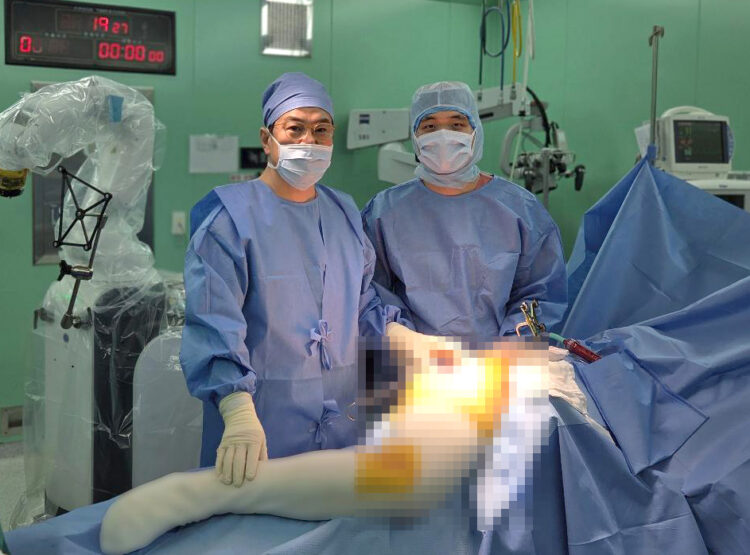
Ha Yongchan, Director of Academic Research at Seoul Bumin Hospital, explained: “If robot-assisted knee surgery focuses on lower-limb axis alignment through precise cutting, the primary goals in the hip are the perfect restoration of the acetabular cup’s 3D position and angle, as well as leg length and femoral offset.”
Korean-made ‘CUVIS-Joint’ begins nationwide clinical rollout
While the robotic hip market has long been dominated by imported equipment, recent progress with domestic technology is lowering the barrier to entry. CUREXO, a medical robotics company, received MFDS approval last October for its “CUVIS-joint THA,” enabling hip surgery using Korean technology.
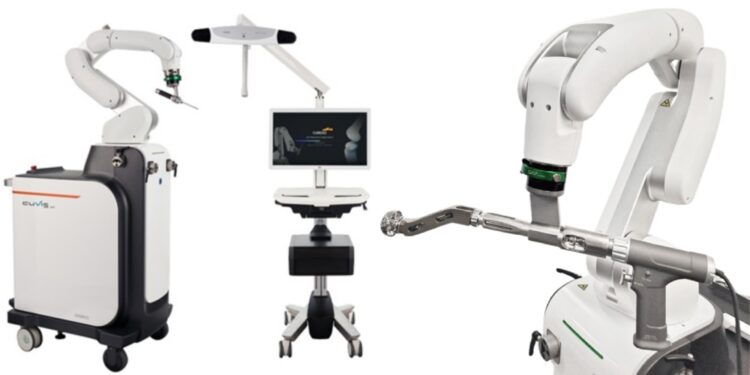
Following the lead of Seoul Bumin Hospital, Haeundae Bumin Hospital recently succeeded in performing total hip arthroplasty (THA) using this Korean-made robot. As a result, patients in the Busan–Ulsan–Gyeongnam region can now access advanced robotic surgical services locally. This is viewed as a vital turning point for improving regional healthcare quality and broadening access to specialized hip care.
Selection Criteria for Patients: “The robot is the tool; the surgeon is the driver”
When considering robotic surgery, patients must first understand the costs. Generally, while the surgery itself is covered by national health insurance, disposable supplies are not. For a single knee, this typically incurs an additional cost of KRW 1.5 million to 2.0 million, though this varies by hospital. Costs for hip procedures similarly depend on the facility and equipment used.
However, clinical appropriateness is more important than cost. Patients with severe bone deformity, unclear anatomical landmarks from prior fractures, or avascular necrosis of the femoral head may benefit most from the robot’s precise planning capabilities.
Experts advise looking beyond the brand of the robot to "who is using it, and how." Director Ha noted, “Extensive experience in knee surgery does not automatically make a surgeon proficient in robotic hip surgery. Because the biomechanics differ, it is essential to find a specialized hospital with dedicated training protocols.”
Ultimately, the robot is a powerful assistive tool that executes the surgeon’s plan with consistency. When a skilled surgeon utilizes the robot properly, patient satisfaction and surgical outcomes can increase substantially.
[FAQ] Frequently Asked Questions
Q. Does robotic surgery mean a faster recovery? A. Not necessarily. Recovery speed depends on age, muscle strength, bone condition, and the patient's commitment to rehabilitation.
Q. Will hip surgery fix my leg-length discrepancy? A. Preoperative 3D planning and real-time verification help significantly reduce discrepancy. However, results depend on pelvic condition and the surgeon's judgment.
Q. Are doctors who are good at robotic knee surgery also good at robotic hip surgery? A. Not automatically. Because the anatomy and biomechanics differ, a separate learning curve and team-based training are required.
Q. What questions should I ask my doctor? A. Rather than just asking if they have a robot, ask: “Why do I personally need robotic surgery?”, “What is your specific experience with robotic hip procedures?”, and “How do you plan for my specific leg length and cup angle?”
Expert Commentary: Ha Yongchan, Director of Academic Research at Seoul Bumin Hospital Ha Yongchan graduated from Gyeongsang National University College of Medicine and earned his PhD at its graduate school. After serving as a professor at Bundang Seoul National University Hospital and Chung-Ang University Hospital, he became the fifth Director of Seoul Bumin Hospital. A leading authority in joint care, he has served as President of the Korean Society for Bone and Mineral Research and the Asian Hip Arthroscopy Society. In 2027, he will assume the presidency of the Association Research Circulation Osseous (ARCO)..