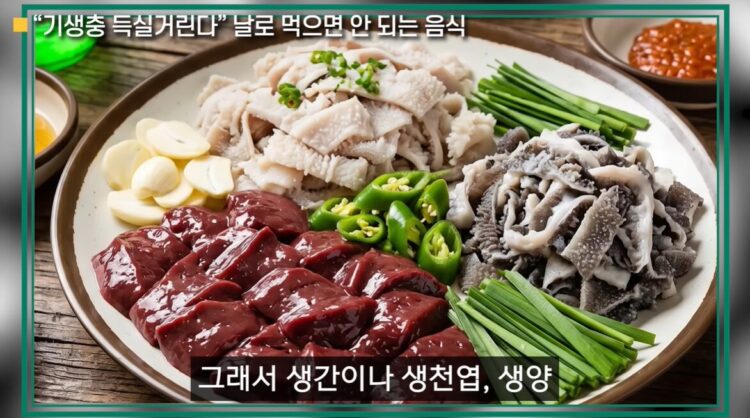
Kwon Hyuk-soo, a professor of allergy and immunology at Asan Medical Center in Seoul, recently discussed the foods he strictly avoids in their raw state. Appearing on the YouTube channel Knowledge Hansang, Professor Kwon highlighted the severe dangers associated with consuming animal organs, such as beef liver and omasum, without thorough cooking.
"If cattle become infected with the Toxocara parasite through their feed, humans can ingest those parasites by eating the raw meat," Professor Kwon explained. While he noted that infection rates have dropped significantly due to sterilized imported feed and improved domestic hygiene, he warned that the risk remains. "This is why I recommend avoiding uncooked items like raw liver, omasum, or tripe."
The Path from Parasite to Sudden Death
When asked about the potential for fatal outcomes, Professor Kwon confirmed the severity of the risk. He explained that the danger isn't necessarily the parasite itself, but the secondary inflammation it triggers. In cases of toxocariasis, an excessive rise in eosinophils—a type of white blood cell—can lead to severe complications.
"Severe eosinophilia can block blood vessels," Professor Kwon said. "This can lead to blood clots in the heart, which may travel to the brain and cause a stroke. It can also trigger myocardial infarction or other vascular diseases, potentially leading to sudden death, liver failure, or respiratory distress."
Understanding Toxocariasis
Toxocariasis occurs when Toxocara larvae enter the human body and migrate to organs such as the liver, lungs, eyes, and central nervous system. While these roundworm-type parasites typically live in the intestines of dogs or cats, raw beef liver has long been a primary route of infection in Korea.
According to 2022 data from Weekly Health and Disease by the Korea Disease Control and Prevention Agency, foodborne parasitic infections remain a concern due to the persistent culture of consuming raw organ meats. While many infections are asymptomatic, others can cause coughing, abdominal pain, and neurological symptoms.
The most dangerous complication is the infiltration of eosinophils into vital organs. This can cause thrombosis (clotting) or an embolism (blockage), which, if left untreated, may result in death from cardiovascular failure.
Diagnosis and Professional Treatment
Confirming a Toxocara infection is difficult with standard stool tests because the larvae do not mature into egg-laying adults in humans. Instead, physicians use blood tests like the enzyme-linked immunosorbent assay (ELISA) to detect antibodies. Diagnosis also relies on imaging, such as ultrasound or CT scans, to identify lesions in the liver or lungs.
Treatment depends on the severity and organ involvement. While some cases resolve spontaneously, severe eosinophilia or organ involvement typically requires anthelmintics like albendazole, sometimes combined with steroids. Experts warn against self-treating with over-the-counter deworming medications, as a clinician must determine the appropriate dosage and monitor for organ damage.
To prevent infection, the most effective strategy is to avoid eating organ meats raw. If consumed, beef liver, omasum, and tripe should always be cooked thoroughly to the center.
How Raw Organ Meat Can Trigger a Stroke: The Link Between Parasites and Blood Clots
The primary takeaway from Professor Kwon's warning is the risk of "secondary inflammation." When the body detects Toxocara larvae, it produces a flood of eosinophils. This immune overreaction can cause blood to coagulate within the vessels. If a resulting clot blocks an artery leading to the brain or heart, the result can be a sudden, life-threatening stroke or heart attack. Staying informed about "how" these foods affect your vascular system is the first step in prevention.
A relevant follow-up: Are there any other traditional raw foods you frequently include in your diet that you'd like me to look into for safety guidelines?