

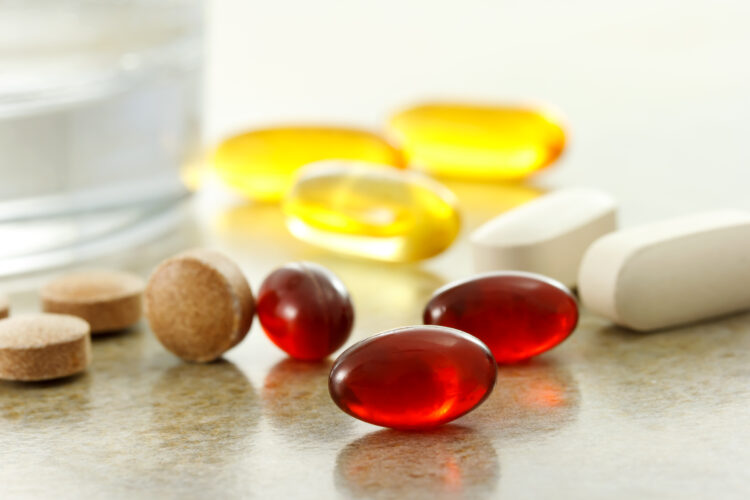
Sometimes a choice you make for your health can backfire. Even supplements your body needs can cause side effects depending on the dose and how you take them. With familiar options like vitamin C and calcium supplements, how can you get the benefits without the downsides?
Water-soluble vitamin C dissolves easily, but high doses require caution
Vitamin C, an antioxidant, is water-soluble. Because it dissolves readily in water, any amount your body doesn’t need is excreted in urine. Problems can arise, however, when you take high-dose vitamin C without drinking enough water. Some people pursue high doses after hearing claims that taking 2,000–3,000 mg or more per day boosts immunity, prevents colds, and relieves fatigue.
However, if you take vitamin C while drinking too little water, the likelihood of developing stones increases. In particular, if you’ve had stones before, the risk of recurrence is higher. When a kidney stone moves down the ureter—the tube that connects the kidney and bladder—it can cause pain. If a large stone enters the ureter, which is only about 2–4 mm wide, it can scrape the lining or block the ureter itself. At that point, the ureter contracts forcefully to push the stone out, causing severe pain often compared to labor pain.
To help prevent stones… drink plenty of lukewarm or warm water
If you’ve never had urinary stones and you drink enough water, you generally don’t need to worry about stones. If you developed stones after taking vitamin C, it may also indicate a deficiency of vitamin B6 and magnesium.
Stones are more likely to form when urine concentrations of oxalate, calcium, and uric acid increase. Vitamin B6 helps reduce oxalate, and higher magnesium intake can interfere with oxalate binding to calcium, helping prevent stones. The recommended daily intake of magnesium is 200–300 mg, and the recommended amount of vitamin B6 is about 100 mg.
Calcium supplements are good for bones, but too much may worsen cardiovascular health
Calcium is an essential nutrient for maintaining bone health. However, taking large amounts in supplement form can cause other problems. A study published in 《BMJ》 also reported an association between calcium supplements and cardiovascular risk.
To help reduce these risks, one approach is to take vitamin K2 and magnesium together. Vitamin K2 helps direct calcium into the bones. Magnesium helps maintain balance in calcium metabolism. An even better approach is to get calcium from food. Calcium consumed through food may actually help protect blood vessels. Therefore, it’s recommended to focus on calcium-rich foods and use supplements only to make up for what you’re lacking. It’s best to avoid taking high-dose calcium supplements on their own.