"Whenever I go to the hospital, my blood pressure reads far too high. As soon as I walk into the exam room, my heart starts pounding. Why is that?"
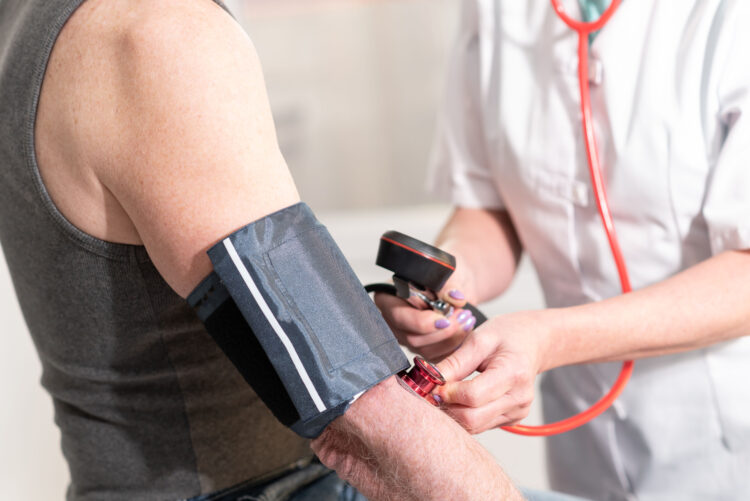
This is a common concern shared in online health communities. Many people find that while their blood pressure is typically normal at home, the mere sight of a doctor’s white coat triggers tension, causing a temporary spike—a phenomenon known as "white coat hypertension."
New research suggests that the "white coat" isn't the only trigger; the routine act of being weighed at the hospital may also be a significant factor in elevating blood pressure levels during a visit.
Simulated Clinic Visits Reveal the Impact of Measurement Order
A joint research team from the University of Manchester, the University of Leeds, and the University of North Carolina (UNC) conducted an experiment with 190 undergraduate students to examine how weight measurement affects blood pressure in a medical setting. Researchers created a campus laboratory designed to mirror a clinical environment, wore white lab coats, and monitored both the blood pressure and weight of the participants.
The study revealed a distinct pattern: students whose blood pressure was measured after stepping on the scale maintained a state of elevated blood pressure. Conversely, students who were weighed only after their blood pressure had already been recorded showed a decrease in blood pressure levels. This trend remained consistent regardless of whether a researcher performed the weighing or the participant weighed themselves. The findings were recently published in Stigma and Health, a journal of the American Psychological Association.
Reducing Stress to Improve Diagnostic Accuracy
The research team noted that for many patients, weight measurement can feel like a stigmatizing assessment. "In clinical situations where both blood pressure and weight must be measured, adjusting the order—specifically measuring blood pressure first—could reduce patient stress and improve the overall healthcare experience," the team stated.
For those frequently affected by white coat hypertension, experts recommend bringing a log of readings taken with a home blood pressure monitor to review with a healthcare provider. Additionally, resting for five to 10 minutes to calm the nervous system before a measurement, or requesting to have blood pressure taken while lying down, can help ensure more accurate results.