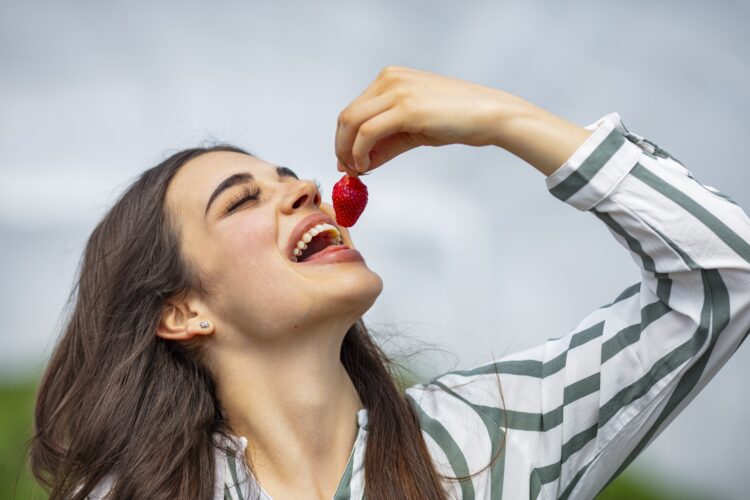
Even when individuals consume the same types of fruit, the long-term psychological benefits can differ significantly. A major follow-up study suggests that people who consistently eat fruits rich in flavonoids—antioxidant compounds found in plants—tend to sustain levels of happiness and optimism for longer. The defining factor in these results was not necessarily the variety of fruit, but the consistency and frequency of intake.
The research was conducted by a joint team from Queen’s University Belfast and the Harvard T.H. Chan School of Public Health. They analyzed data from more than 40,000 participants in the Nurses’ Health Study, a landmark cohort that tracks the health of healthcare professionals over several decades.
Fruit intake linked to mood while tea and wine associations fade
The research team analyzed data from 44,659 individuals for happiness indicators and 36,723 for optimism. Participants completed food frequency questionnaires every four years, allowing researchers to calculate a "flavodiet score" based on their intake of berries, citrus fruits, apples, tea, and red wine.
The study found a strong association between maintaining a positive mood and the consumption of strawberries, blueberries, apples, oranges, and grapefruit. Interestingly, while tea and red wine are also high in flavonoids, their association with happiness disappeared after researchers adjusted for other variables. The team suggested that differences in how the body absorbs and metabolizes flavonoids from different sources may account for this discrepancy.

Frequency and consistency drive psychological outcomes
The frequency of consumption appeared to be a major driver of the observed benefits. Women who consumed flavonoid-rich foods three or more times per day were 3% to 6% more likely to sustain happiness and 3% to 16% more likely to maintain optimism compared to those with the lowest intake.
When looking at specific foods, the group with the highest strawberry intake was 8% more likely to sustain happiness, while those who ate more blueberries were 14% more likely to maintain optimism. Researchers noted that these are not immediate mood-altering effects that an individual would notice instantly; rather, they are cumulative patterns that emerge over many years.
The most significant takeaway is the "virtuous cycle" identified by the researchers. Not only does eating fruit support a better mood, but individuals who feel more optimistic are also more likely to maintain the habit of eating fruit regularly.

A landmark study in positive psychology
While previous research has linked flavonoids to reduced depressive symptoms, most of those studies were small-scale and short-term. This study, published in the January 2026 issue of Clinical Nutrition, stands out for its direct measurement of positive psychological factors—happiness and optimism—within a massive cohort followed for 18 years.
The study, titled "Dietary flavonoid intake and psychological well-being – A bidirectional relationship," was led by Professor Aedin Cassidy. Because it was an observational study focusing on non-Hispanic White women in the healthcare sector, the findings show an association rather than direct causation. However, the results suggest a practical health habit: choosing a few favorites like strawberries, blueberries, or apples and spreading their intake throughout the day. Ultimately, what separates the outcomes is not just what you eat, but how long you keep it up.