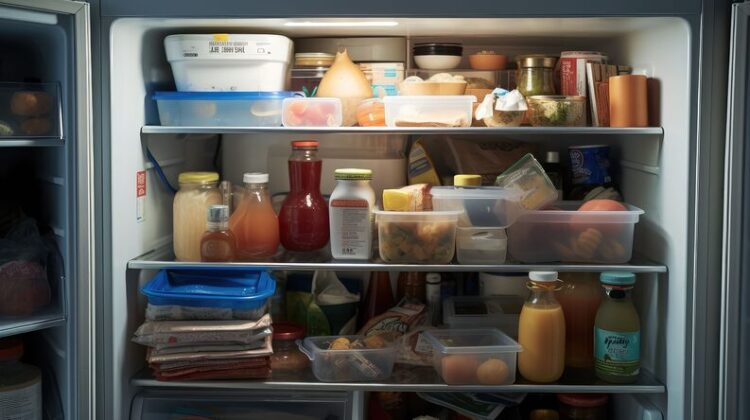
That unpleasant blast of air when you open the refrigerator is a common household grievance. When pungent staples like kimchi, onions, and fish are stored together, their odors mingle, and moisture builds up over time. If left unaddressed, these smells can lead to the growth of bacteria and mold. While commercial products are available, you can achieve professional results using five simple items already in your home.
Before starting, proper maintenance is key. Strong-smelling foods must be moved from cardboard or plastic bags into airtight containers. After purging spoiled items, wash the shelves with a mild detergent and wipe them down with baking soda for an antibacterial boost. For deep cleaning, use a cloth dampened with 2–3% diluted vinegar to clean door gaskets and crevices where hidden spills often linger.
1. The Toilet Paper Trick: Replace Every 3 Weeks
One of the most unconventional yet effective tools for odor control is a simple roll of toilet paper. Placing a fresh roll in the refrigerator helps absorb excess moisture in the air, which in turn reduces the spread of unpleasant smells. For maximum effectiveness, the roll should be replaced every three weeks. However, hygiene is paramount: always use a brand-new roll, never one previously kept in a bathroom. If the paper becomes visibly wrinkled or damp before the three-week mark, replace it immediately.
2. Acidic Neutralization with Lemon Slices
Lemons are a powerful natural deodorizer due to their high citric acid content, which neutralizes alkaline odors like ammonia. Simply cut a lemon into small pieces and leave them in the fridge for at least four hours. To prevent the lemon itself from spoiling and becoming a source of odor, ensure you replace the slices every 12 hours.
3. Porous Absorption with Stale Bread
Bread is highly porous, acting as a natural trap for odor-causing molecules. To use this method, wrap a piece of bread (even stale bread past its best-by date) in foil, poke several holes in the surface with a chopstick, and place it in the corner of a shelf. This is an economical way to recycle food that would otherwise be thrown away.
4. Mesh-Like Filtration with Charcoal
Charcoal is widely recognized for its mesh-like molecular structure, which allows odor-causing substances to adhere easily to its surface. You can place whole pieces of charcoal directly on a shelf. Unlike some other methods, charcoal is long-lasting and provides a consistent "adsorption" effect that clears the air without adding any scent of its own.
5. Volatile Compound Adsorption with Coffee Grounds
Dry coffee grounds are excellent at adsorbing volatile compounds while leaving behind a subtle, pleasant aroma. It is critical that the grounds are completely dry before being placed in an open container; damp grounds can quickly promote mold growth and compromise the hygiene of your refrigerator.