Lee Hee-jin, a former member of the group Baby V.O.X, shared stories related to dieting during her idol days.
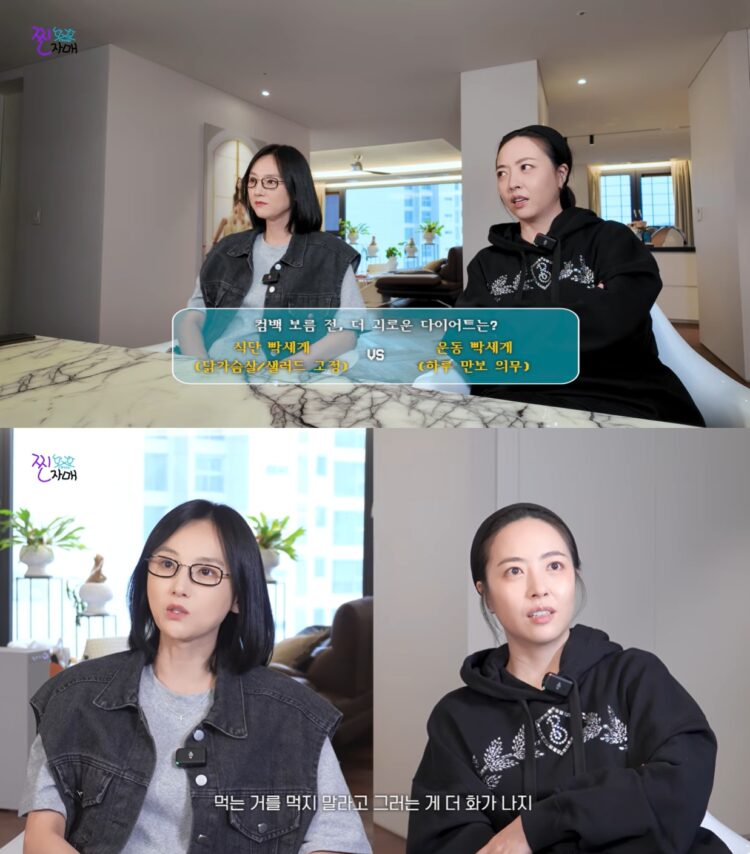
In a recent video released on the YouTube channel ‘Jin Sisters cross’, Lee Hee-jin talked about various experiences she had during her past activities with Sim Eun-jin. In the video, the two played a balance game and reminisced about the dieting situations of idols before their comebacks.
Particularly, when questions related to body management came up, the reactions of the two caught attention. When asked, "Before a comeback, which is more painful dieting? Option 1: Strict diet (chicken breast, salad), Option 2: Strict exercise (mandatory 10,000 steps a day)," they immediately chose option 1.
Lee Hee-jin and Sim Eun-jin stated, “We love eating too much. We would rather exercise.” When the production team asked, “Do you like exercising?” the two replied with laughter, “No. But we get angry if we are told not to eat.” Sim Eun-jin also added, “I get stressed if I’m forbidden to eat.”
Lee Hee-jin previously revealed on a broadcast, “In the past, my weight was in the 30kg range, and now it’s in the 40kg range.” Considering her height of 168cm, this is an extremely thin physique. However, she stated that she has never done any specific dieting. She explained that due to lack of sleep and not being able to eat properly during her idol days, her weight was naturally maintained.
Idol Schedule… Essentially Exercising All Day
Idol activities involve a repetitive schedule of practice, performances, and travel, spending most of the day moving their bodies. With dance practice, stage rehearsals, broadcasting shoots, and travel schedules, the structure naturally increases energy expenditure.
In particular, dance practice provides aerobic exercise effects that raise heart rates even in a short time. When these activities are repeated, the total daily energy expenditure can be high enough to create an environment where weight does not easily increase, even without additional exercise.
Stress from ‘Not Eating’… Increases Risk of Binge Eating
Excessive restriction of food can increase psychological burdens, making diet management itself more difficult. Strong restrictions on food can heighten feelings of deprivation, leading to a greater possibility of binge eating afterward. In fact, research shows that designating certain foods as ‘absolutely forbidden’ can lead to stronger obsessions with those foods.
Nutrition studies report that managing eating habits by allowing appropriate amounts of certain foods rather than completely banning them is more beneficial for long-term weight maintenance.
The Key to Weight Management is ‘Sustainable Habits’
Many opinions suggest that creating sustainable lifestyle habits is more important than drastically reducing diets in the short term for weight management. Instead of severely restricting diets, increasing activity levels and maintaining balanced meals is more favorable for health.
Habits that increase movement in daily life, such as walking, using stairs, and light exercise, also help increase energy expenditure. Maintaining regular sleep and meal patterns is also considered an important factor in weight management.