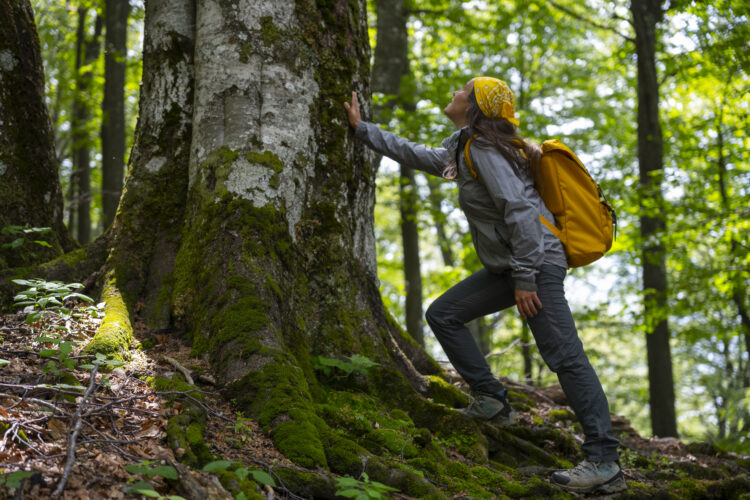
New research is bringing fresh attention to the "forest effect," revealing that the body's immune response can vary significantly depending on where exercise is performed. The findings suggest that forests are far more than just spaces for relaxation; they serve as vital environments for physical recovery and stress relief.
A research team led by Hiroko Ochiai at the Tokyo Medical Center (NHO) conducted a randomized controlled study, recently published in the international journal Scientific Reports. The study involved 78 healthy men aged 40 to 70 and found that respiratory mucosal immune markers (sIgA) were significantly higher in the group that spent time in the forest compared to those in an urban setting.
The Power of a 90-Minute Walk
The study observed an adjusted mean difference of 32.1µg/mL (p=0.035) in sIgA levels between the two groups after just 90 minutes of activity. This indicates that secretory immunoglobulin A—the primary defense antibody that blocks pathogens from attaching to the mucous membranes of the mouth, nose, and bronchi—can increase even with short-term exposure to nature.
While the researchers noted that the study was limited to middle-aged and older men, the implications are significant. It suggests that the forest environment may bolster the body's first line of defense against respiratory infections more effectively than a city environment, even when the exercise intensity remains the same.
A Measurable Decrease in Stress Hormones
The forest group also showed a more significant decrease in the stress hormone cortisol compared to the urban group. Subjective scores for tension, anxiety, and fatigue also dropped markedly. This confirms that physiological and psychological responses are not dictated by exercise alone, but by the interaction between the activity and the surrounding environment. Nature appears to play a unique role in stabilizing the autonomic nervous system and relieving deep-seated psychological tension.
Environmental Factors and Exercise Efficiency
The effectiveness of outdoor activity is often more influenced by temperature and humidity than by altitude. While high-altitude exercise can increase heart rate due to lower oxygen concentrations—potentially straining those with underlying health issues—the forest provides a moderate climate that supports steady movement.
Experts suggest that finding natural spaces within one's local area and visiting them frequently is a practical first step for those who cannot easily access deep forests. While urban parks with scattered trees offer some psychological benefit, forests with diverse tree species were found to be superior for triggering immune markers.
Frequently Asked Questions
Q: How often should I visit a forest to see these effects? A: This study confirms that a single 90-minute session can trigger changes in immune markers and stress hormones. However, to maintain these benefits, experts generally recommend engaging with natural environments at least once or twice a week.
Q: Do urban parks offer the same immune boost? A: Urban parks with high greenery and low noise provide psychological recovery, but this study observed distinct differences in immune markers when compared to dense forests. The variety of tree species in a forest likely plays a role in the enhanced biological response.
Q: Does this mean forest bathing can prevent the common cold? A: While higher sIgA levels increase the body's defense against viral invasion in the respiratory mucosa, it has not yet been confirmed if this directly leads to fewer colds. Immunity remains a complex system influenced by sleep, nutrition, and overall stress levels.