In the early 1980s, countless children born with congenital heart disease—often marked by the distinct blue tint of their lips—missed their window for treatment. If these children undergo surgery before the age of seven, they can lead healthy, full lives. Yet, for decades, the high cost of surgery and a lack of specialized facilities meant many families were left with only a painful burden in their hearts.
Sejong Hospital changed that narrative, achieving a monumental milestone in medical history by ensuring that financial hardship would no longer be a death sentence for children with heart conditions.
A Miracle Built in a Medical Desert
The hospital’s legacy began with its founder, Woochon Park Young-kwan. Moved to tears by the plight of families suffering from heart disease, he established a specialized heart center in Bucheon—an area considered a "medical desert" at the time. Despite persistent warnings from peers that such a venture was impossible, Park remained steadfast, famously declaring, "I will create a world without heart disease."
Park poured his soul into the operating room and tirelessly sought out benefactors to fund surgeries for those in need. His dedication was so absolute that he neglected his own health, suffering both a stroke and myocardial infarction, only to return to the hospital to treat patients immediately upon his recovery.
Saving Lives Across Borders
The impact of Sejong Hospital is measured in thousands of lives restored:
Domestic Impact: The hospital has performed surgeries on over 7,000 domestic patients with congenital heart disease, accounting for more than one-third of all such cases in South Korea.
Global Reach: Sejong has extended its mission beyond its borders, providing life-saving surgeries to over 1,600 children from overseas.
A Vision for 2030: Top 10 in the World
Today, the founder’s mission is carried forward by his son, Chairman Park Jin-sik. Under his leadership, Sejong Hospital is launching a project to elevate its facilities in Incheon and Bucheon into the elite tier of global medicine.
"Sejong Hospital has developed alongside the advancement of thoracic surgery in South Korea," Chairman Park stated. He has set ambitious goals for the near future:
Bucheon Sejong Hospital aims to rank among the top 10 heart specialty hospitals in the world by 2030.
Incheon Sejong Hospital, which opened in 2017, is on track to rank among the top 100 hospitals globally.
By combining a legacy of compassion with world-class surgical expertise, Sejong Hospital continues to transform what was once considered "impossible" into a reality for families around the world.
In 1981, Dr. Woochon Park Young-kwan was a professor at Hanyang University College of Medicine when a single piece of news changed his life. The government was offering low-interest loans via the Japan Overseas Economic Cooperation Fund (OECF) for hospital establishment. For Woochon, this was the answer to a memory that haunted him: a father in his 40s who had walked away from his clinic in despair after learning his daughter’s heart surgery would cost 10 million won—the price of a house at the time.
"If I had my own hospital," Woochon realized, "I could save these patients myself."
From a Small Island Boy to a National Mission
His conviction was cemented by a letter published in the Korea Daily. A principal from a remote island village pleaded for help for a boy who could only watch his friends play due to heart disease. Woochon volunteered for the surgery, and the publicity sparked a surge of generosity, raising 10 million won in a single day.
After curing the boy, Woochon suggested to the parents that the remaining donations be used to save others. They agreed, saving two more lives. This solidified his mission: a dedicated heart hospital could save thousands across the country.
Building in a "Medical Blind Spot"
Despite his mentor and peers advising him to build a "department store-style" general hospital instead of a specialty center, Woochon’s heart burned with a different purpose. On August 23, 1982, he opened Sejong Hospital in Bucheon—then a medical blind spot—with 100 beds. To maximize his time for patients and management, he even shaved his head to avoid trips to the barber.
Within a year, Sejong Hospital rose to the "Big 3" in heart surgery, standing alongside giants like Seoul National University Hospital and Yonsei Medical Center.
The Driving Force: Global Standards and the "Morning Conference"
When asked what fueled this rapid ascent, Chairman Park Jin-sik, who now leads the hospital, points to his father’s commitment to systems and education:
Global Manuals: Woochon applied strict clinical protocols he learned during training at Düsseldorf University Hospital in Germany and the Mayo Clinic in the U.S.
The Morning Conference: Every morning, medical staff from six departments discussed every diagnosis from the previous day—a rigorous collaborative system that ensured the highest level of care.
Investment in People: Despite being a private hospital, Sejong funded international symposiums and fully covered airfare and housing for doctors training abroad. It became known as the "Heart Military Academy," as its doctors were eventually scouted to lead thoracic departments at major institutions like Seoul Asan Hospital and Samsung Medical Center.
A Path Paved with Tears and Science
Woochon knew that to save more children, the medical staff needed to study the pathology of congenital heart disease through autopsies. This was a painful task. Once, a grieving parent slapped him in the face when he made the request. He left in anger, only to return and weep with another guardian who ultimately agreed to donate.
Through nearly 100 donated hearts, Sejong’s doctors studied the pathological processes of 65 different heart conditions, eventually publishing the landmark English textbook, Congenital Heart Disease - Correlation with Daily Life and Pathology. This blend of raw compassion and rigorous science remains the heartbeat of the institution today.
The history of Sejong Hospital is inextricably linked to the "Miracle of 3 Million Won"—a movement that transformed South Korean society. In November 1983, a single photograph of U.S. First Lady Nancy Reagan boarding the presidential plane with two Korean children suffering from heart disease sparked a national awakening.
The public outcry was immediate: "We must save our children at home." This sentiment led to a historic partnership between Sejong’s founder, Dr. Woochon Park Young-kwan, and Pastor Cho Yong-gi of Yoido Full Gospel Church. The church community famously collected mountains of waste paper to fund surgeries, a grassroots miracle that saved countless young lives.
A Father’s Grief and a Global Mission
While many children were saved, others served as a painful reminder of medical limitations. In 1981, a father unable to afford surgery for his daughter returned years later with the funds, pleading for a cure. Tragically, her condition had progressed to Eisenmenger syndrome—beyond the reach of the era's technology. Even a referral to the world-renowned Dr. Magdi Yacoub in the UK could not save her.
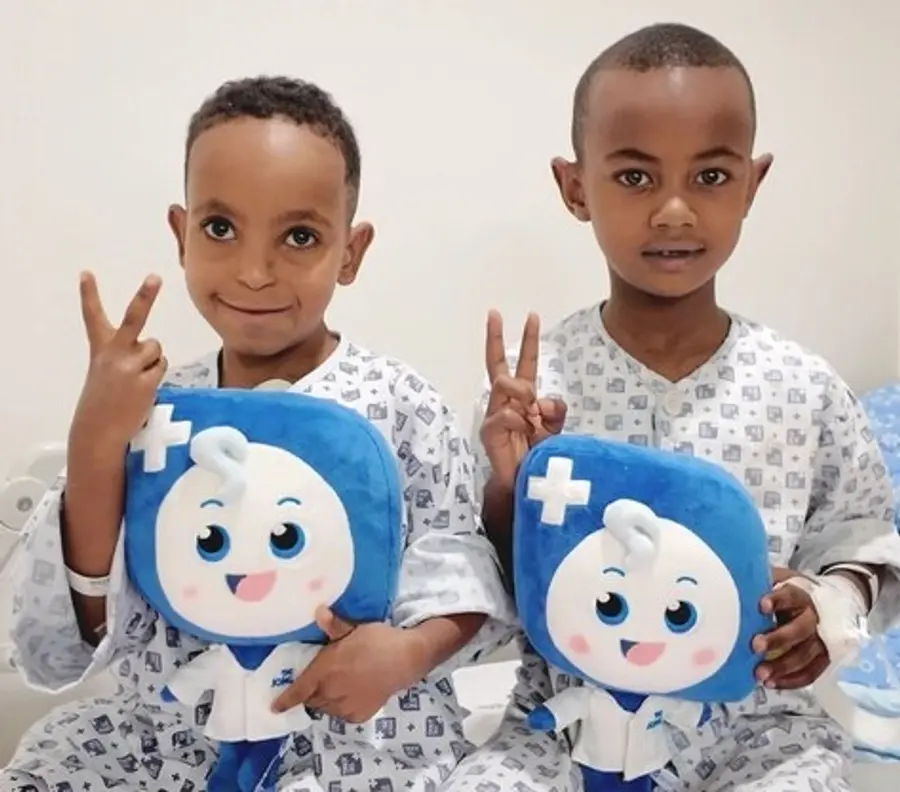
Following her passing, the father donated the treatment costs to Sejong, asking Woochon to ensure no other parent would ever feel such regret. This spirit of "paying it forward" eventually led Sejong to look abroad. Since 1989, the hospital has provided life-saving surgeries to over 1,600 children from Russia, Vietnam, and beyond. Most recently, in early 2026, Sejong restored the health of five children from Ethiopia—descendants of veterans who defended South Korea during the Korean War.
Transition and Modernization: The 2008 Turning Point
The burden of saving lives took a toll on the founder. To soothe the heartache of losing patients, Woochon smoked heavily, eventually suffering a cerebral infarction and depression. In 2008, his son, Park Jin-sik, left his professorship at Seoul National University Hospital to join Sejong as Planning Director.
Working alongside his mother, Jeong Ran-hee—who had stabilized the hospital's management through extensive business studies—Park Jin-sik set out to professionalize the institution. He began by surveying all 700 employees to derive a collective vision and led a "pilgrimage" to the top 100 heart hospitals in the U.S. to study world-class systems.
Leading the Digital Healthcare Revolution
Upon taking the helm, Chairman Park prioritized a 4-billion-won investment in computerization, which increased outpatient visits by 30% within a year. Sejong soon became a pioneer in digital healthcare:
Predictive AI: Collaborating with startups like Vuno, Sejong developed "Aegis," a system that predicts heart attacks in hospitalized patients.
Smart Innovation: In 2023, the hospital was selected as the lead for the "Smart Hospital Leading Model Development Support Project," a rare honor for a non-university hospital.
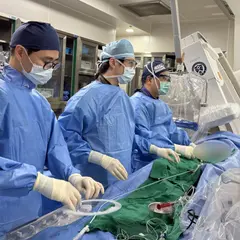
The Hybrid Operating Room: In 2011, Sejong established Korea’s first hybrid operating room, where thoracic surgeons and cardiologists collaborate in a single space to maximize treatment success.
Today, Sejong Hospital has evolved from a surgery-only center into a balanced institution where advanced procedures, AI diagnostics, and high-level surgery coexist. By blending its legacy of humanitarian "miracles" with cutting-edge technology, Sejong continues to ensure that the heart never has to wait.
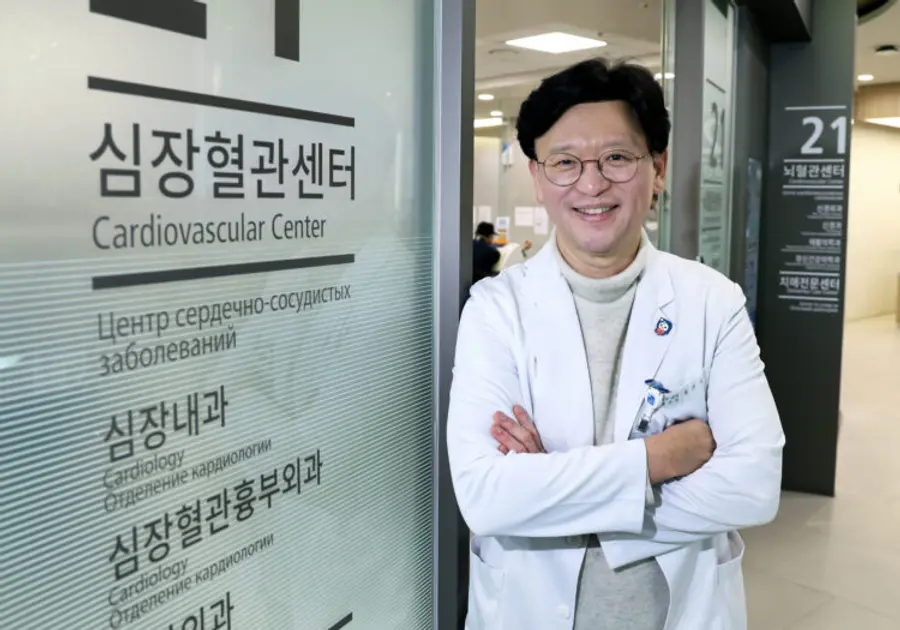
-Does Sejong Hospital possess the competitiveness to rival the "Big Four" hospitals in Seoul?
"In heart disease, prompt treatment can mean the difference between life and death. Time is of the essence. Patients may find themselves at a crossroads of life and death even on their way to the hospital or while waiting for treatment. Most university hospitals have cardiology or thoracic surgery as just one of several departments, making it difficult to reflect these urgent characteristics.
Sejong Hospital is designed to report test results on the same day and provide treatment immediately if necessary. Our hospital emphasizes the '1.3.7 Principle', meaning that patients connect with us on one call, receive treatment within three days, and undergo procedures or surgeries within seven days. Additionally, our emergency room has specialists treating heart diseases on duty 24/7, 365 days a year. This is a significant departure from other hospitals where residents wait and call specialists in emergencies. We only hire doctors who agree to this rigorous on-call duty."
A "Battlefield" Mentality to Save Every Patient
Above all, we cannot overlook the "passionate determination" among the doctors at Sejong Hospital to take full responsibility for their patients.
In October 2023, the hospital received an SOS from a large hospital in Hong Kong stating that a Korean student, A, was relying on ECMO (Extracorporeal Membrane Oxygenation) in the ICU in a state of cardiac arrest. A was a patient with Eisenmenger syndrome. In the past, this was a disease that would lead to death if it worsened, but today, heart transplantation offers an ultimate solution.
During an emergency meeting, Deputy Director Lee Chang-ha argued, “If there is even a slight chance of saving the patient, shouldn’t we go to the battlefield?” The medical staff took an air ambulance to transport the patient and performed surgery to implant a Left Ventricular Assist Device (LVAD). Eight months later, the student underwent surgery to receive a heart from a brain-dead donor and was discharged four months later. He has been undergoing rehabilitation for a year and a half and frequently checks in with his doctor via smartphone regarding his health.