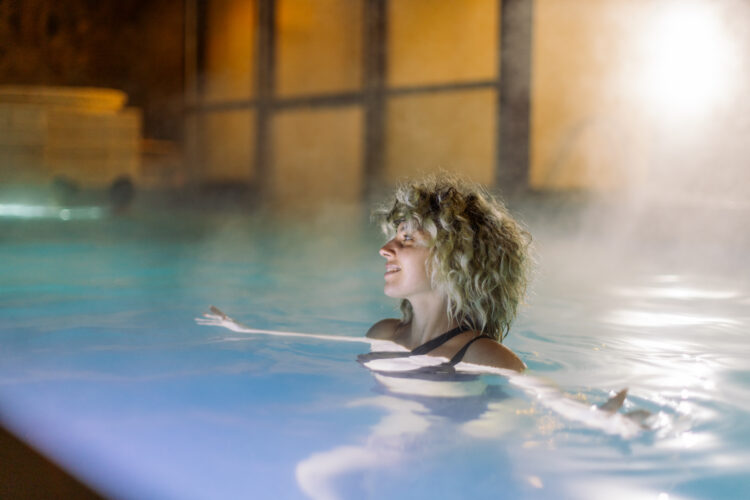
Move over, simple ice baths. The latest "it" keyword dominating the global wellness industry for 2026 is Contrast Therapy—the practice of alternating between extreme heat and intense cold.
Global fashion authorities like Elle and Vogue, along with specialized wellness media, have recently highlighted Contrast Therapy as a cornerstone of the Biohacking movement. Biohacking is the practice of treating the human body as a complex system and using scientific data to optimize health. In this context, Contrast Therapy is being grouped with other high-performance habits like intermittent fasting and precision caffeine timing.
A Global Market Shift
The trend is manifesting in a surge of "recovery clinics" across major hubs like London and New York. These centers feature state-of-the-art infrared saunas and cryotherapy chambers. According to market research firms, the global infrared sauna market alone is expected to hit $1.89 billion by 2025, with projections reaching $3.58 billion by 2032.
Is This Really New?
While it feels like a high-tech innovation, Contrast Therapy carries a sense of déjà vu. In South Korea and Japan, alternating between hot and cold tubs at the local bathhouse has been a way of life for generations. Similarly, Scandinavians have long practiced "sauna-to-snow" rituals.
The modern 2026 version is simply a tech-forward evolution: swapping the traditional hot bath for an infrared sauna and the cold plunge for a liquid-nitrogen-cooled cryotherapy device.
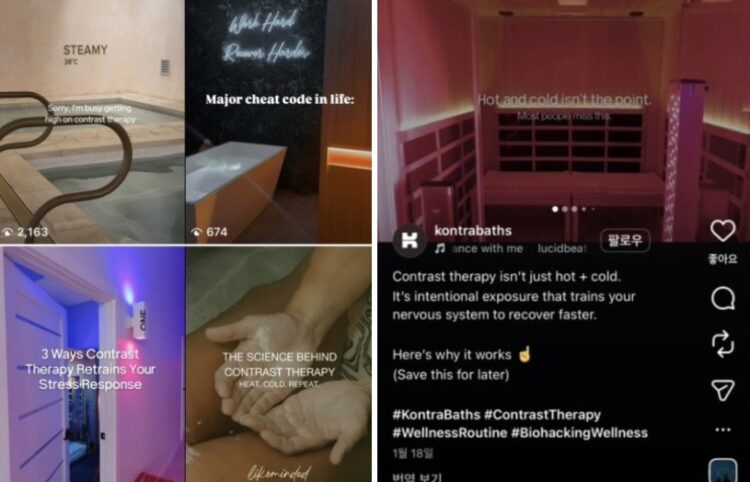
The Science of "The Pump"
The wellness industry is marketing this trend under the umbrella of Recovery, claiming it combats chronic fatigue, insomnia, and stress. But what does the science say?
Vascular Pumping: Cold exposure causes vasoconstriction (narrowing of blood vessels), which reduces inflammation and swelling. Conversely, heat causes vasodilation (widening of blood vessels), boosting oxygen delivery. Alternating between the two creates a powerful "pumping" effect that flushes out metabolic waste and speeds up muscle repair.
The Dopamine Hit: The "mood-boosting" claims are largely attributed to the cold phase. Research shows that cold immersion activates the sympathetic nervous system and triggers a significant release of dopamine—the neurotransmitter linked to pleasure and motivation.
Proceed with Caution: Who Should Skip the Dip?
Despite the hype, experts warn against viewing Contrast Therapy as a miracle cure. Research on its long-term benefits for recovery speed is still developing. More importantly, the practice can be physically taxing.
Warning: Individuals with cardiovascular disease, cardiac arrhythmia, severe asthma, or chronic migraines, as well as pregnant women, should avoid Contrast Therapy.
Sudden temperature shifts can overload the nervous system or cause temporary skin swelling due to circulatory stress.
Expert Tips for Safe Practice:
Frequency: Limit sessions to 2–3 times per week.
The Ratio: A common recommendation is 15 minutes in the sauna followed by 30 seconds to 1 minute in the cold.
Transition Slowly: Do not rush from one extreme to the other. Allow the body a moment to stabilize, and move gently after the cold phase to help your internal temperature recover naturally.
Editor’s Note: It is fascinating to see the humble "cold-hot bath" from local neighborhood bathhouses rebranded as a high-end global luxury. It goes to show that in the world of wellness, everything old eventually becomes new again!