


A common New Year’s resolution is to quit smoking. However, quitting cigarettes is not as easy as it sounds. As a result, e-cigarettes are often presented as a common alternative.
Due to the perception that e-cigarettes are relatively less harmful to health, they are spreading rapidly. They are an attractive option for smokers who find it hard to quit nicotine but dislike the smell of cigarettes. According to a report from the World Health Organization (WHO) last year, the number of e-cigarette users has steadily increased, surpassing 100 million. In contrast, the smoking rate of traditional cigarettes is on the decline.
However, according to Professor Jo Yoo-sun of the Department of Family Medicine at Asan Medical Center, e-cigarettes also have a similar level of negative impact on our bodies. Professor Jo emphasized, "The method has only changed from cigarettes to e-cigarettes, but the damage to our bodies remains the same."
Isn't e-cigarettes supposed to have fewer harmful components?
Thanks to the marketing of tobacco companies, many smokers believe that "e-cigarettes have fewer harmful components compared to traditional cigarettes," but this is not a medically simple issue.
According to an analysis by the Korean Food and Drug Administration, the tar content of e-cigarettes can be similar to or even higher than that of regular cigarettes, and fine metal particles created when the coil is heated can penetrate deep into the lungs, potentially causing chronic inflammatory responses. Just because some component levels, like carbon monoxide, are lower does not mean that the overall toxic burden on the body is reduced.
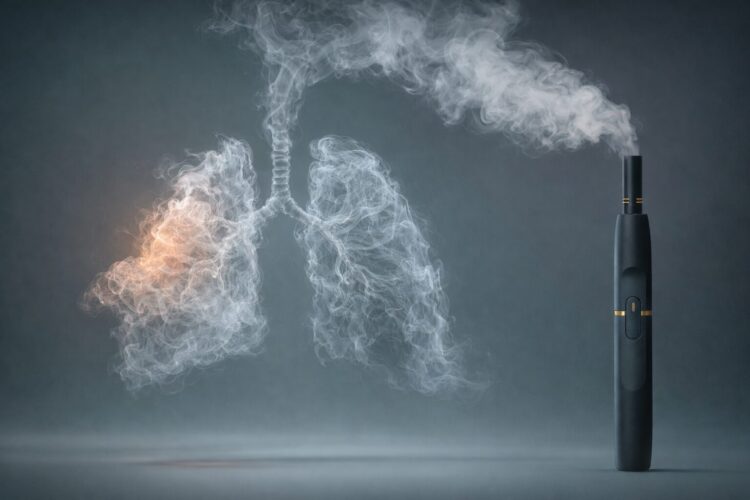
Furthermore, a recent meta-analysis summarizing tobacco-related research found that e-cigarette users had a 1.53 times higher risk of myocardial infarction compared to non-users. Particularly, when former cigarette smokers used e-cigarettes, the risk of myocardial infarction increased by 2.52 times, and the risk of stroke increased by 1.73 times. This is because nicotine increases blood pressure and heart rate, and the fine particles in the white gas (aerosol) emitted from e-cigarettes can cause inflammation and oxidative stress.
Professor Jo warned, "Aerosol is not just simple water vapor; it is an active substance mixed with nicotine, heavy metals, and carcinogens. Since it contains harmful particles to the human body, it is essentially no different from cigarette smoke."
Wouldn't it help if the goal is to quit smoking?
Many smokers temporarily use e-cigarettes in an attempt to completely quit traditional cigarettes. However, according to Professor Jo, the 'dual use' of e-cigarettes and traditional cigarettes is the most clinically concerning form of smoking.
Over 80% of domestic e-cigarette users fall into the category of dual users. Dual users are reported to have no reduction in exposure to toxic substances compared to regular cigarette smokers, and in fact, the risk of cardiovascular disease among dual users is reported to be even higher.
Professor Jo stated, "E-cigarettes have been promoted as a smoking cessation aid, but the U.S. Food and Drug Administration (FDA) has not officially approved e-cigarettes as a smoking cessation device. In actual studies, many who attempted to quit smoking with e-cigarettes did not succeed in achieving complete cessation."
He added, "If you truly care about your health, you should not think about 'which cigarette is less harmful' but choose complete cessation of smoking."