A 50s office worker, Mr. A, has been managing his diet primarily with vegetarian options, minimizing alcohol and meat intake. He was confident in his health, but recently received an unexpected diagnosis of 'fatty liver' during a health check-up. He wonders, 'Why, when I don’t drink or eat meat?' However, such cases are not uncommon. Doctors explain that if a diet high in carbohydrates and low in protein continues, fatty deposits can accumulate in the liver, regardless of vegetarianism. Being vegetarian does not guarantee freedom from fatty liver. In fact, incorrect eating habits that are easily overlooked while being vegetarian can lead to fatty liver.
The Misconception That Fatty Liver Is Caused by Alcohol and Meat
Fatty liver refers to a condition where triglycerides are excessively accumulated in liver cells. It is commonly believed that alcohol or fatty foods are the causes, but in reality, excessive carbohydrate intake and lack of energy expenditure have a greater impact. Even if one is vegetarian, if they primarily consume white rice, bread, noodles, and processed foods high in sugar, the liver will store the remaining energy in the form of fat. Especially if such a diet is repeated in a state of low activity, it can lead to fatty liver regardless of meat consumption. In other words, the liver is more sensitive to 'excess energy' than to 'fat.'
Reasons Why Eating a Lot of Carbohydrates Is Dangerous
When starting a vegetarian diet, the focus of the diet often shifts naturally to grains and starchy foods. This is because, instead of protein and fat intake decreasing, one tends to rely on rice, bread, noodles, and potatoes for satiety. The problem is that if the carbohydrates consumed are not used, they are converted into triglycerides in the liver. Particularly, if a high carbohydrate vegetarian diet is maintained during the evening, it creates an environment where fat can easily accumulate in the liver overnight. Moreover, if carbohydrate intake is high compared to activity levels, repeated excessive intake can be dangerous. The thought that 'it's okay because it's vegetarian' can actually contribute to the development of fatty liver.
Protein Deficiency Encourages Fatty Liver
The most commonly overlooked aspect of a vegetarian diet is protein. Protein plays an important role not only in muscles but also in regulating fat metabolism in the liver. If protein intake is insufficient, the liver's ability to process fat decreases, accelerating fat accumulation. A vegetarian diet that does not sufficiently include plant-based proteins such as beans, tofu, lentils, and chickpeas can create a state of 'low metabolism' rather than 'low fat.' From the perspective of liver health, a vegetarian diet lacking in protein can actually become a risk factor.
Fruits and Nuts: The 'Quantity' Is the Problem
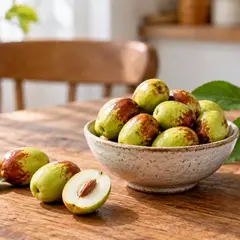
Many people think they can eat fruits and nuts freely while being vegetarian. However, the fructose contained in fruits can lead to fat synthesis in the liver if consumed excessively, and nuts, while healthy fats, are very high in calories. Especially if consumed repeatedly in excess of the recommended daily amount, they can put a burden on the liver. Just because they are natural foods does not mean they are safe in unlimited quantities. The liver reacts much more sensitively to actual intake and energy balance than to the image of food.
Essential 'Liver Health Principles' to Follow Even While Being Vegetarian
To maintain liver health through vegetarianism, several basic principles are necessary. First, the proportion of refined carbohydrates should be reduced, and the diet should be centered around whole grains and vegetables. It is also important to include a certain amount of plant-based protein in every meal. Regular exercise should be added to ensure that the fat accumulated in the liver is actually burned. Vegetarianism is not just about 'what to avoid eating' but rather 'how to structure total caloric intake.' Even while being vegetarian, if these principles are not followed, fatty liver can certainly develop.