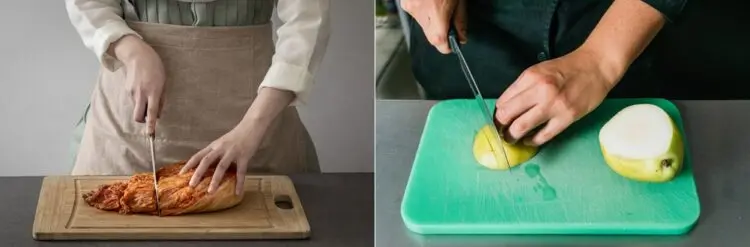
Cutting boards are the beginning and end of cooking. Recently, they have been used not only for preparation but also for serving finished dishes, increasing the importance of hygiene management. If cutting boards are neglected, mold and bacteria can proliferate, raising the risk of food poisoning. The food residue left in the knife marks is particularly problematic.
Wooden cutting boards have high antibacterial properties, while plastic ones are easy to clean
The main materials for cutting boards are wood and plastic. Wooden cutting boards can easily absorb moisture, which can lead to mold, but they have the advantage of being sturdy and having high antibacterial properties. According to research from Mosul, Iraq, wooden cutting boards reduced E. coli and Salmonella faster than plastic ones. Even if knife marks appear, they can be easily removed with sandpaper.
On the other hand, plastic cutting boards are water-resistant and can be used in dishwashers, making them convenient to clean. Many products are color-coded, making it easy to use them for different ingredients. However, knife marks can easily form, and bacteria can penetrate through those gaps, necessitating regular replacement.
The key to hygiene is 'management' rather than material
More important than the material of the cutting board is the method of management. After use, it is essential to thoroughly clean between the knife marks immediately, wipe off moisture, and store it upright to dry. Laying it flat can allow bacteria to proliferate on the bottom surface.
Plastic cutting boards should be rinsed with hot water above 80℃ and dried in sunlight for a high sterilization effect. If the knife marks are deep, it is advisable to replace it with a new cutting board.
Wooden cutting boards should be rinsed with lukewarm water and dried in a well-ventilated shade. Applying wood-specific oil or olive oil about once a month can extend their lifespan. The oil should be absorbed for a day, and any remaining oil should be wiped off with a clean cloth.
The Ministry of Food and Drug Safety stated, "Cutting boards are cooking tools that easily transfer bacteria," and emphasized the need for thorough cleaning and drying before and after cooking.