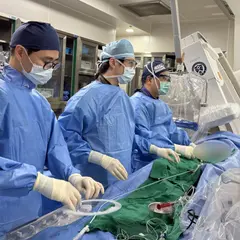
The chronic crisis in domestic healthcare extends beyond the collapse of essential services; it is also a crisis of human capital. Currently, roughly 99% of medical school graduates in Korea are funneled exclusively into clinical practice. While this may seem a natural career path, it has resulted in a severe drought of physician-scientists—the hybrid researchers who hold both a Doctor of Medicine (MD) and a Ph.D. in science or engineering.
These "dual-threat" professionals are the engine of the global bio-industry. Their ability to bridge the gap between the patient’s bedside and the laboratory bench makes them invaluable; indeed, seven out of ten global pharmaceutical giants have appointed physician-scientists as their Chief Technology Officers (CTOs). Korea, however, remains stuck in a cycle of perpetual manpower shortages.
The Manpower Gap: A Need for 10,000 More
The Korea Bio Association estimates that the nation’s innovative medical and bio industries require approximately 14,000 physician-scientists to remain competitive. With only 4,300 currently active domestically, even a tenfold increase in annual training would take years to meet the demand.
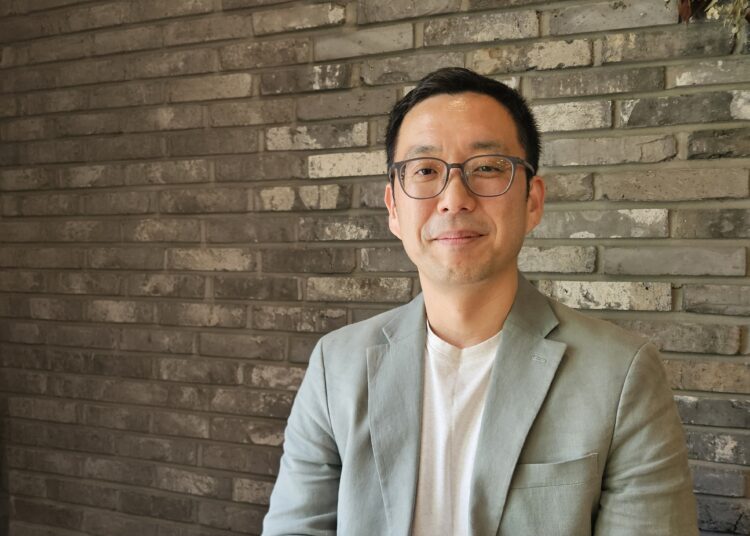
"In Korea, hospitals are structured to maximize patient volume for revenue," says Park Ji-hoon, President of the Korean-American Professional Association in Life Sciences (KAPAL), whom I met in Maryland. "In such a system, it is extremely difficult to produce doctors who can dedicate themselves to research." He noted that when university professors must see 100 to 200 patients a day just to keep a hospital solvent, research naturally falls by the wayside.
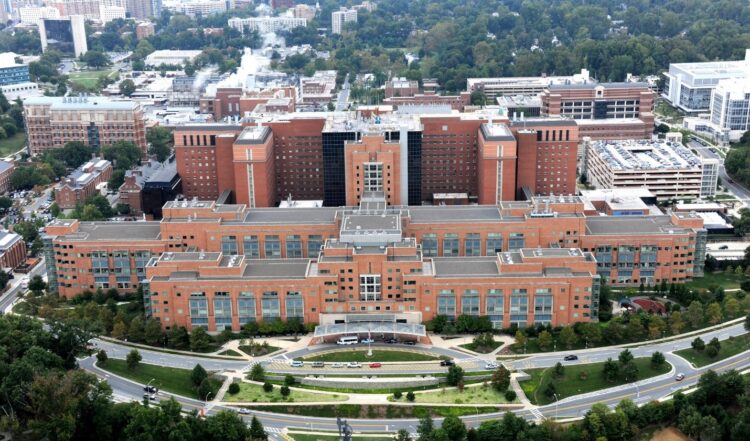
The Maryland region stands in stark contrast. Home to the U.S. National Institutes of Health (NIH) and the Food and Drug Administration (FDA), the area is a dense ecosystem of basic and translational research involving Johns Hopkins University and the University of Maryland. Park’s organization, KAPAL, facilitates collaboration within this elite community of over 2,000 members across the U.S.
Securing the Career Path: The Economic Reality of Research
A critical factor in the steady supply of U.S. physician-scientists is the NIH. As the world’s leading medical research institution, the NIH operates 27 institutes and has produced a staggering 174 Nobel laureates. Unlike the Korean model, where research is often an "extra" duty for clinical professors, the U.S. provides a structural environment where research is a viable, high-paying career.
Park, who completed a four-year postdoctoral program at the NIH, points out that the compensation is designed to make research a "convincing choice." While NIH salaries—averaging around $217,000 for research physicians and up to $357,000 for clinician-scientists—may not match the astronomical earnings of private U.S. surgeons, they provide a stable, prestigious middle ground. "It is enough to make staying in the lab instead of the clinic a sustainable life decision," Park noted.
A Virtuous Cycle of Internships and Infrastructure
The NIH also maintains a tightly organized "virtuous cycle" through its internship programs. By offering research opportunities to high school and college students, the NIH secures talent early. Interns are often credited as affiliated researchers on published papers, a pedigree that helps them enter medical school. Many later return to the NIH as MD-PhD researchers.
Professor Huh Jun of Harvard Medical School, whom I met in Boston, emphasized that this infrastructure is fueled by a "capitalistic" approach to research output. "U.S. universities reward talent with significant incentives, but there is also a high-pressure reality: if you don’t produce research, you cannot maintain your position," he explained. In Korea, by contrast, research success rarely translates into direct revenue for the individual or the hospital, making startups or long-term projects less attractive than high-volume clinical work.
Toward a "Korean Model" of Innovation
Both Park and Professor Huh agree that Korea cannot simply copy the U.S. model. "No matter how impressive the Statue of Liberty is, if you just place it in Yeouido, it's just a bronze statue without social context," Park remarked.
Instead, they suggest leveraging Korea’s unique strengths: a globally recognized clinical and surgical infrastructure that generates a massive volume of clinical samples. Combining this data-rich environment with a U.S.-style research framework could be the key.
Signs of progress are emerging. The Ministry of Health and Welfare has launched the "Korean ARPA-H" project, benchmarking the U.S. Advanced Research Projects Agency for Health. With a planned investment of over 1 trillion won, the project aims to fund high-risk, high-reward research that could finally bridge the gap between the clinic and the laboratory.
(To be continued in the third installment of the series)
Interview interpretation and reporting assistance: Lee Seul-ah
This project received support from the Press Promotion Fund, which is financed by government advertising fees.