
A growing number of young people are wearing headphones throughout the day—from subway commutes to offices, cafes, and bedrooms.
While earbuds once dominated, more people have recently turned to headphones. They offer better sound quality and less ear discomfort, allowing for longer wear, and can double as a fashion accessory.
As headphones have become an everyday essential, concerns over the risks excessive use poses to physical and mental health have grown. U.S. broadcaster CNN recently warned that overusing headphones can harm not only physical health but also social connections.
Young People Spend 4.5 Hours a Day Listening
Audio consumption among young people worldwide is already substantial. According to a survey by polling firm Edison Research, people ages 13 to 34 spend an average of 4.5 hours a day listening to music or podcasts.
Spotify, the world’s largest music streaming platform, also reported that Gen Z accounted for roughly 56% of global streams between January and November 2025, with most listening through personal audio devices such as headphones or earbuds.
Prolonged Exposure to Loud Sound Raises the Risk of Hearing Loss
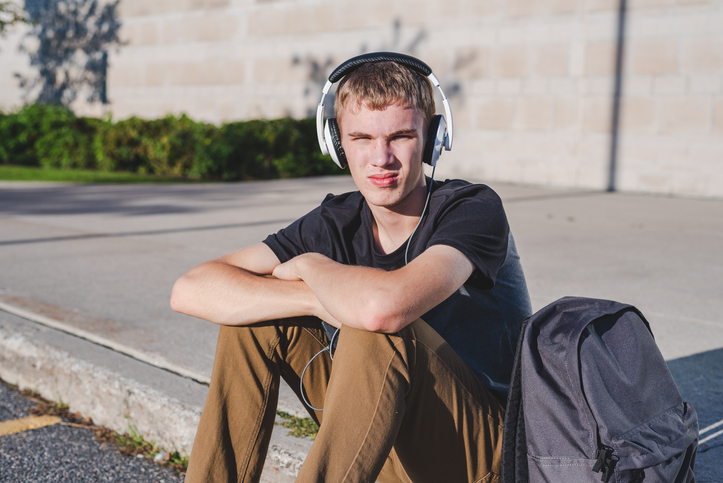
The problem is that prolonged headphone use can lead to hearing damage. The World Health Organization (WHO) has warned that more than 1 billion young people ages 12 to 35 worldwide are currently "at risk of hearing damage."
Medically, prolonged exposure to sounds at 85 decibels (dB) or higher can damage hair cells in the inner ear, leading to hearing loss. At higher volumes, even brief exposure is hazardous. Personal audio devices reach a maximum volume of about 105 dB—a level capable of causing permanent hearing damage in as little as 15 minutes.
One widely recommended guideline for preventing hearing damage is the "60/60 rule," endorsed by international health organizations and medical institutions. It advises keeping personal audio devices at no more than 60% of maximum volume and limiting listening sessions to 60 minutes at a time.
Headphone Use Fuels "Social Isolation"
Beyond physical harm, experts point to growing concerns over social isolation and disconnection, warning that automatically putting on headphones can create an "invisible wall" that blocks interaction with others.
Gloria Mark, a professor of informatics at the University of California, Irvine (UC Irvine), noted that people use headphones as a kind of "shield" to protect themselves from their surroundings, shutting out unwanted social interactions—whether intentionally or not.
Richard Davidson, a professor of psychology and psychiatry at the University of Wisconsin–Madison, observed that roughly 90% of students walking across college campuses now wear headphones—a sight that would have been unheard of 10 years ago.
Davidson expressed deep concern that students remain closed off behind their headphones without speaking to one another, missing out on one of the greatest benefits of a college education: meeting and communicating with people from diverse backgrounds.
Social isolation carries serious consequences for both physical and mental health and is recognized as a major risk factor for premature death. According to meta-analyses published in medical journals including The Lancet, social isolation increases the risk of cardiovascular disease by 29% and stroke by 32%. Research has also found that it raises the likelihood of developing dementia by about 50% and shortens average healthy life expectancy by roughly six years.