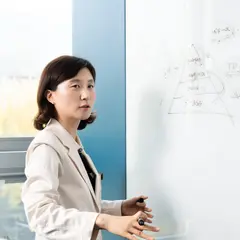
Professor Minako Kamimoto, who teaches community medicine at Tottori University School of Medicine in Japan, is from Daisen Town in Tottori Prefecture. Her hometown is rural even within Tottori Prefecture, which is the least populous prefecture in Japan.
There was an event that inspired Kamimoto to dream of becoming a community physician. When she was a high school student, her grandfather passed away at a hospital in another city. The regret of "I wanted to see my grandfather off in his hometown" was the catalyst.
The Jichi Medical University she graduated from is Japan's only public medical school established jointly by the country's 47 prefectures. With a founding philosophy of "lighting a lamp in the valleys of healthcare," the university focuses its education thoroughly on community-based care. While at university, Kamimoto took community medicine courses, attended lectures by senior physicians, and lived in the dormitory with like-minded classmates, instilling in her a mission to "work for the community."
When I met Professor Kamimoto on August 21, she modestly said she wasn't sure if her story would be helpful, but added, "My experiences at Jichi Medical University laid the foundation for a lifelong career as a community physician."
"Many Jichi Medical University students are children of public servants, teachers, or regional physicians. Living in the dormitory with them for six years naturally fosters a shared atmosphere of 'working for the community.' In addition, the fact that everyone gathers with a common purpose of serving community healthcare fosters pride and a sense of camaraderie."
Alumni who spent their medical school years together in this way have dispersed across the country to protect their respective hometowns. The strong network of Jichi Medical University alumni is one of the forces supporting regional healthcare in Japan.
A doctor trained with Tottori Prefecture’s financial support returns to Tottori
After graduating from Jichi Medical University, Kamimoto served her nine-year mandatory service at institutions including Tottori Prefectural Central Hospital, Yazu General Hospital, and Nakayama Hospital — regional hospitals far removed from the busy hospitals of major cities.
Kamimoto recalled that working with local medical staff and caring for patients at these hospitals helped her grow as a physician day by day. She was sometimes reprimanded by patients for speaking too softly and not being heard, and at other times she received encouragement, with patients thanking her for coming. Although many Jichi graduates leave for big cities after completing their nine-year service, her resolve to work in the community only strengthened during her service.
"It was a time when I could connect with local residents not only as a physician but as a young person. Even now, some patients from that time send me letters. Every time I see them I renew my original resolve and live thinking about what I can do for those people now."
After becoming a board-certified family medicine physician, Kamimoto took on the community medicine course at Tottori University School of Medicine in 2018. It matched the dream she had nurtured during her time at Jichi Medical University. The high school student who once dreamed of becoming a community physician now helps shape the careers of future community physicians.
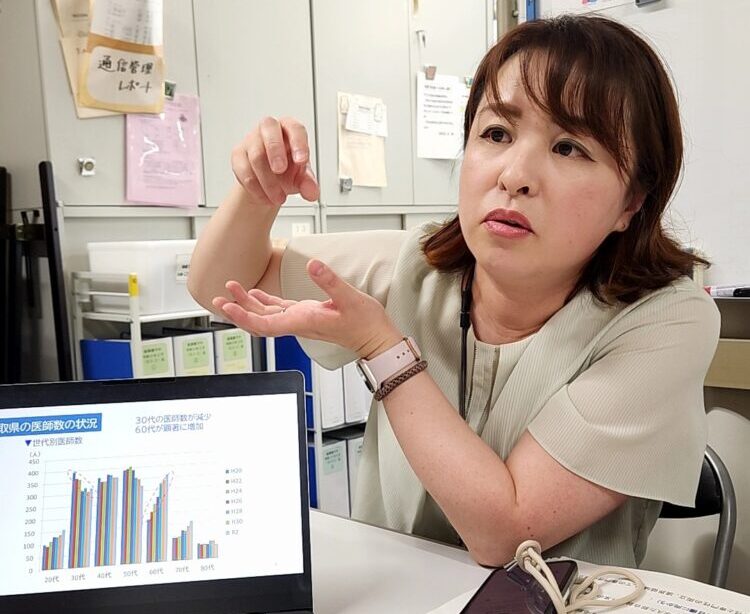
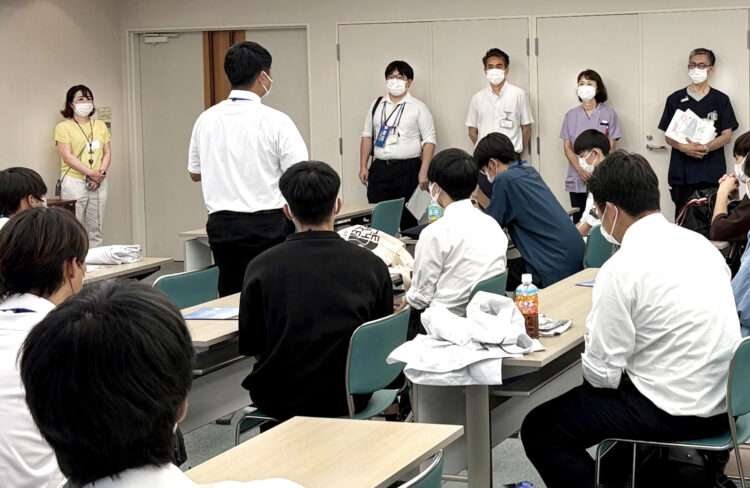
Having studied at Jichi and now teaching at Tottori University, she compared the characteristics of the two schools.
Jichi Medical University is an "intensive education model" that places mission and mandatory service at the forefront. It minimizes liberal arts courses and focuses students early on medical and community medicine curricula. It is also characterized by deploying graduates as clinical instructors to send students out to community medicine sites across the country. However, shortcomings include insufficient attention to individual career development and a strong atmosphere of 'you must do it' that can be prescriptive.
By contrast, Tottori University School of Medicine is closer to a "mixed model," with general admissions and regional admissions coexisting in approximately a 7:3 ratio. Although it is gradually strengthening its community medicine education, it is regrettable that students' experience with community medicine differs depending on the admission track, and that there is some negative sentiment about allocating slots to the regional admissions track.
Tottori University's community medicine curriculum is designed in stages. In the first year, students learn basic community medicine and observe the field. In the third year, they learn diagnostics and participate in research. In the fourth year they study family medicine, home-based care, and geriatrics, and in the fifth and sixth years they take charge of outpatient and inpatient care and provide health education at Hino Hospital and clinics. Through this process, students do not simply acquire medical knowledge but develop a perspective of viewing the community together with their patients.
She explained that above all, hands-on experiences engaging directly with patients have a major impact on students' attitudes and career choices. "If university hospital rotations are observational, with students watching from the side, community medicine rotations are experiential education in which students engage directly with patients in the role of a primary physician," she said. "Through these experiences, students learn responsibility and deepen their awareness as healthcare professionals. Ultimately, meeting residents directly and building relationships is the greatest value of community medicine," she emphasized.
There is also a distinctive curriculum that studies communication skills. At Tottori University School of Medicine, underclassmen learn sign language to communicate with people with hearing impairments. The school also runs a 'Human Communication Program' for first- and second-year students. In this program students are divided into small groups to learn and discuss ways of communicating with others and professional attitudes through artistic activities or film appreciation. This education is a process that helps students understand medicine not just as a technical skill but as relationships with people.
The wall of mandatory service — only about 30% remain
That is not to say Japan's regional healthcare system is flawless. Jichi Medical University and the special regional quota system have sustained medicine in remote areas, but a problem has emerged where even Jichi graduates leave for cities after completing their mandatory service. According to Kamimoto, only about 20–30% remain in the region after service. This leaves smaller regional hospitals short of mid-level physicians to mentor younger colleagues.
As someone who manages the careers of physicians in Tottori Prefecture, this situation is a major concern for her. Kamimoto said, "Because doctors can make practical choices, such as prioritizing family or pursuing specialization, relying solely on 'fulfillment' or 'a sense of mission' is not enough for the community medicine system to be sustainable. It is not just young doctors who should be asked to work in the regions; senior physicians must also go out to regional hospitals to provide clinical and educational support so residents can receive care with confidence," she emphasized.
She also emphasized the importance of generalist physicians. The generalist physician system, established in 2018, is similar to family medicine but plays a role beyond simple treatment, supporting patients' post-discharge living and social reintegration. "Currently, generalist physicians make up only about 1–2% in Japan. Going forward, we need to increase the number of generalist physicians to take on primary care and establish a system that connects patients to specialists when necessary," she said.
A message for Korea, where strengthening community medicine has become a key issue
Professor Kamimoto's story is not unique to Japan; it resonates in Korea as well. Recently, a bill was proposed in Korea to select medical students through regional or public physician admission tracks and require ten years of mandatory service after licensure. This parallels Japan in that the need for community and public healthcare is growing. However, criticisms that simple mandatory service has a limited effect on retention have repeatedly surfaced in Korea as well.
She said, "To cultivate community physicians, it is necessary to have experiences within the educational system that build relationships." Students need to actually live with local residents, feel the joy of 'working for someone,' and meet senior physicians in the field to instill a positive image. She also proposed curricular and institutional support to systematically teach skills such as generalist practice, home-based medical care, and multidisciplinary collaboration, and to link these to specialist certification pathways.
Of course, Japan's systems and Korea's realities differ. Japan is a super-aged society where home-based medical care and multidisciplinary collaboration are already established, while Korea is still at the stage of discussing strengthening primary care and expanding home visits. Yet the two countries align in direction. Her message carries significant implications for Korea's current discussions on public medical schools beyond mere anecdote.
"I hope that community medicine in Korea will also reach a future where it is chosen out of hope rather than obligation."
⋅ Interview interpretation and reporting assistance: Interpreter Jo In-sook
This project received support from the Press Promotion Fund, established with government advertising fees.