A South Korean research team has succeeded in removing a key substance implicated in Alzheimer’s disease using ultrasound.
Alzheimer’s disease occurs when a protein called “amyloid beta” accumulates excessively in the brain. This protein tends to clump together; as it hardens and builds up, it can disrupt signal transmission between nerve cells or even kill the cells.
These clumped deposits are called “amyloid plaques.” Among them, the “fibrillar structure form,” in which proteins are tightly intertwined like tangled yarn, and the “oligomer form,” which is considered the most neurotoxic, are difficult to break down and are associated with a poorer prognosis.
Against this backdrop, a team led by Professor Jae-ho Kim of the Department of Neurology at Hallym University Dongtan Sacred Heart Hospital announced on the 23rd the results of a study in which amyloid plaques were removed in an experimental mouse model using only the mechanical energy of ultrasound, without administering drugs. The research was conducted jointly with Dr. Hyung-min Kim of the Bionics Research Center at the Korea Institute of Science and Technology (KIST) and a team led by Professor Young-soo Kim of the College of Pharmacy at Yonsei University.
The researchers focused on a method that concentrates the vibrational energy of ultrasound on a specific area of the brain to physically break the bonds within amyloid plaques. In preliminary validation using in vitro culture experiments, ultrasound removed up to 62% of the amyloid fibrillar structure form and up to 65% of the oligomer form.
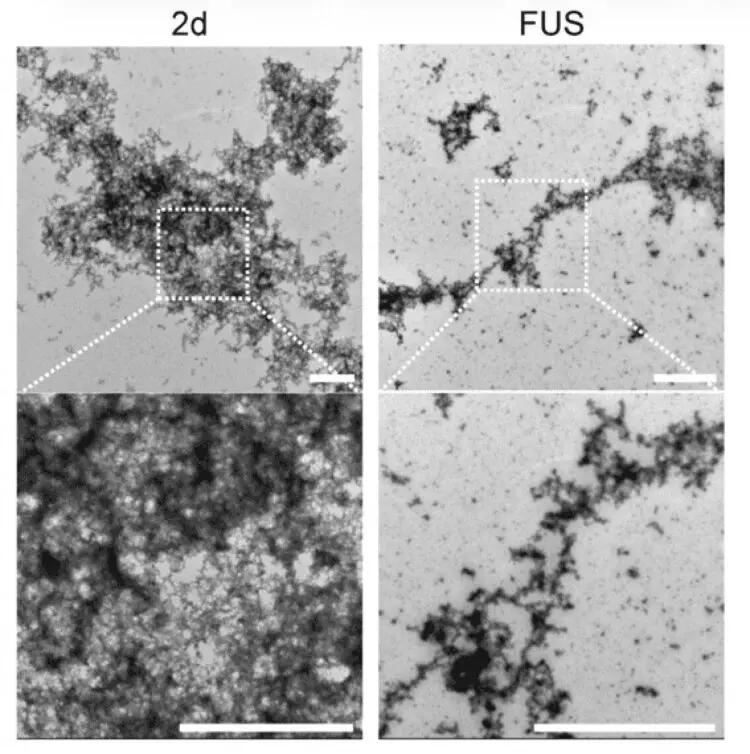
When the ultrasound-based removal method was then applied to experimental mice with Alzheimer’s disease, both the number and size of amyloid plaques in the brain decreased markedly. In particular, after treatment, the mice’s blood amyloid concentration increased by about 66%. According to the research team, this suggests that amyloid broken down in the brain may have been cleared through the bloodstream.
A similar effect was observed in a “human-derived neuroblastoma cell line,” which has biological characteristics very similar to human nerve cells. When typical amyloid aggregates were administered to this cell line, the cell death rate was 18%; in contrast, when aggregates that had undergone ultrasound treatment were administered, the death rate fell to 10%. This indicates that ultrasound not only physically pulverized the protein clumps but also reduced their toxicity.
These findings are drawing attention as a potential alternative to the latest dementia antibody therapies, which have recently faced heightened scrutiny over side effects. Current next-generation treatments such as “lecanemab” and “donanemab” work by recruiting immune mechanisms to target and clear amyloid beta. While their therapeutic effects have been demonstrated, high costs and the risk of serious adverse events—such as brain swelling and brain hemorrhage—have been cited as limitations.
Professor Jae-ho Kim said, “The technology demonstrated this time could be applied as a core technology for treating various neurodegenerative brain diseases,” adding, “We will devote ourselves to research so that we can provide real hope to suffering patients and their families.”
The results of this study are scheduled to be published next January in the international journal 《Theranostics》. In recognition of the excellence of this research, the researchers were also named among the “People Who Shined Korea (Hanbitsa),” selected by the Biological Research Information Center (BRIC).