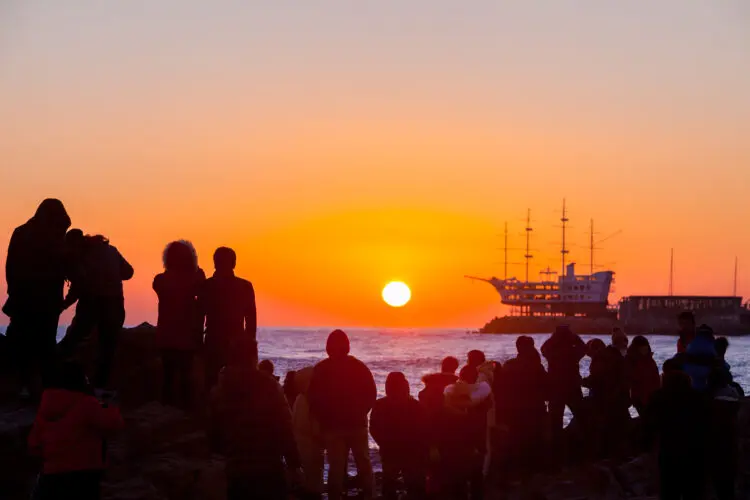
Every year on New Year’s Day, there are certain places that people flock to. It’s because of the symbolism of seeing the sun rise first—and because even a single photo can announce the “start of the new year.” These days, a sunrise trip doesn’t end with simply watching the sun. The key is capturing a memorable proof shot along with the New Year atmosphere. There’s always a reason why proof photos pour out of the most popular sunrise spots.
Jeongdongjin ㅡ A sunrise spot where the sun rises straight ahead
Jeongdongjin in Gangneung, Gangwon-do, is considered a place where the sunrise composition is already perfectly set. The ocean horizon, railroad tracks, and sandy beach fit into a single frame, with the sun rising directly in front of you. With almost no structures blocking the view, you can clearly watch the entire process of the sun coming up, and naturally capture even the moment the sky’s color changes. For proof shots, a stable composition places the tracks along the bottom and the horizon in the center, and the time when the red dawn glow still lingers before the sun fully rises yields the most polished photos. After sunrise, it’s easy to roll into a morning itinerary that continues to Anmok Beach, Gangneung Coffee Street, and the Chodang Soft Tofu Alley.
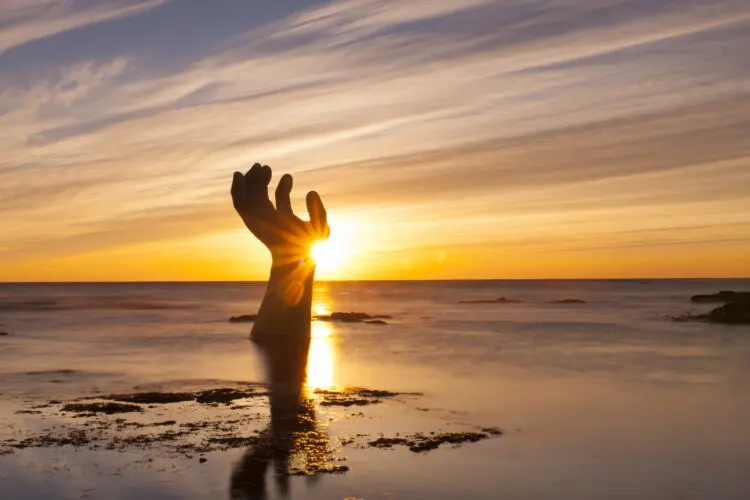
Homigot ㅡ Welcoming the New Year between the “Hands of Harmony”
Homigot in Pohang, Gyeongsangbuk-do, is where the symbolism of the “first sunrise of the new year” feels the most vivid. Because the sun rises between the “Hands of Harmony” sculpture out at sea, you can get a proof shot without any special staging. The moment when the sun aligns perfectly between the hands is brief, so it’s important to claim your spot in advance. For portraits, shooting mainly silhouettes with the hand sculpture as the backdrop brings out the mood. After sunrise, it’s a great idea to head to Guryongpo Harbor to take in the port scenery and start the morning Pohang-style with gwamegi (semi-dried saury) or mulhoe (cold raw fish soup).
Seongsan Ilchulbong ㅡ A sunrise rising beyond the crater
Seongsan Ilchulbong in Seogwipo, Jeju, is special because it’s a “sunrise you climb up to look down on.” The sun rises beyond the crater, overlapping with sea mist and red light to create a layered, three-dimensional scene. If you include part of the summit railing as a frame element, the sense of height and on-site realism comes through. Photos tend to look more complete in the early moments when the crater rim begins to glow, rather than after the sun has fully risen. After descending, it pairs well with warming up in the Seongsanpo area with abalone porridge or hangover soup, then continuing the morning to Seopjikoji or Gwangchigi Beach.
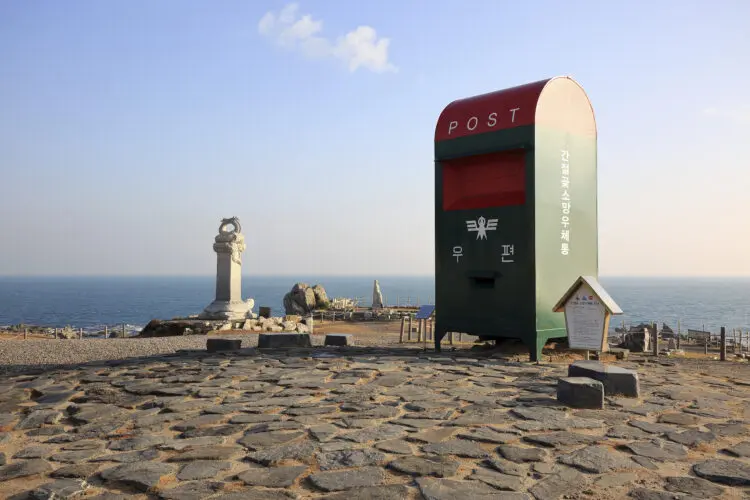
Ganjeolgot ㅡ A wide-open sunrise you can enjoy comfortably
Ganjeolgot in Ulju, Ulsan, has almost nothing to obstruct the view, so the entire horizon spreads out at a glance. You can take your time watching the surroundings gradually brighten as the sun rises, making it closer to a “relaxed sunrise experience.” For proof shots, a panoramic composition that leaves plenty of space for the sky works especially well, and placing a person small near the bottom of the frame helps the landscape stand out. With gentle terrain, it’s also an easy visit for families, and after sunrise you can take a coastal walk or head into Ulsan for brunch or gukbap (rice soup) to start the day.
Chuam Chotdaebawi ㅡ The place with the highest photo “finish” for sunrise shots
Chuam Chotdaebawi in Donghae, Gangwon-do, is often cited as the most reliably “complete” location for sunrise photos. The silhouette of Chotdaebawi and the sun create a strong contrast, producing a striking scene in a short window of time. For proof shots, placing the rock prominently in the foreground and keeping the sun smaller brings out a dramatic mood. Shooting from the observatory lets you include the waves and cliffs as well, making the scene even richer. After sunrise, you can head to Mukho Port or downtown Donghae and enjoy a hearty breakfast such as grilled fish or daegu-tang (cod soup).