Medical aesthetic device manufacturer Wontech is expanding beyond its traditional hospital- and clinic-centered B2B model to enter the global home beauty segment. By moving into the consumer market, the company aims to apply the technological expertise and clinical credibility established through its professional medical devices to create a new long-term growth engine.
Speaking on "Knocking on the World’s Door with Home Beauty Devices" at the MedTech Insight 2026 BeautyTech Innovation Forum—hosted by the Korea Health Industry Development Institute on Sept. 15—Wontech Chief Technology Officer Seo Young-seok outlined the strategic rationale and commercialization process behind the company's shift toward B2C.
B2B Structural Limits and Growing Overseas Consumer Demand
Wontech has built a strong market presence through professional aesthetic systems, including the Oligio noninvasive radiofrequency (RF) lifting device, the Titan high-intensity focused ultrasound (HIFU) system, the PicoCare picosecond laser, and the Lavieen fractional laser. While the company has driven revenue by supplying equipment and generating recurring sales through replaceable tips and cartridges, the B2B model faces inherent growth limits due to the finite number of medical institutions worldwide and extended repurchase cycles.
In contrast, the consumer beauty market offers vast expansion potential. According to market data presented by Wontech, the global beauty tech market combining artificial intelligence and digital technology is projected to grow from $66.2 billion in 2024 to $172.9 billion by 2030, representing a compound annual growth rate of 17.9 percent.
Direct feedback from international markets also accelerated the company's B2C push. Overseas distributors and partners repeatedly asked whether Wontech offered home-use devices utilizing its core clinical technologies. Seo highlighted historical precedents, such as Tria Beauty—founded by former Lumenis engineers—which introduced the first FDA-cleared at-home laser hair removal device in 2008 before its acquisition by Beauty Tech Group in 2024.
Overcoming Internal Debate with a Bundled Device-Cosmetics Strategy
Despite the market potential, entering the B2C segment sparked internal debate within Wontech. Concerns were raised that dividing R&D resources might dilute the brand trust cultivated within professional medical communities. Additionally, developing cosmetics presented regulatory and manufacturing requirements distinct from the company's existing hardware operations.
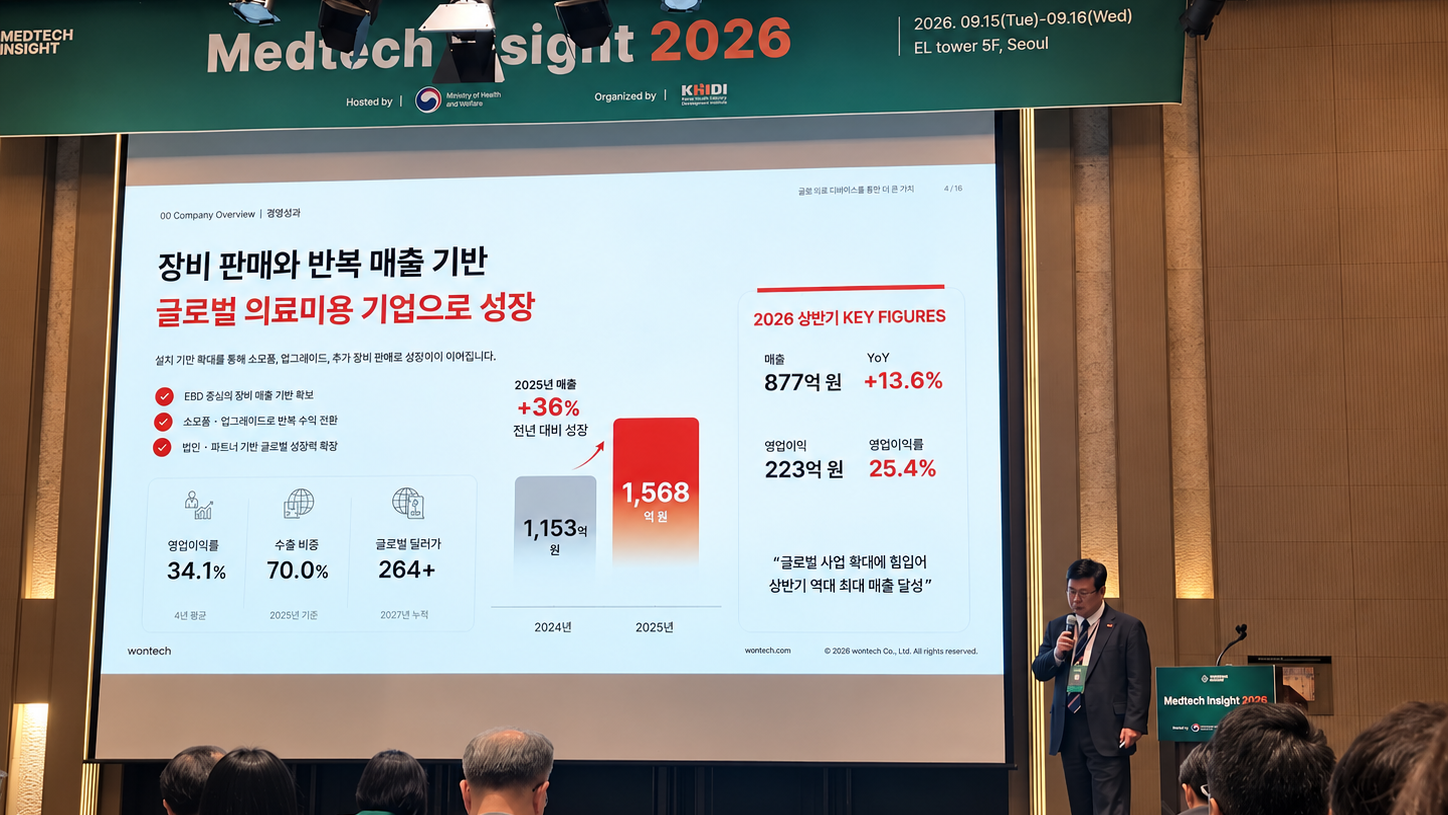
However, Wontech's strong financial momentum provided a solid foundation to pursue new growth pillars. The company reported revenue of 156.8 billion KRW in 2025, up 36 percent from 115.3 billion KRW in 2024, with exports accounting for 70 percent of total sales. Holding more than 264 regulatory approvals across 32 countries and a four-year average operating profit margin of 34.1 percent, Wontech sustained its growth into the first half of 2026, recording 87.7 billion KRW in revenue and 22.3 billion KRW in operating profit.
To differentiate its B2C offering, Wontech is adopting a bundled strategy that pairs home beauty devices with specialized skincare formulations. "The key is developing home beauty devices and cosmetics together so consumers build a habit of continuous use," Seo explained.
To bridge its hardware-focused R&D capabilities with cosmetic science, Wontech partnered with a specialized Original Design Manufacturer (ODM) and established a dedicated task force to manage device output, absorption dynamics, and launch timelines simultaneously. By coordinating development into a unified pipeline, Wontech aims to mirror its B2B "device and consumable" business model in the consumer space as "home devices and skincare consumables"—bringing hospital-validated clinical technology directly into daily routines.