Humanoid robots capable of responding to voice commands and handing surgical instruments directly to doctors are entering operating rooms.
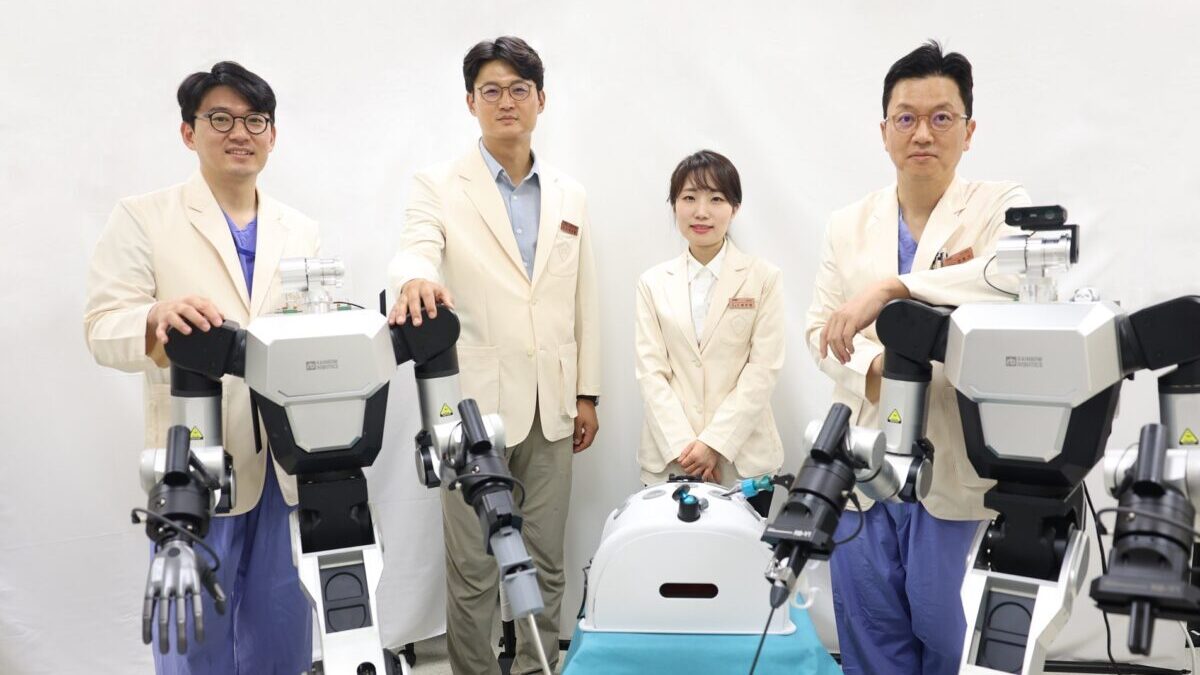
Samsung Medical Center announced on September 9 that it will publicly unveil its newly developed humanoid surgical assistant robots, which recognize spoken commands from clinicians and manage surgical tools. Developed over more than a year, the system will be presented to reporters during a live demonstration at 3 p.m. on September 16 at the Samsung Life Insurance Irwon Station Building in Gangnam-gu, Seoul.
Completing the Surgical Instrument Workflow
The primary demonstration will highlight a humanoid robot assuming duties traditionally performed by a scrub nurse. Designated as Robot No. 1, the machine recognizes the lead surgeon’s voice requests and hands over the specified instrument, automatically adjusting the handle orientation and grip angle so the surgeon can grasp it safely. After the tool is used, the robot receives it back, returns it to its designated tray, and tracks remaining instruments while anticipating subsequent requests.
"The key innovation is not merely handing over a tool once, but executing the entire instrument circulation cycle—request, handoff, use, retrieval, and organization—just as a human nurse does during actual surgery," said Professor Jung Yong-gi of the Department of Otolaryngology at Samsung Medical Center.
In a secondary demonstration, a robot will hold instruments directly to perform basic procedures, including tissue incision, dissection, and suturing. Operating under a master-slave control system, the robot mirrors the surgeon’s movements in real time as the clinician controls the system while watching a monitor.
"We are not yet at the stage where the robot autonomously assesses patient conditions and performs surgery independently," Professor Jung Yong-gi clarified. "Rather, skilled medical personnel operate the robot’s dual arms and surgical instruments in real time using a control console."
A World First in Dual-Robot Collaboration
The event will also mark a world-first demonstration of a three-way collaboration involving two humanoid robots working simultaneously alongside a human physician.
In this setup, Robot No. 1 fulfills the nurse’s role, while Robot No. 2 manages surgical field visualization and assistance. Holding a laparoscopic endoscope in its left hand, Robot No. 2 dynamically adjusts its position to keep the surgical site centered on the monitor. Simultaneously, it uses surgical forceps in its right hand to gently retract tissue upon the surgeon’s instruction.
"Because a single humanoid assistant manages both the endoscopic camera and tissue retraction, it can seamlessly coordinate camera angles with workspace adjustments," Professor Jung Yong-gi explained. While the system mimics open and laparoscopic surgical workflows, the upcoming demonstration will take place in a simulated environment rather than on live patients.
Global Race for Operating Room Robotics
Efforts to integrate humanoid robotics into surgical environments are accelerating globally. Taiwan’s Foxconn operates "Nurabot" for hospital logistics and co-developed "Scrubbot"—a voice-activated instrument-passing robot built on Nvidia’s Isaac AI platform—alongside Taichung Veterans General Hospital and Yuanhai Tech. Additionally, University of California, San Diego researchers reported in Nature on July 8 that they successfully removed a pig’s gallbladder using remotely operated humanoid robots.
Samsung Medical Center’s "world first" distinction centers on synchronized, three-way collaboration where two humanoid robots and a human surgeon execute a procedure together. A major operational advantage of the system is its compatibility with standard infrastructure.
"There is no need to construct specialized surgical suites; these robots operate within standard operating rooms using existing human-designed surgical instruments," Professor Jung Yong-gi noted. "This compatibility will allow rapid deployment once commercialized."
Government Support to Tackle Staffing Shortages
Development began after Samsung Medical Center was selected in 2025 to lead a national project under the Korean-style ARPA-H initiative. Samsung Medical Center formed the "Orchestra" consortium alongside Rainbow Robotics, Aiden Robotics, Hahaeho, the Samsung Advanced Institute for Health Sciences & Technology, Seoul National University, the National Cancer Center, and Jeonbuk National University Hospital.
Supported by the Ministry of Health and Welfare and the Korea Health Industry Development Institute (KHIDI), the 54-month project runs from July 2025 through December 2029 with 13.835 billion won in government R&D funding.
"We expect this technology to stabilize surgical operations amid limited medical personnel and help fill crucial staffing gaps in high-demand environments, including night shifts, emergency rooms, and essential care fields," said Professor Jung Yong-gi.