Researchers have developed a diagnostic technology capable of reading molecular signals associated with cardiovascular disease from a single drop of blood plasma in roughly 10 minutes. By bypassing the labor-intensive steps traditionally required to isolate microscopic particles in the blood and extract genetic material, the new technique sharply streamlines the diagnostic workflow.
A joint research team led by Lee Jun-yeop, a professor of ophthalmology at Asan Medical Center, and Hong Seon-gi, a professor of chemical physics at Daegu Gyeongbuk Institute of Science and Technology (DGIST), announced on Aug. 18 that it has developed a diagnostic platform named "SAFE" that rapidly analyzes microRNA (miRNA) in plasma.
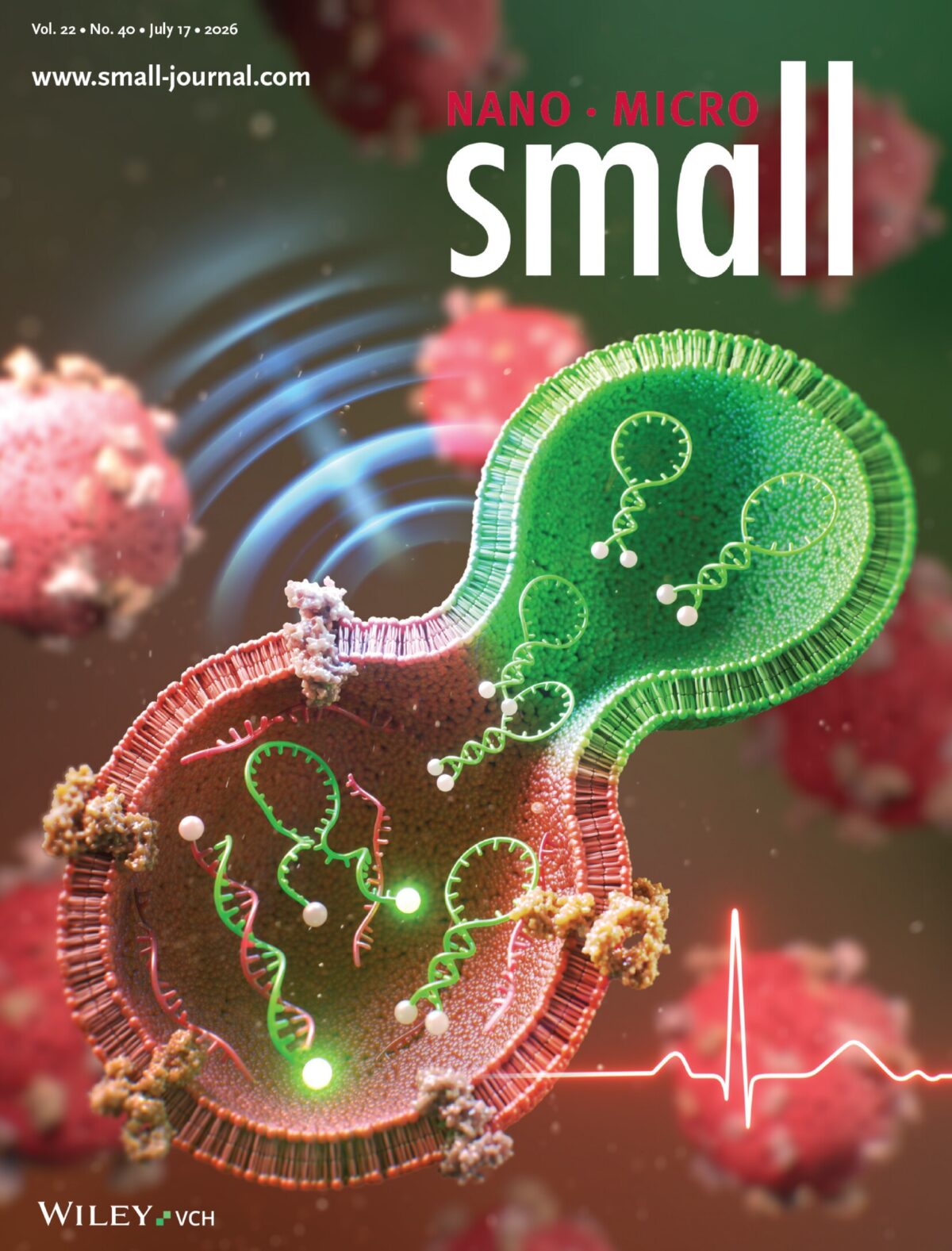
The findings were published as a cover story in the international scientific journal Small, which covers nanoscience and biomaterials.
Reading Disease Signals in Extracellular Vesicles
Human cells continuously release nanoscale, pouch-like particles called "extracellular vesicles" into the bloodstream. These vesicles carry proteins and genetic material reflective of cellular health, and their contents shift when disease develops. Tracking these molecular shifts offers valuable diagnostic clues.
The research team focused on microRNAs inside these extracellular vesicles. MicroRNAs are small genetic molecules that regulate various cellular functions. Because their composition and abundance vary depending on specific pathologies, microRNAs are widely studied as biological markers for disease.
Detecting these signals historically required isolating extracellular vesicles from blood plasma and subsequently extracting the RNA contained within—a multi-step process demanding specialized equipment and substantial time.
The SAFE platform eliminates these intermediate steps. By using ultrasound to fuse test materials directly with extracellular vesicles in plasma, the platform enables probes to react with target microRNAs and emit light. This direct-analysis method reduces the detection window to about 10 minutes without requiring separate vesicle isolation or RNA extraction.

Clinical Validation and Potential Applications
The team validated the SAFE platform using plasma samples from 35 individuals: 20 patients diagnosed with cardiovascular disease and 15 healthy controls. The analysis targeted two microRNAs linked to cardiac muscle damage: miR-133a and miR-208a.
By measuring these two biological markers, SAFE distinguished cardiovascular patients from healthy controls with 91.4% accuracy. Researchers emphasized that the 10-minute timeframe refers specifically to the time required to detect and analyze microRNA in plasma, rather than a complete clinical evaluation.
While the study represents an early validation stage involving a small cohort, the technology demonstrates strong potential. Before clinical adoption, its performance must be confirmed through larger patient trials and evaluated against conventional diagnostic methods such as electrocardiograms (ECG) and blood tests.
If fully validated, SAFE could serve as a complementary diagnostic tool in emergency settings where rapid decision-making is critical, such as evaluating suspected myocardial infarction alongside troponin tests and ECGs. Furthermore, adjusting the target microRNAs could expand the platform's application to oncology, neurodegenerative conditions, and ophthalmic diseases.
"We have developed a technology capable of performing complex extracellular vesicle analysis in just 10 minutes," Lee said. "We expect it will help clinicians rapidly and accurately diagnose diseases and guide treatment decisions in real-world clinical settings."
"SAFE's key strength lies in its ability to analyze microRNA directly in plasma without isolating extracellular vesicles or extracting RNA," Hong added. "We plan to expand validation across a broader range of diseases and patient groups to turn this into a practical clinical diagnostic tool."