Inherited retinal diseases (IRDs) present significant diagnostic challenges: while many manifest with similar clinical appearances, effective treatment options and genetic counseling depend entirely on identifying the exact underlying gene mutation. With more than 300 genes linked to IRDs, pinpointing the precise causal variant has historically been a complex, time-consuming process.
To address this barrier, an international research team developed "Retina4IRD"—an artificial intelligence clinical decision support system designed to analyze routine ophthalmic imaging and patient metadata to narrow down suspect genes before ordering formal genetic tests. In a prospective randomized controlled trial, AI-assisted specialists achieved an 88.5% accuracy rate in identifying the true causal gene within their top five candidates, compared to 67.3% when specialists made clinical judgments independently.
The study was led by Prof. Han Jin-woo and Prof. Byun Seok-ho of the Department of Ophthalmology at Severance Hospital, alongside Prof. Lee Jun-won of the Department of Ophthalmology at Gangnam Severance Hospital. Their findings were published in the journal Nature Medicine.
Unlocking Treatment Opportunities Among 300 Causal Genes
Inherited retinal diseases represent a spectrum of rare genetic disorders—such as retinitis pigmentosa—characterized by progressive retinal degeneration that can ultimately lead to complete blindness. Identifying the specific causal gene is crucial not only for confirming a diagnosis, but also for predicting disease trajectory, providing accurate family inheritance counseling, and determining eligibility for gene-targeted therapies or clinical trials.
For instance, Luxturna, an approved gene therapy for inherited retinal dystrophy, is strictly indicated for patients with confirmed mutations in the RPE65 gene. Accurately pinpointing the mutated gene directly dictates whether a patient can receive life-changing treatment. However, diagnostic complexity remains high: identical gene mutations can manifest differently across individual patients, while distinct genetic abnormalities can produce virtually identical retinal damage.

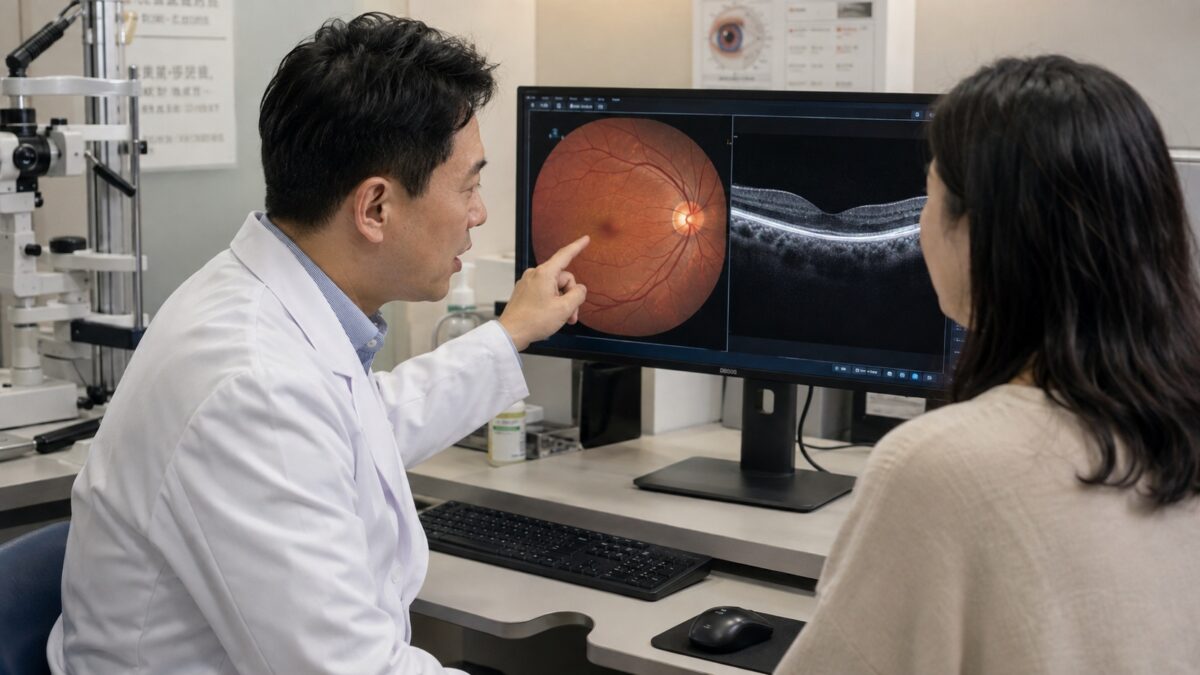
To streamline this process, Retina4IRD integrates fundus photography and optical coherence tomography (OCT) scans with clinical parameters, including age, sex, family history, age of symptom onset, and disease duration. Rather than relying solely on imaging, the platform evaluates multimodal data to rank the most probable candidate genes across 17 categories, focusing on genes with existing targeted therapies or active clinical trials.
The platform was trained and validated using data from 1,843 patients (3,376 eyes) across nine medical centers in South Korea, China, and Poland. During internal validation, the true causal gene was included in Retina4IRD’s top five predictions in 90.4% of cases, and achieved an 85.6% top-five accuracy rate in external validation cohorts.
Proven Utility in a Prospective Randomized Clinical Trial
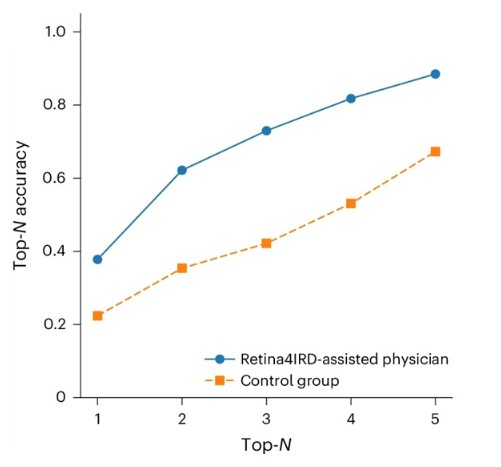
To evaluate its real-world clinical utility, the research team conducted a randomized controlled trial involving 300 patients with suspected IRDs, ultimately analyzing 295 confirmed cases. Clinicians were tasked with selecting five suspect genes for each patient, with one group receiving AI assistance and the control group relying solely on standard clinical evaluation.
When provided with Retina4IRD’s predictions, specialists included the true causal gene within their top five candidates 88.5% of the time, compared to 67.3% for the unassisted group. For top-single gene predictions, AI assistance boosted accuracy from 22.4% to 37.8%.
The researchers emphasize that Retina4IRD is not intended to replace formal genetic diagnostic tools, such as next-generation sequencing (NGS). Instead, it functions as a pre-screening decision support tool that optimizes gene prioritization prior to sequencing, potentially reducing unnecessary testing costs and diagnostic delays.
This trial marks the world's first prospective randomized controlled study validating an AI system that combines standard ophthalmic imaging with clinical metadata for inherited retinal diseases.
"Retina4IRD is designed not to replace physician judgment, but to serve as a pre-screening tool that narrows down candidate genes before genetic testing," said Prof. Han Jin-woo. "By enabling earlier identification of target genes, this system will help realize precision medicine for patients who require urgent intervention with gene therapies."