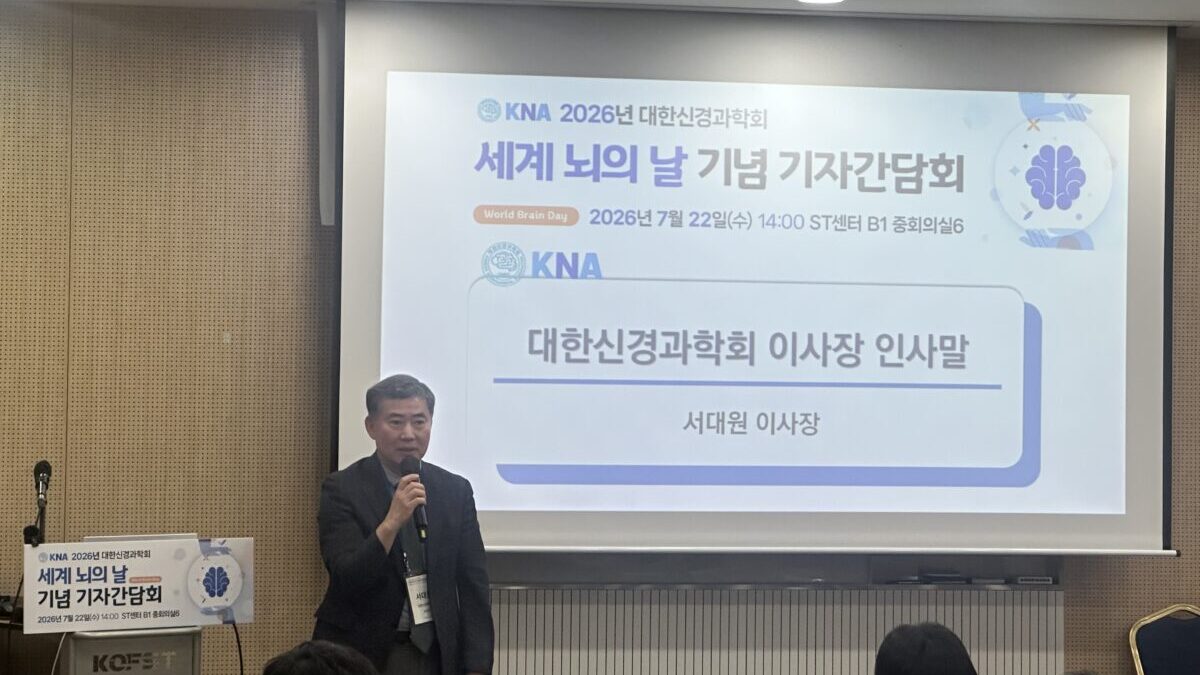
"In a super-aged society, brain diseases represent a core healthcare challenge that the nation must tackle collectively, far beyond the burden placed on individual patients," said Seo Dae-won, chair of the Korean Neurological Association and professor of neurology at Samsung Medical Center. "While advances in treatment technology are important, ensuring patient access to care and establishing an essential medical system are equally crucial."
Seo made the remarks at a press briefing hosted by the association on July 22 to mark World Brain Day 2026. He stressed the urgent need for a national strategy and a streamlined medical system that guarantees timely treatment for neurological disorders.
This year's World Brain Day theme, "Brain Health and Access for All," reflects a global consensus that everyone should have equitable access to neurological care regardless of their location or socioeconomic status.
As South Korea enters a super-aged era, neurological disorders such as dementia, stroke, Parkinson's disease, epilepsy, and cluster headaches have grown into pressing societal issues. Dementia alone accounts for 10 million new diagnoses globally each year, with cases steadily climbing in South Korea alongside its rapidly aging population.
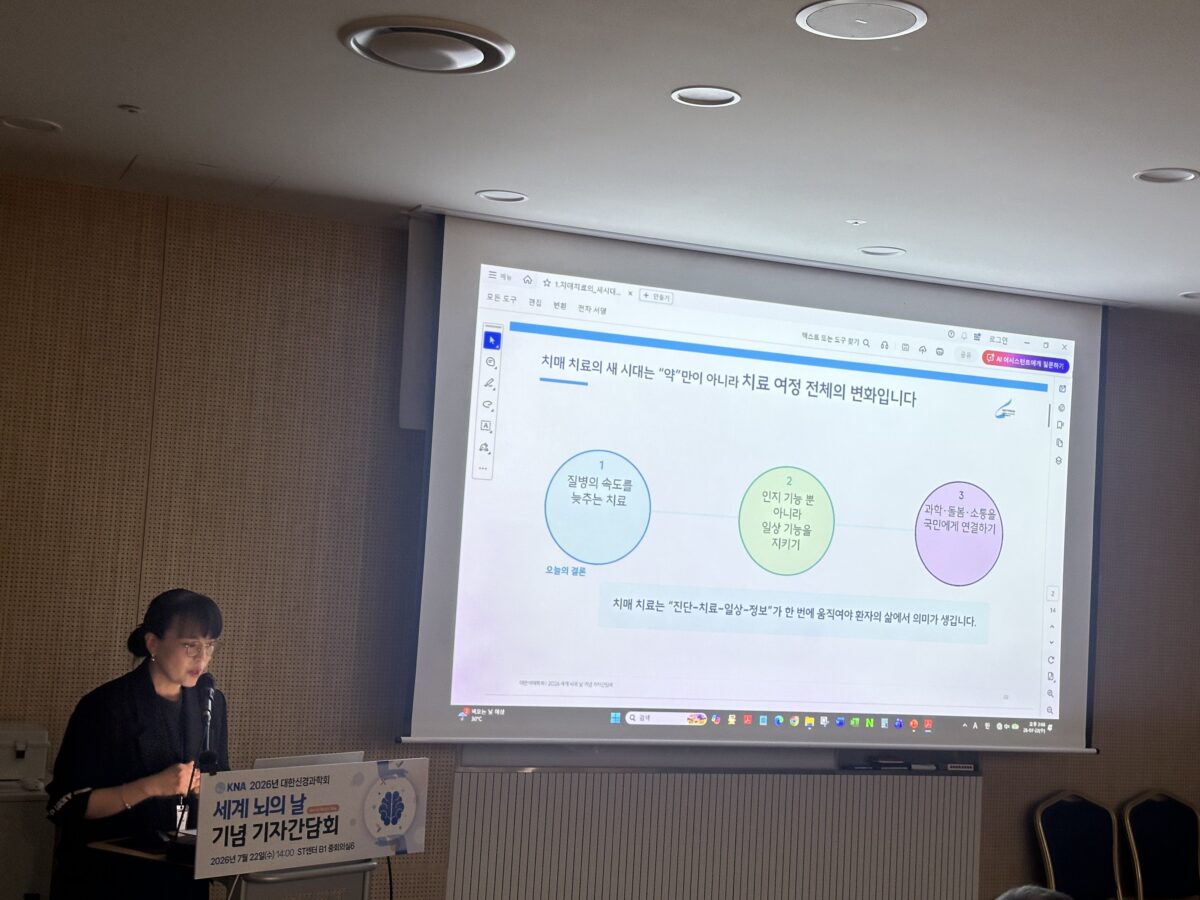
At the briefing, Kim Hee-jin, professor of neurology at Hanyang University Hospital, emphasized early diagnosis, safe treatment, and dignified long-term care as the pillars of dementia management. Kim, who serves as information director for the Korean Neurological Association and public relations director for the Korean Dementia Association, highlighted the "Everyday Praise" campaign. Run by the Korean Dementia Association since 2012, the initiative helps patients maintain daily living skills while easing the burden on caregivers.
"Dementia can affect anyone," Kim advised. "Starting in their 50s and 60s—a crucial time to reflect on brain health—people should undergo formal risk assessments to determine whether they have mild cognitive impairment."
Reforming emergency stroke systems and home-based care
Speakers at the briefing also called for urgent institutional improvements to emergency stroke care. Stroke—comprising cerebral infarction (a blocked blood vessel) and cerebral hemorrhage (a ruptured vessel)—is a severe, time-critical emergency.
"In cerebral infarction, approximately 2 million brain cells die every minute after a blood vessel becomes blocked," warned Kim Tae-jung, professor of neurology at Seoul National University Hospital and public relations director for the Korean Stroke Society. "Even though rapid treatment dictates patient survival and long-term disability, patients still face dangerous delays or rejections due to shortages of regional stroke centers, lack of specialists, and miscommunication between emergency rooms and specialized departments."
Currently, even when emergency rooms have open beds, a lack of neurological specialists prevents them from admitting stroke patients. To resolve this, the Korean Stroke Society proposed stationing dedicated neurologists in emergency departments centered on regional emergency medical centers. Kim Tae-jung noted that having a neurologist manage initial triage and communicate directly with emergency responders (119) and other medical facilities would significantly reduce transfer delays and hospital selection times.
The briefing also addressed broader neurological challenges, including the introduction of new Parkinson's disease medications, supply disruptions of emergency epilepsy drugs, and National Health Insurance coverage gaps for at-home oxygen therapy for cluster headaches.
Finally, participants emphasized the need for home-based medical care to relieve the burden on families caring for patients with severe degenerative diseases, such as amyotrophic lateral sclerosis (ALS) and advanced Parkinson's disease. The Korean Neurological Association identified the post-discharge transition period as the "golden window" for intervention. The association proposed a "shared care" model, where a hospital-based multidisciplinary team (comprising neurologists, nurses, and social workers) provides intensive care for one to three months following discharge before transitioning long-term care to community-based primary care hubs.
Addressing the economic feasibility of the model, Lee Sang-beom, director of Seoul Sinnae Clinic and vice chair for public relations at the Korean Association of Neurologists in Private Practice, noted, "For a shared care model to take root in clinical practice, medical fee schedules must be revised realistically. Under the current fee-for-service system, covering travel opportunity costs and team labor expenses remains unfeasible."