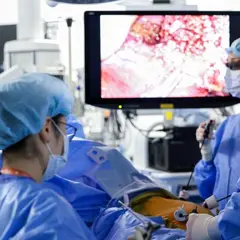
Most hospital patients never see the inner workings of an operating room. Kept strictly behind closed doors, it is a highly restricted zone. Inside its walls, however, a sophisticated matrix of life-support and environmental safety systems runs simultaneously, long before the primary surgeon makes the first incision.
The Critical Role of the Surgical Warming Cabinet
Maintaining precise thermoregulation is one of the most critical challenges during surgery. Under anesthesia, the human body’s natural ability to sense and respond to cold drops sharply, making patients—particularly older demographics—highly vulnerable to perioperative hypothermia.
Even a minor systemic drop of 1°C to 2°C can significantly impair platelet function and disrupt natural blood clotting, leading to increased blood loss. Furthermore, hypothermia triggers peripheral vasoconstriction (the narrowing of blood vessels), which reduces oxygen delivery to surrounding tissues, delays wound healing, and elevates the risk of surgical site infections.
To combat this, the operating room warming cabinet serves as a vital clinical device rather than a mere convenience. Intravenous (IV) fluids are meticulously warmed to 37°C to 40°C to prevent internal thermal shocks. Thermal blankets are maintained at 40°C to 45°C, and surgical drapes covering the operative field are pre-warmed to 35°C to 45°C.
Strict clinical protocols govern these devices; excessive heat can cause thermal injury or degrade medical supplies. For instance, blood intended for transfusions is strictly prohibited from standard warming cabinets and must instead be prepared using a specialized, dedicated blood warmer. Keeping a patient warm is a calibrated clinical intervention designed to minimize hemorrhage, fend off infection, and accelerate overall recovery times.
Engineering Clean Air as a Safeguard Against Infection
While dust and microorganisms remain invisible to the naked eye, atmospheric purity is a foundational cornerstone of surgical safety. Rigorous air management becomes paramount during orthopedic joint replacements or fracture fixations, where foreign implants or metal hardware are permanently embedded into the body.
Air channeled into modern surgical suites undergoes a rigorous multi-stage filtration process. Ambient air passes sequentially through a pre-filter, a medium-efficiency filter, and finally a high-efficiency particulate air (HEPA filter), systematically purging microscopic particles. Because bacteria rarely travel airborne independently—typically hitching a ride on microscopic dust particles—eliminating airborne particulates is the primary defense in modern infection control.
Aerodynamic pressure dynamics play an equally crucial role. Operating rooms are engineered to maintain positive air pressure, meaning the internal air pressure is kept higher than that of adjacent corridors. This structural design ensures that whenever a surgical door opens, clean air flows outward, preventing contaminated hallway air from entering the sterile field. This is the exact operational inverse of the negative-pressure isolation rooms utilized during infectious disease outbreaks to prevent pathogens from escaping.
To optimize this environment, premier surgical suites utilize laminar air flow systems. This advanced architectural design forces a continuous stream of sterile, HEPA-filtered air downward from the ceiling in a uniform parallel flow, swiftly pushing loose particles out through lower exhaust vents near the floor. Atmospheric integrity is treated as a measurable science, requiring routine audits of suspended particulates, active bacterial counts, pressure differentials, temperature, humidity, and airflow velocity.
Ensuring Electrical Continuity and Preventing Microshocks
The electrical architecture of an operating room must navigate a dual paradox: power must never fail, and current must never leak. Because anesthetized patients cannot consciously communicate or react to localized electrical shocks, the electrical grid must be entirely foolproof.
Surgical theaters are packed with high-demand electrical apparatuses, including anesthesia delivery systems, mechanical ventilators, overhead surgical illumination, electrosurgical units, diagnostic imaging, and complex robotic consoles. When medical devices are in direct contact with internal organs, even a minute, imperceptible stray current measuring mere tens to hundreds of microamperes (μA) can disrupt the heart's electrical pathways, potentially triggering fatal arrhythmias or ventricular fibrillation.
In standard commercial properties, a localized ground fault immediately triggers a circuit breaker, severing power to the grid. In a surgical environment, however, an instantaneous blackout midway through a complex procedure poses an immediate threat to patient survival.
To mitigate this risk, modern operating rooms are wired into an isolated power system (IPS) driven by a medical isolation transformer. This system prevents essential medical equipment from losing power during an initial primary ground fault. Instead, an integrated line isolation monitor (LIM) continuously evaluates the system's electrical integrity, sounding a visual and audible alert to the nursing staff without disrupting active power supply.
To guard against municipal blackouts, the infrastructure is backed by an uninterruptible power supply (UPS) capable of stabilizing voltage fluctuations and restoring full operational power within one second of an external grid failure, while secondary emergency generators stand by seamlessly in the background.
Architectural Evolution in the Era of Robotic Surgery
This rigorous approach to safety extends directly into the physical materials of the room itself. Unlike standard hospital wards, operating room walls and ceilings must feature perfectly smooth, non-porous surfaces optimized for rapid chemical disinfection. Minimizing joints, seams, and crevices leaves no structural weak points for dust or bacterial biofilm to colonize. To further streamline the environment, heavy instrument storage and medical cabinets are completely recessed into the walls, eliminating exposed horizontal ledges where particulates accumulate.
Flooring materials are laid seamlessly to prevent microbial traps and are infused with specialized compounds designed to dissipate static electricity, protecting sensitive diagnostic instrumentation from electrostatic discharge.
As medicine transitions further into the era of advanced robotic surgery and minimally invasive interventions, the structural demands placed on these spaces continue to evolve. Modern surgical robots are massive, high-power systems. Their articulate robotic arms require substantial physical clearance around the patient, while the primary surgeon operates from a separate, detached electronic console.
This technological integration introduces a dense network of high-definition fiber-optic cables, secondary visualization monitors, and significant localized power requirements into the sterile workspace. While surgical incisions have grown smaller and less invasive for the patient, the internal ecosystem of the operating room has grown vastly more complex, necessitating a parallel upgrade in HVAC, electrical infrastructure, and structural materials.
A prime example of this infrastructural adaptation can be found at Busan Bon Hospital, an institution that has maintained its clinical designation as a specialized joint hospital for 12 consecutive years. Under the leadership of Ha Sang-hoon, the hospital's CEO and chief director, the institution has operated advanced clean-room surgical suites since 2013. Recognizing the shifting demographics of an aging patient base alongside the expansion of robotic and minimally invasive orthopedic surgeries, the hospital recently executed comprehensive upgrades to its HVAC infrastructure, secondary isolated power systems, thermal warming cabinets, and internal finishing materials.
"Patient safety within a surgical suite cannot be achieved by a single piece of advanced technology," states Jung Yoon-tae, the administrative director of Busan Bon Hospital. "True surgical safety relies on an integrated ecosystem where air purification, electrical safeguards, thermal management, clinical traffic flow, and architectural finishing materials operate as a single unified system. As surgeries on elderly populations expand, proactively managing these hidden environmental risks prior to the first incision is paramount."
While the intricate mechanics of the operating room remain entirely unseen by the sleeping patient, these hidden systems serve as the ultimate frontline defense for human life—quietly absorbing, managing, and neutralizing risk while the patient rests secure.