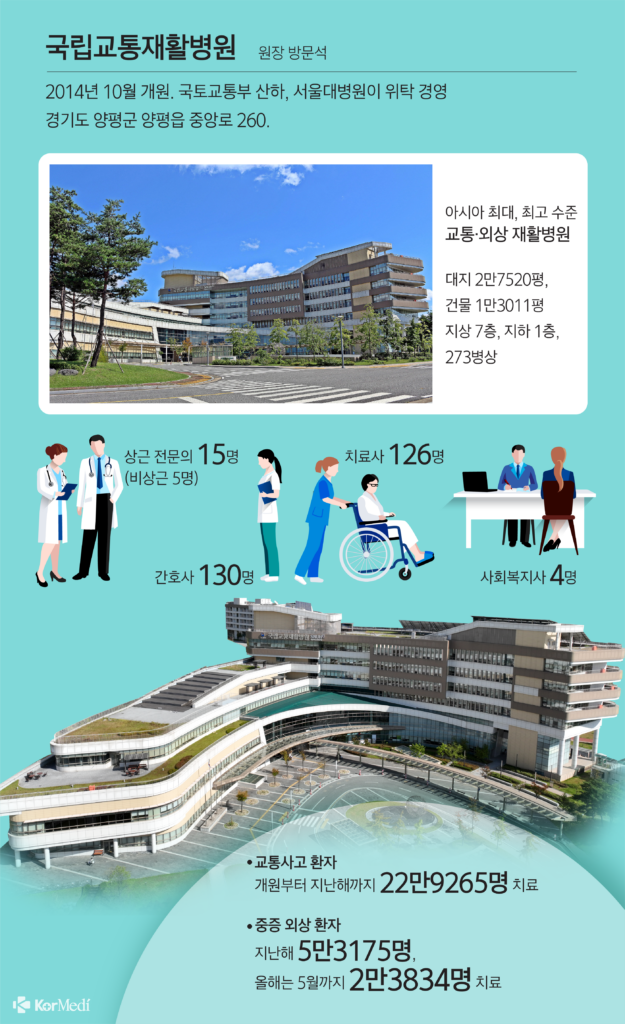
Yangpyeong Station in Gyeonggi Province is actively served by both the KTX and the Seoul metropolitan subway. A brief five- to six-minute taxi ride east from the station brings a massive seven-story complex into view, sprawling across roughly 27,000 pyeong of land with a total floor area of 13,000 pyeong. With relatively few people coming and going, the campus can seem deceptively silent from the outside. Step inside and head to the second floor, however, and you find yourself instinctively straightening your clothes. Across massive exercise therapy rooms spanning hundreds of pyeong—alongside cutting-edge robot therapy rooms and specialized aquatic pools—patients surviving devastating traffic collisions grit their teeth through grueling rehabilitation. This is Asia’s largest and highest-caliber medical facility specializing in traffic accidents and severe trauma, capable of providing top-tier rehabilitation therapy to 300 patients simultaneously.
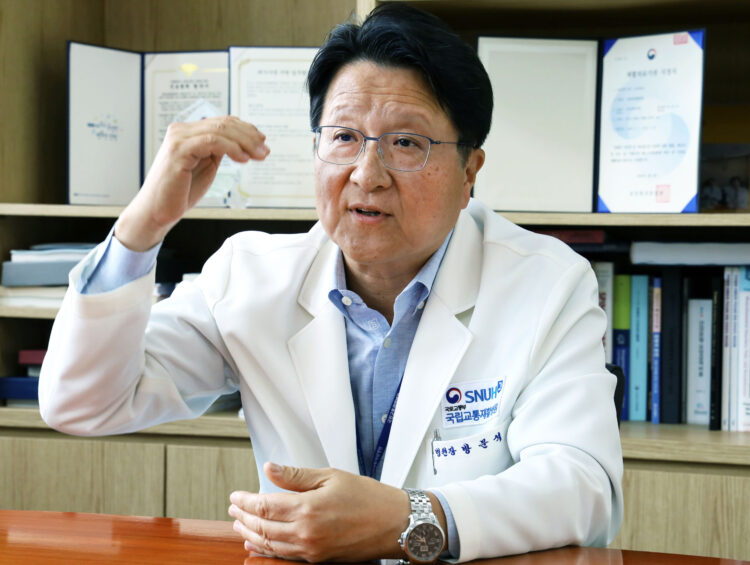
The National Traffic Rehabilitation Hospital, an affiliate of the Ministry of Land, Infrastructure and Transport, originally opened its doors in 2014. However, after racking up massive financial losses, it came perilously close to shutting down before pulling back from the brink to help catastrophic injury survivors build a second life. In a literal sense, it is an institution that successfully rehabilitated itself while rehabilitating its patients. At the center of this turnaround is its director, Bang Moon-seok, who at one point weathered fierce complaints from staff and patients' families alike by sticking resolutely to medical principles.
“Even now, many people do not fully understand what a specialized rehabilitation hospital does,” Director Bang notes. “Even within the medical community, some doctors struggle to differentiate it from a standard long-term care facility.”
I must admit, I don’t fully understand either. What exactly is the difference between a rehabilitation hospital and a long-term care hospital?
“A rehabilitation hospital provides intensive, specialized medical treatment to patients who have completed emergency care after an accident or illness, helping them recover physical and mental function or learn to live with the support of equipment and others. It is fundamentally distinct from long-term care facilities, which focus primarily on providing a place to live. In rehabilitation medicine, mobility is everything. If a patient cannot walk, a rehabilitation hospital works tirelessly to help them walk again—either independently or with the assistance of others. In particular, traffic-accident survivors frequently present with complex, multi-system disabilities simultaneously affecting the brain, spinal cord, vision, and hearing, so they require a highly coordinated, multifaceted treatment approach. Patients with severe trauma demand that exact same intensity of care.”
Because of these highly specific clinical needs among traffic-accident patients, patient advocacy groups—including the Korea Traffic Disabled Association and the Korea Association of Persons with Physical Disabilities—spent years lobbying for a dedicated medical center specializing in traffic accidents. A legislative foundation was first laid in 1999 under the Automobile Accident Compensation Guarantee Act, with detailed frameworks for specialized programs and facilities codified during a 2006 revision. In 2007, the then-Ministry of Construction and Transportation invited local municipalities to bid for the project, and Yangpyeong County ultimately secured the hospital after competing against roughly 30 other candidate sites..
But given the structural realities of South Korea’s medical system, it does not seem easy for a specialized rehabilitation hospital to turn a profit.
“Unfortunately, that reality is entirely true. In 2009, a Seoul National University Hospital research team that I led studied the economic feasibility of a specialized traffic rehab hospital. Our data clearly demonstrated that if the facility provided appropriate, uncompromised care within the standard National Health Insurance framework, an annual deficit of 10 billion won would be mathematically unavoidable. We submitted a transparent report stating that maintaining an Asia-top-tier facility would only be viable if the government committed to covering that operational shortfall.”
However, during the subsequent competitive bidding process to select an operator, Seoul National University Hospital was unexpectedly eliminated. In the Ministry of Land, Infrastructure and Transport's evaluation criteria, the bidder's financial soundness on paper was heavily weighted, and our application received a failing score because our institutional asset values were technically undervalued by accounting guidelines. In contrast, the Catholic Medical Center earned high marks after proposing potential private donations during their project presentation—leaving the question of systematic government support completely up in the air. Predictably, unable to withstand five consecutive years of crushing financial deficits without state backstopping, the operating institution withdrew, forcing the ministry to reopen the bidding process in 2019.
After leading all that foundational research only to be eliminated—and then later taking over the management of a hospital with mounting losses—there must have been significant opposition back at Seoul National University Hospital’s main campus.
“Even so, how could we allow a specialized rehabilitation hospital—something catastrophic patients had spent decades fighting for—to simply close its doors? We firmly presented the ministry with the data from our 2009 commissioned study. We didn’t demand unconditional handouts; instead, we requested proper equipment and dedicated research funding. On top of that, I insisted on a specific contractual clause stating that the government would absorb any operational deficits triggered by force majeure events, such as natural disasters or large-scale infectious outbreaks, rather than blaming the hospital or medical staff. I pushed for that safeguard after witnessing the devastating impact of the 2015 Middle East Respiratory Syndrome (MERS) outbreak, and that precise clause ended up keeping this hospital afloat when the COVID-19 pandemic struck.”
Upon assuming the directorship in 2019, Bang immediately went on the road. He visited regional trauma centers across the Seoul metropolitan area and Gangwon Province, alongside veterans' hospitals, workers' compensation facilities, and traditional rehab centers, explicitly mapping out the hospital's capabilities and establishing direct patient transfer pipelines. Initially, many administrators gave him a cold shoulder. However, as clinical outcomes spoke for themselves and patients showed vastly superior recovery rates at the traffic rehabilitation hospital, tertiary hospitals and regional trauma hubs began routinely transferring their most complex cases directly to Yangpyeong.
Simultaneously, Bang initiated sweeping internal reforms soon after taking office. He expanded the specialized medical staff and introduced a rigorous hospital-wide evaluation framework. Some internal critics viewed these moves with deep suspicion, questioning why he was hiring more physicians into an active deficit. He maintained constant, transparent dialogue to dismantle the lingering anxiety and distrust among employees who felt they had been abandoned during the previous operational transition.
He also strictly regulated access to inpatient wards. He established hard rules permitting entry only to authorized individuals with official electronic passes. When people routinely ignored the guidelines, the hospital installed physical screen doors and mandated secure card access. Some guardians and private caregivers openly revolted, labeling him a "crazy director." Furthermore, cooking inside patient rooms was completely banned. At the time, it was a widespread habit for families and private caregivers to prepare meals at the bedside—some were even boiling kimchi stew on portable gas burners right next to recovering patients. When the hospital enacted the ban, people protested fiercely, accusing the administration of denying patients a home-cooked meal. The criticism was relentless, with detractors claiming that a detached institution like Seoul National University Hospital, completely clueless about how the real world works, was cruelly severing the bond between families and individuals who had become disabled through no fault of their own.
But Bang refused to waver. Guided by his core conviction that a rehabilitation hospital must operate strictly as a place of advanced medical treatment, he pushed ahead with uncompromising principles to maximize his patients' ultimate return to a normal life. The profound wisdom of those hygiene and security protocols became indisputably clear when the pandemic hit.
Improved public relations and strict hygiene protocols alone cannot fully account for the exceptionally high satisfaction rates reported by your patients and their guardians. Could you explain the core clinical competitiveness of the hospital itself?
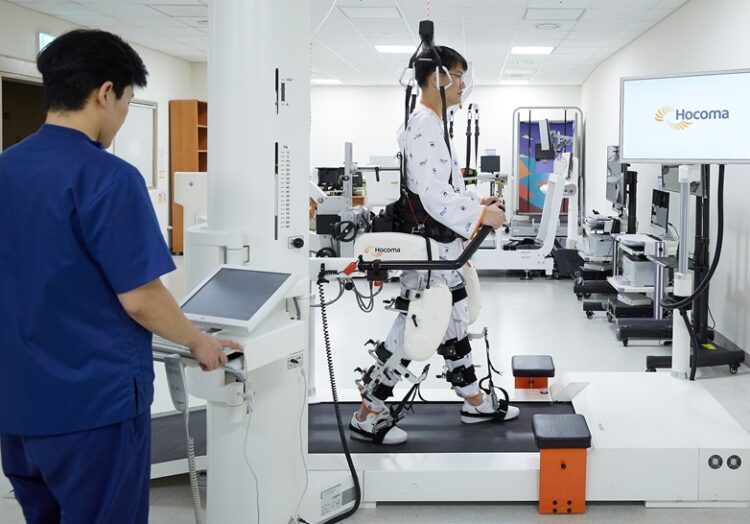
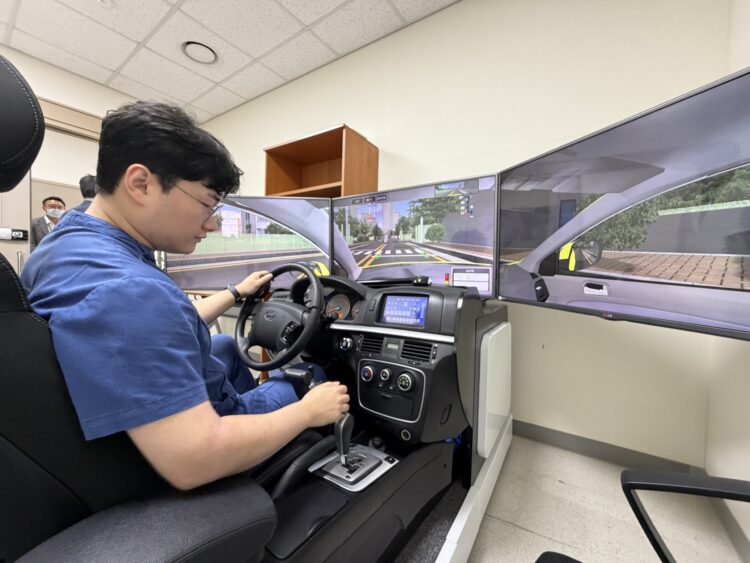
“Both our baseline staffing ratios and therapeutic equipment are at the absolute highest level in Asia. On our second floor, we have consolidated roughly 1,800 pyeong into an advanced therapeutic hub. This space houses our massive exercise therapy complex, a cutting-edge robot-assisted therapy suite utilizing international and domestic technologies, an advanced aquatic therapy facility with specialized pools, and a specialized driving rehabilitation unit designed to help patients safely return to the road based on their specific physical adaptations. This infrastructure enables a wide range of highly customized, symptom-specific treatment tracks. Floors four through six are also anchored by dedicated, localized therapy units on each level.
The passionate care provided by our outstanding medical staff dispatched directly from Seoul National University Hospital is also something we take immense pride in. Our multidisciplinary clinical team—which seamlessly unites specialists in rehabilitation medicine, internal medicine, psychiatry, and otolaryngology with highly trained nurses, physical therapists, occupational therapists, speech therapists, and social workers—is world-class. For context, Professor Cho Seung-ho, a preeminent national authority on swallowing disorders in otolaryngology, willingly chose our hospital as his 'second workplace' to continue his practice after retirement.”
The direct, real-time collaboration with the main Seoul National University Hospital network provides an invaluable safety net for patients. Patients navigating profound neurological or physical disabilities can rapidly develop severe pressure sores if clinical surveillance slips even slightly. To combat this, a plastic surgeon reviews our inpatients once a month, and a specialized trauma surgeon conducts evaluations every two weeks. If a pressure sore is detected, the patient is seamlessly coordinated and transported to Seoul for immediate surgical intervention. Additionally, urologist Oh Seung-jun visits our campus every Friday to personally evaluate neurogenic bladder complications. If he flags an advanced issue, the patient is transferred directly to Seoul National University Hospital on Sunday and undergoes targeted surgery first thing Monday morning. This seamless, one-stop clinical pipeline completely eliminates the agonizing logistical burden that forces families to wander from hospital to hospital in search of specialized care.
Furthermore, the moment a patient is admitted and our medical staff completes their baseline clinical evaluations, the hospital convenes a comprehensive "family meeting." This mandatory roundtable brings together the patient, their guardians, the attending physician, primary nurses, physical and occupational therapists, and clinical social workers to collaboratively solidify the long-term inpatient care plan. The hospital repeats these interdisciplinary meetings before executing any major pivot in treatment and prior to finalizing any discharge decisions.
“During that final discharge meeting, when our social workers outline structured home-care protocols—including connecting families with optimal outpatient programs and local municipal support systems—some guardians radically plead to extend their hospitalization or ask to transfer to another facility,” Bang notes. “But we have no choice but to remain firm; our institutional mandate dictates that we focus intently on active, intensive rehabilitation to transition patients back into society, rather than functioning as an indefinite residential care ward.”
I understand you eventually expanded the hospital's structural mandate so you can treat not only traffic-accident victims but also survivors of general catastrophic trauma.
“During the 2011 'Operation Dawn of the Gulf of Aden,' I felt a profound sense of systemic frustration while watching Captain Seok Hae-gyun. After sustaining multiple severe gunshot wounds, he underwent lifesaving acute surgeries at Ajou University Hospital, but was then forced to spend an entire year occupying an acute-care inpatient bed there simply because our country lacked a dedicated, high-tier trauma rehabilitation facility. While the general public applauded his survival, to medical professionals in other advanced nations, that logistical reality bordered on a comedy.

Isn’t the normal, efficient protocol for a major regional trauma center to stabilize an emergency patient via immediate surgery, transfer them directly to a specialized rehabilitation hospital for functional recovery, and instantly free up that acute bed for the next incoming patient? Furthermore, under standard domestic medical guidelines at the time, university hospital rehab centers were institutionally restricted from hospitalizing any single patient for more than two months. Someone needed to step up and take permanent responsibility for long-term, complex trauma recovery.”
When the hospital first opened its doors in 2014, it exclusively accepted traffic-accident patients. Today, the inpatient census is split evenly: half are traffic-related injuries, and the other half are complex trauma survivors. Now, whenever the national news reports a catastrophic structural failure—a bridge collapse, a building failure, or a mass casualty event at a military installation—it has become a given that one month later, those severely injured survivors will be arriving at our facility to rebuild their lives.
Throughout the extensive evaluation process to designate this institution as a “K-Best Hospital,” healthcare and policy experts consistently pointed to it as a vital touchstone for what roles the state and the medical community should play to protect citizens.
“Through highly systematic, data-driven clinical research, the National Traffic Rehabilitation Hospital provides clear empirical justification for what we call a 'healthy deficit,'” Director Bang says. “Because we receive direct institutional research funding from the Ministry of Land, Infrastructure and Transport, we can protect this model. If our facility were governed strictly under the Ministry of Health and Welfare, maintaining this level of uncompromised care would be practically impossible, as our funding ratios would be constantly squeezed and adjusted within the broader, rigid budget constraints of the general National Health Insurance system.”
Ultimately, the hospital's trajectory underscores an undeniable healthcare reality: when the national government and local municipalities properly back specialized medical institutions, the massive societal costs associated with fragmented, non-covered treatments and desperate hospital-hopping drop drastically. And most importantly, the number of times vulnerable patients and their heartbroken families are brought to tears is profoundly reduced.