
As outdoor activity picks up and the sun grows stronger in June, more people reach for sunglasses. On days you spend a long time outside, a pair can make your vision noticeably more comfortable — and change your overall look. And as more people treat sunglasses as a fashion statement like singer Jennie, many shoppers end up focusing on style before function.
But choosing sunglasses based on design alone can be a mistake. Their primary job is to cut glare and protect your eyes from ultraviolet rays. It is fine to choose a trendy frame or a brand name, but if you are also thinking about eye health, you should check the UV-blocking label and the condition of the lenses, too. Here are the key standards you should not overlook when buying sunglasses.
Do darker lenses block UV better?
The most common misconception when buying sunglasses is that “the darker the lens color, the better it blocks UV.” Black or deep-brown lenses may feel like they block sunlight more strongly, but lens tint and UV-blocking performance are separate.
Darker lenses can reduce glare. But if the lenses do not properly block UV, they can actually put more strain on your eyes. When you wear dark lenses, less light enters the eye and the pupil dilates; if the lenses lack adequate protection, UV can then pass into the eye. That is why it matters less how dark the lenses are and more whether they actually provide UV protection.
Lens color affects glare and how your field of view feels more than it affects UV protection. For example, gray-toned lenses cause less color distortion and work well for everyday use, while brown-toned lenses increase contrast, making outlines appear a bit sharper. Even light-colored lenses can help protect your eyes if they provide sufficient UV protection. Conversely, no matter how dark the lenses are, if they lack that function, it is hard to expect sunglasses to do what they are meant to do.

Check the “UV protection” label first
When buying sunglasses, start by checking the UV-protection information in the product description or on the label. UV (ultraviolet) refers to ultraviolet rays. UV is not visible light, but heavy exposure can strain eye health.
Some products are labeled “UV400,” “100% UV protection,” or “UV blocking rate.” In UV400, the “400” refers to 400 nm, the boundary that separates ultraviolet rays from visible light. Because UV belongs to the shorter-wavelength range than the light we can see, a UV400 label means the lenses block ultraviolet rays at 400 nm and below.
Repeated UV exposure can strain the surface tissues of the eye, as well as the cornea and lens. Especially in situations with prolonged sun exposure — such as driving, hiking, or beach travel — it is better to check the UV-protection label rather than choosing sunglasses based on design alone.
Worn for years? Check lens lifespan, too
If you pull out an old pair of sunglasses every year and keep wearing them, it is worth checking their condition at least once. Even if they look fine, lens condition can vary depending on storage conditions and how you use them. If the lenses have many scratches or the coating has peeled, glare may feel worse than before and your vision may seem hazier. Continuing to wear them in that condition increases eye fatigue.
It is hard to pin down a single replacement cycle, but if you wear sunglasses often, you should check their UV-blocking status using roughly a two-year benchmark. UV protection is difficult to confirm with the naked eye, and the blocking rate can decline over time. For products that have been used for a long time or have unclear UV labels, one option is to check UV transmittance at the retailer or an optical shop.
In connection with this, the Korean Agency for Technology and Standards has improved safety standards to require UV-blocking rates to be displayed in product information. In particular, some products bought while traveling abroad or directly imported online can make it difficult to verify whether UV protection is sufficient, so it is best to review labeling information carefully.
Want to prevent lens scratches? Pay attention to storage‧cleaning, too
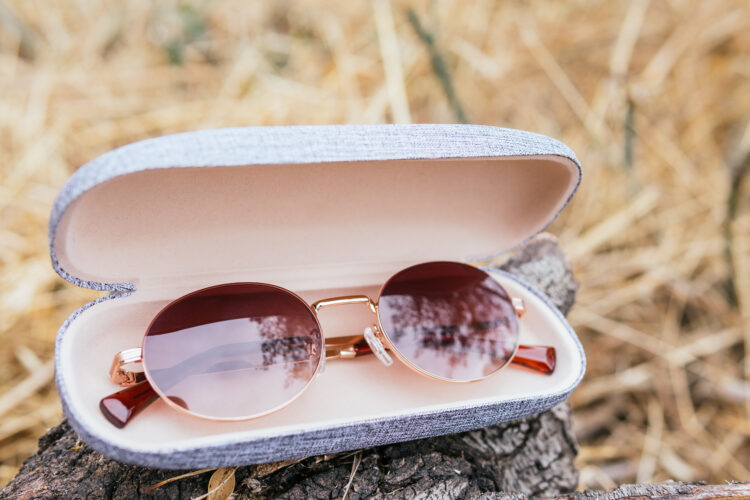
When you are not wearing sunglasses, store them in a dedicated case. If you leave them loose in a bag, the lenses can easily get scratched by keys, cosmetics, or the edge of a wallet. When cleaning the lenses, use a dedicated cloth rather than rubbing them with clothing or tissue. Wiping immediately with a dry cloth when dust is present can create fine scratches.
After a trip to the beach or pool, gently wipe away sweat, skin oils, salt residue, and sunscreen from the lenses. If sand or dust is on them, do not rub right away; first shake it off lightly. Rinsing briefly under running water and then absorbing moisture with a dedicated cloth can help reduce damage to the lens surface.
Where you store them also matters. Leaving them for a long time in high-temperature places — such as inside a car in summer — can easily deform the frame or damage the lenses. Keep them in a cool place whenever possible, and wipe away any sweat or cosmetics left on the inside of the lenses and around the nose pads as well.