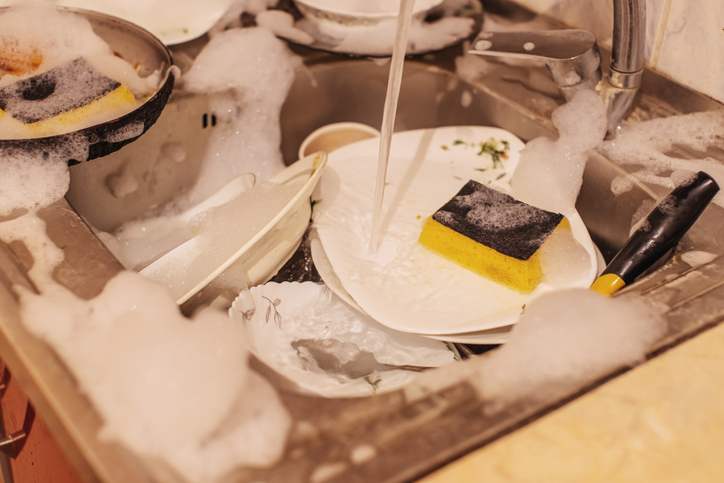
Grilling meat at home often leaves plates and pans slick with a heavy layer of stubborn grease. While it is tempting to squeeze a mountain of extra dish soap onto the sponge to cut through the film, culinary and chemical experts suggest a completely different starting point: changing the order of how you wash. Loading up on detergent right away can actually backfire, making the grease harder to remove.
The Hidden Risks of Excess Detergent
Piling on soap does not guarantee cleaner plates; instead, it frequently leaves behind an invisible chemical residue. Guidelines from the Sudokwon Landfill Site Management Corporation place the appropriate amount of dish soap at a surprisingly small dose: just 1.5 to 2 milliliters of detergent per one liter of water. When soap is squirted directly onto a scrubbing sponge, it is remarkably easy to far exceed this recommended standard.
Most commercial dishwashing liquids rely heavily on surfactants—chemical agents designed to lift grime by allowing oil and water to mix. While excellent for cutting grease, these compounds can pose genuine health risks if they remain on dishes and are repeatedly ingested. Chronic exposure can gradually degrade the mucous membranes lining the digestive tract. Because these membranes serve as the body's primary barrier against foreign substances, their disruption can lead to weakened immune defenses and deteriorated digestive function.
Smart Tactics for Reducing Soap Volume
To achieve spotless results while minimizing chemical usage, the key is systematic pre-cleaning. For heavily oiled cookware and plates, always wipe away the bulk of the grease with a paper towel before introducing water.
For an even more effective pre-treatment, a splash of leftover soju can do wonders. The ethanol in alcohol features a unique molecular structure consisting of a water-compatible head and an oil-compatible tail. This allows the alcohol to bind directly with the lipids, dissolving the grease instantly. If soju is unavailable, vodka or other clear liquors work just as well; as a rule of thumb, the higher the alcohol content, the more efficiently it strips away the grease.
Once the surface layer is managed, fill a washing basin with water and dilute the dish soap rather than applying it raw to a sponge. This practice significantly lowers overall detergent consumption and dramatically reduces the risk of soap film clinging to the dishes after the final rinse.
The 15-Second Rinsing Rule
The final defense against chemical residue comes down to timing under the tap. A domestic experiment evaluated typical washing habits by applying 8 milliliters of detergent—the average amount used by a standard consumer—across four common types of kitchen sponges. When the washed dishes were rinsed under running water for only seven seconds, surfactant residues were detected on every single container. However, when the rinse time was extended to 15 seconds, surfactants were completely eliminated from all dishes, with the sole exception of porous earthenware pots, which require extra care.
For targeted cleaning challenges, household staples like baking soda and vinegar remain highly effective when added to warm water. Baking soda is mildly alkaline, making it ideal for breaking down aged, stubborn grease. Vinegar, containing acidic components, excels at cutting through hard water stains and neutralising lingering food odors. However, because they sit on opposite ends of the pH scale, using them at the same time will cause their active properties to neutralize each other. To get the best results, they should always be used separately depending on the specific cleaning task at hand.