The Dietary Guidelines for Americans (DGA) have been published every five years since 1980, and to date, 10 editions have been released. Jointly issued by the U.S. Department of Agriculture (USDA) and the Department of Health and Human Services (HHS), these guidelines are intended to promote health and reduce the risk of chronic conditions such as hypertension, diabetes, and heart disease.
The DGA holds immense power, shaping federally funded food programs like the National School Lunch Program, which feeds 30 million children daily, and the WIC program, serving 8 million beneficiaries. They also set the standards for federal agencies, the Department of Defense, and veterans' hospitals. Beyond that, they have enormous influence and are widely used by local governments, schools, businesses, and the food industry [1]. Historically, these guidelines have consistently recommended increasing plant-based intake while reducing animal products.
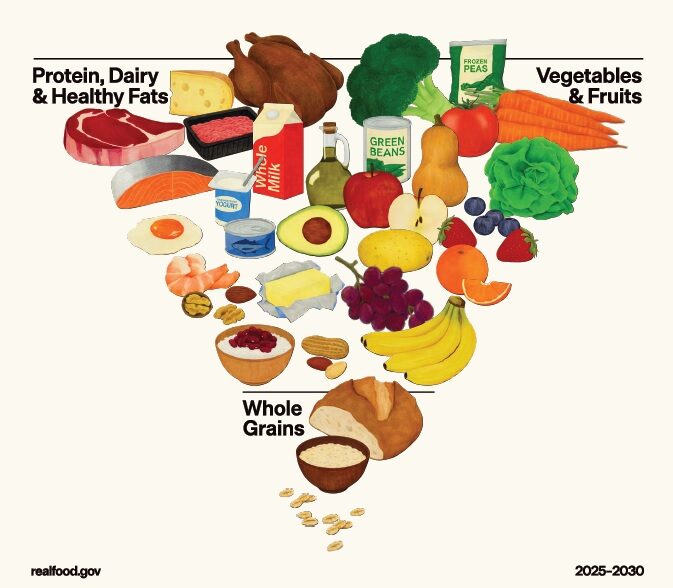
However, the recently released 2025–2030 guidelines—themed "Eat Real Food"—present a troubling bundle of contradictions. While they correctly advocate for cutting ultra-processed foods and added sugars, they contain several critical errors that appear to favor the food industry over nutritional science [2].
Is the Food Industry Trying to Push Protein?
The most glaring issue is the elevation of animal protein to the top of the nutritional priority list. The new guidelines have nearly doubled the recommended daily protein intake to 1.2–1.6 g/kg, up from the long-standing standard of 0.8 g/kg.
This change raises a fundamental question: Is the modern population actually deficient in protein? The data suggests the opposite. In Western countries, the average daily protein intake is already 1.3–1.4 g/kg—roughly 170% of the previous recommendation [3].
The situation is similar in Korea. According to the 2016–2018 Korea National Health and Nutrition Examination Survey, men consume an average of 1.17 g/kg and women 1.05 g/kg, significantly exceeding the required amounts [4]. Most people are already in a state of "nutritional excess." Adding more protein to an already sufficient diet can lead to adverse effects, including impaired kidney function, osteoporosis, and increased cardiovascular risk [5].
The Myth of High Protein and Gut Health
There is a serious contradiction in the DGA’s simultaneous emphasis on gut health and high protein intake. Excessive protein that is not fully digested in the small intestine passes into the colon, where it is broken down by harmful bacteria. This putrefaction process produces toxic substances like ammonia and hydrogen sulfide, which can trigger chronic intestinal inflammation and increase the risk of colorectal cancer [6, 7]. High-protein diets are, in fact, inherently stressful to the digestive system.
What We Actually Lack: Dietary Fiber
The obsession with protein distracts from the true nutritional crisis: a severe lack of dietary fiber. A 2021 U.S. survey revealed that a staggering 93% of Americans fail to meet the recommended daily fiber intake [8].
In Korea, despite a diet that traditionally includes fiber-rich side dishes like kimchi, approximately 57% of adults still fall short of the recommendations. Among men aged 19–64, the deficiency is even more pronounced, with nearly 70% failing to consume enough fiber [9].
Why the Misplaced Focus?
The reason for this persistent focus on protein, despite its abundance in our diets, is largely economic. The protein industry is a massive global business that fuels both the food and pharmaceutical sectors. Massive marketing campaigns have successfully convinced the public that they are at risk of deficiency, leading consumers to constantly ask where they can get more protein.
If you truly care about your longevity and health, it is time to move past the protein obsession and focus on what is actually missing: dietary fiber. We live in an era of excess; the path to health lies in balance, not in the overconsumption of animal products pushed by industry-influenced guidelines.
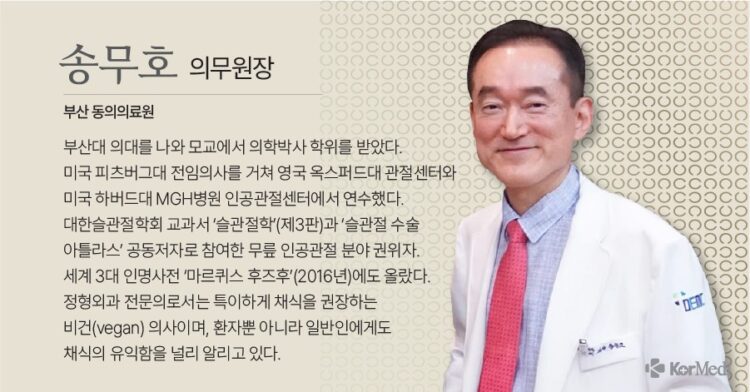
Song Mu-ho, MD, PhD, Specialist in Orthopedic Surgery and Lifestyle Medicine
References
1. Wikipedia https://en.wikipedia.org/wiki/Dietary_Guidelines_for_Americans
2. DGA https://cdn.realfood.gov/DGA.pdf
3. F Mariotti, CD Gardner. Dietary protein and amino acids in vegetarian diets—a review. Nutrients 2019;11(11):2661.
4. KW Kim, HA Park, YG Cho, AR Bong. Protein intake by Korean adults through meals. Korean Journal of Health Promotion 2021;21(2):63-72.
5. Dong-A Ilbo https://www.donga.com/news/It/article/all/20260121/133199431/2
6. F Omer, X Song, E Qiao, et al. High-Protein Diets: Characteristics of Bacterial Fermentation and Its Consequences on Intestinal Health. Fermentation 2025; 11(12):678.
7. A González, A Fullaondo, I Odriozola, A Odriozola. Microbiota and other detrimental metabolites in colorectal cancer. Advances in Genetics 2024;112:309-365.
8. American Society for Nutrition https://nutrition.org/most-americans-are-not-getting-enough-fiber-in-our-diets/
9. S Shin. Association Between Dietary Fiber Intake and Low Muscle Strength Among Korean Adults. Clin Nutr Res 2024;13(1):33-41.