Thoroughly rinsing ingredients with water before eating is often considered a basic rule of food safety. However, that does not apply to every item in the kitchen. For some foods, washing can actually spread bacteria and increase health risks. Here are the foods you should avoid washing with water.
Do Not Wash Meat with Water
Poultry, such as raw chicken, does not need to be rinsed. In a 2019 joint study by the U.S. Department of Agriculture and North Carolina State University, washing raw chicken spread bacteria to 60% of nearby kitchen areas, including sinks. Even after cleaning, bacteria remained on 14% of kitchen surfaces where water had splashed. Campylobacter, commonly found on raw chicken, can cause severe infectious diarrhea and abdominal pain. It is sufficient to gently pat the surface dry with a paper towel; cooking poultry to an internal temperature of 75°C will eliminate any pathogens.
Meats such as beef and pork also carry a significant cross-contamination risk. Beyond safety, washing can negatively affect the quality of your cooking. If you pan-sear meat that has excess moisture on the surface, the water evaporates first, causing the meat to steam rather than sear. This prevents the exterior from browning and crisping properly, reducing both flavor and texture. As with chicken, simply wipe any contaminated areas with a paper towel.
For Bagged Salad, Check the “Washed” Label
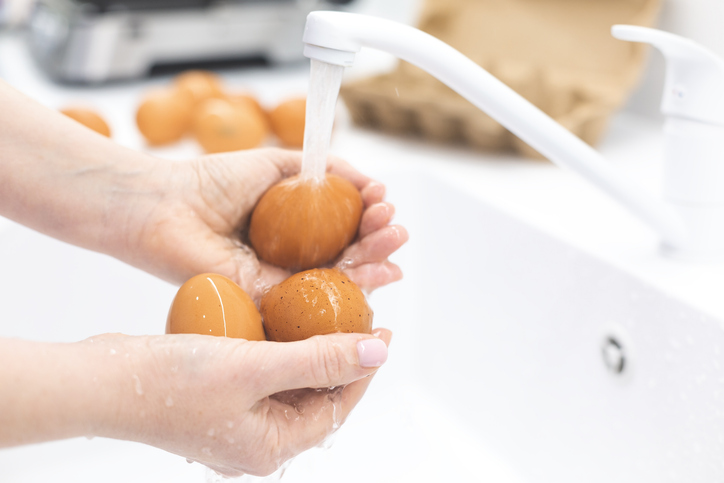
Eggs also do not require washing. Most eggs are commercially washed and sanitized before distribution. Washing them again at home can break down the "bloom," a natural protective coating on the shell. Without this barrier, bacteria and other contaminants can penetrate the shell more easily, increasing the risk of spoilage. If an egg is noticeably dirty, it is best to gently wipe the area with a clean, dry cloth.
As for convenient bagged salads, the wording on the package is key. Products labeled “triple-washed” or “ready-to-eat” have already undergone rigorous sanitization. Washing them again in a home sink can actually increase the risk of bacterial exposure from the kitchen environment.
Mushrooms: Does Washing Destroy Nutrients?
It is often claimed that mushrooms should never be washed because their nutrients will be destroyed. However, this is largely a myth. Rinsing mushrooms under running water does not cause meaningful nutrient loss; instead, it is an effective way to remove dirt and debris.
That said, you should never soak mushrooms in water for an extended period. Because they are highly porous, mushrooms readily absorb water, which compromises their firm texture and increases the risk of mold growth. To maintain their characteristic quality, it is best to rinse them quickly and cook them immediately.