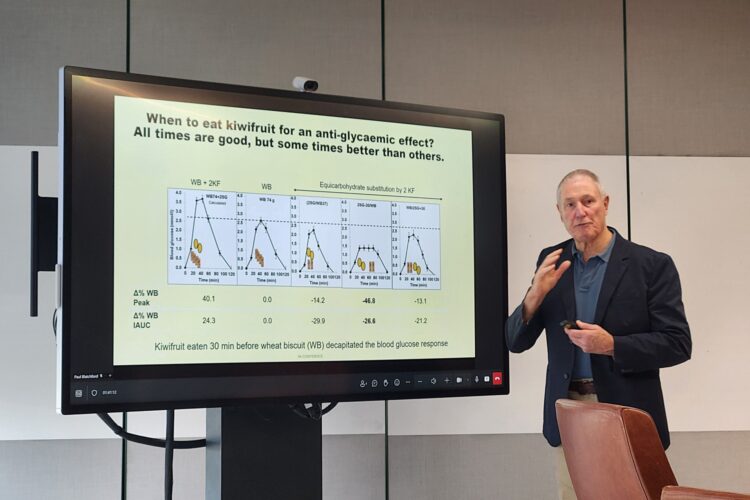
Nutrition and medical experts from South Korea and New Zealand recently gathered to explore strategies for addressing the chronic nutritional imbalances prevalent in modern life. The academic exchange highlighted the importance of dietary habits and the specific role of nutrient-dense fruits in improving public health outcomes.
Zespri announced on the 22nd that it hosted the "Korea–New Zealand Nutrition Academic Exchange Seminar" at its global headquarters in Tauranga, New Zealand. Participants shared the latest research findings on the micronutrients found in kiwifruit and discussed their nutritional value from diverse clinical perspectives.
Fruit Intake and Its Impact on Gut and Metabolic Health
Korean experts emphasized the importance of fruit consumption in the context of shifting dietary patterns, metabolic diseases, and colon health in South Korea. Kim Jeong-yong, Vice Chair of the Korean Nutrition Society, noted that consuming whole fruit provides a wide array of micronutrients that serve as a healthy alternative to ultra-processed snacks.
"Nutrient-dense kiwifruit can provide practical assistance in supplementing the current meal patterns of Koreans, where vegetable and fruit intake has been steadily decreasing," Kim stated.
Dr. Park Min-soo, a family medicine specialist, added that kiwifruit contains a balanced range of micronutrients—such as Vitamin C and dietary fiber—that modern individuals often fail to consume in sufficient quantities. He highlighted the potential for a "one fruit per day" habit to provide meaningful nutritional supplementation for all age groups, from children to the elderly.
Cognitive Function, Skin Health, and the Role of Soluble Fiber
Representing New Zealand, Paul Blatchford, Zespri’s Product Innovation Manager, and Dr. John Monro from the New Zealand Institute of Plant and Food Research presented findings on the broader systemic benefits of kiwifruit.
Blatchford discussed research concerning skin health and cognitive function. He cited a study led by Professor Margreet Vissers at the University of Otago, which found that daily consumption of Zespri SunGold kiwifruit over eight weeks significantly increased blood Vitamin C levels and improved skin density.
Dr. Monro focused on the effects of dietary fiber on gut health, explaining that pectin—a soluble fiber in kiwifruit—increases stool volume and supports regular bowel movements. However, he cautioned that processing kiwifruit by peeling or juicing can destroy these pectin structures, emphasizing that the fruit is most beneficial when consumed in its whole form.
The Paradox of Modern Nutrition: High Calories, Low Density
The seminar concluded that the modern nutritional crisis is characterized by a "full stomach, but a malnourished body." Diets dominated by ultra-processed foods offer high caloric intake with very low nutrient density. This trend is particularly concerning among teenagers, where obesity and nutritional deficiencies are rising concurrently.
Commonly deficient nutrients include calcium and Vitamins A, C, and D, while sodium and carbohydrates are often consumed in excess. To resolve these imbalances, experts recommend reducing ultra-processed food intake and increasing the consumption of vegetables and fruits. For those managing blood sugar, the focus should remain on low-glycemic index (GI) fruits, such as kiwifruit, cherries, and blueberries.