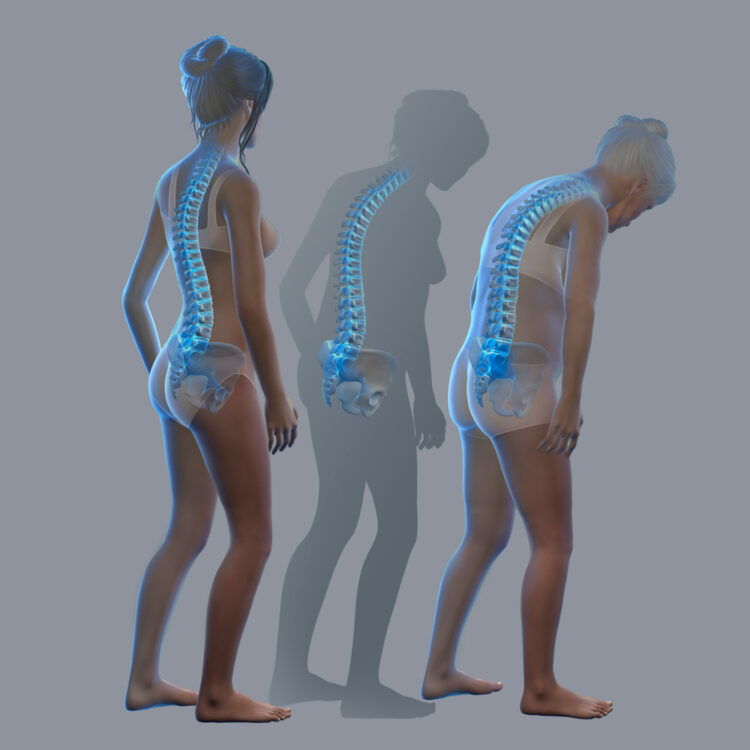
Some patients need to rebuild bone quickly. These are people at high fracture risk—those who have already broken a bone once, or whose bone mineral density has dropped significantly.
Yet even when using medications that build bone strongly, it is not entirely reassuring. Romosozumab (brand name EVENITY), considered a leading bone-forming agent, is highly effective, but because cardiovascular risks such as myocardial infarction and stroke have been raised, its use is limited to 12 months. That is why the question remains: “How long, and in what way, should we use a powerful drug?”
A research team led by Professor Sang-wan Kim of Seoul National University College of Medicine (Division of Endocrinology and Metabolism; President of the Korean Society for Bone and Mineral Research) looked for the next target in osteoporosis treatment in “sleeping bone cells.” The findings were recently published in the international journal 〈Bone Research〉. The team closely examined the process by which cells resting on the bone surface return to bone-forming cells. As a result, another regulatory signal—one that cannot be explained by sclerostin inhibition alone—emerged as an important switch: “TGF-β signaling.” In other words, the researchers identified another axis involved in regulating osteoblast activation.

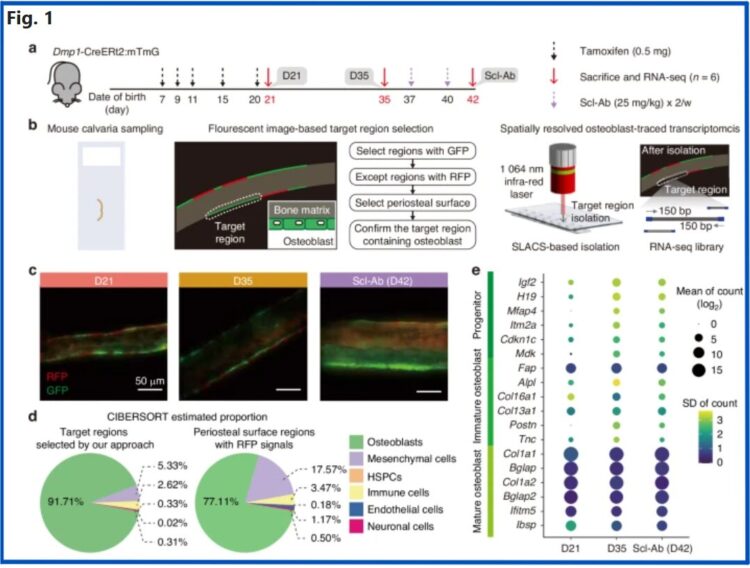
The focus of this study was “bone lining cells.” These cells lie thinly along the bone surface in a resting state, and when needed, they can convert back into osteoblasts and participate in new bone formation. However, because these cells adhere extremely thinly to the bone surface, extracting and analyzing them without damage is extremely difficult.
To address this, a team led by Professor Seonghun Kwon of Seoul National University College of Engineering (Department of Electrical and Computer Engineering) used an in-house developed “laser-based cell isolation system” (SLACS) to precisely select osteoblasts while preserving positional information within the tissue. They also succeeded in deciphering key mechanisms within osteoblasts that regulate bone formation.
Through this work, the SNU team confirmed that blocking TGF-β is involved in reactivating bone lining cells. Put simply, they peeled back another layer of what signals operate in the process of “waking up sleeping cells.”
Going one step further, in animal experiments, applying TGF-β inhibition together with sclerostin inhibition produced greater increases in bone mass and stronger suppression of bone loss than sclerostin inhibition alone. This suggests the potential of a combination strategy that targets both TGF-β and sclerostin.
For Professor Kim, this work was a long-standing challenge. In 2017, he published a study in another journal (Journal of Bone and Mineral Research) showing that a sclerostin antibody converts quiescent bone lining cells into active osteoblasts. If the question then was, “Can sleeping cells truly wake up again?”, this paper advances to the next question: “What are the key signals that regulate that conversion?” It is a deepening of the same line of inquiry.
That said, it is still a long way from an immediate new drug. Building on the limitations of current therapies, this study mainly offers clues that could broaden their effects more precisely or lead to better combination strategies. Still, it may be one answer to the long-standing question of how to fill the gaps that existing drugs have not been able to reach.
Meanwhile, the related paper by the SNU team (Spatially resolved osteoblast-traced transcriptomics uncovers TGF-β as a combination target with sclerostin in osteoporosis) was posted as open access on April 2 in 〈Bone Research〉 (volume 14).
Q. Does this study mean it will immediately replace existing osteoporosis drugs?
Not at that stage. This paper is a preclinical study that proposes a new target and the possibility of combination therapy. However, it is meaningful in that it points to a direction for strategies that could more effectively complement existing anti-sclerostin treatment.
Q. What are “sleeping bone cells”?
They refer to bone lining cells. They normally remain in a resting state attached to the bone surface, but when stimulated, they can convert back into osteoblasts and participate in new bone formation.
Q. Why do osteoporosis patients hesitate even when there are powerful drugs available?
Some leading bone-forming agents carry cardiovascular risk warnings and limits on duration of use, so they must be used cautiously after considering the patient’s condition. The greater the effect, the more careful the choice must be.
Q. How does Professor Sang-wan Kim’s research trajectory connect to this paper?
In earlier work, Professor Kim showed that quiescent bone lining cells can become active osteoblasts again, and in this study he proposes TGF-β as a new combination target among the signals that regulate that conversion. It is a deepening of the same research axis.