Daegu, which stood on the front lines of regional healthcare during the COVID-19 pandemic, now faces another turning point. Efforts are accelerating to build a new healthcare ecosystem that combines artificial intelligence (AI) and biotechnology, leveraging the city’s extensive experience in responding to infectious disease crises.
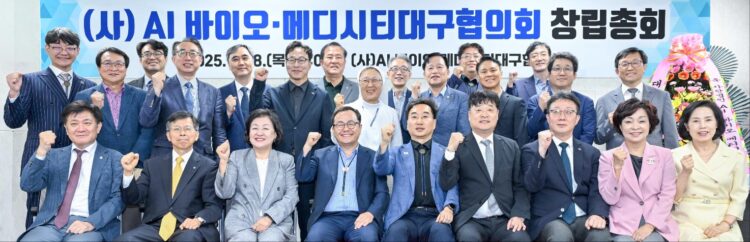
At the center of this transformation is Min Pok-kee, president of the Daegu Medical Association, who recently assumed the role of chair of the AI Bio Medicity Daegu Council. President Min is using the 2026 Daegu World Masters Athletics Championships, scheduled for August, as a springboard to establish “Healthy City Medicity Daegu” through advanced healthcare, AI, and biotech.
We spoke with President Min about the next phase of Daegu’s evolution—envisioned by a leader who sees healthcare not simply as “treatment,” but as a system that sustains the vitality of an entire city.
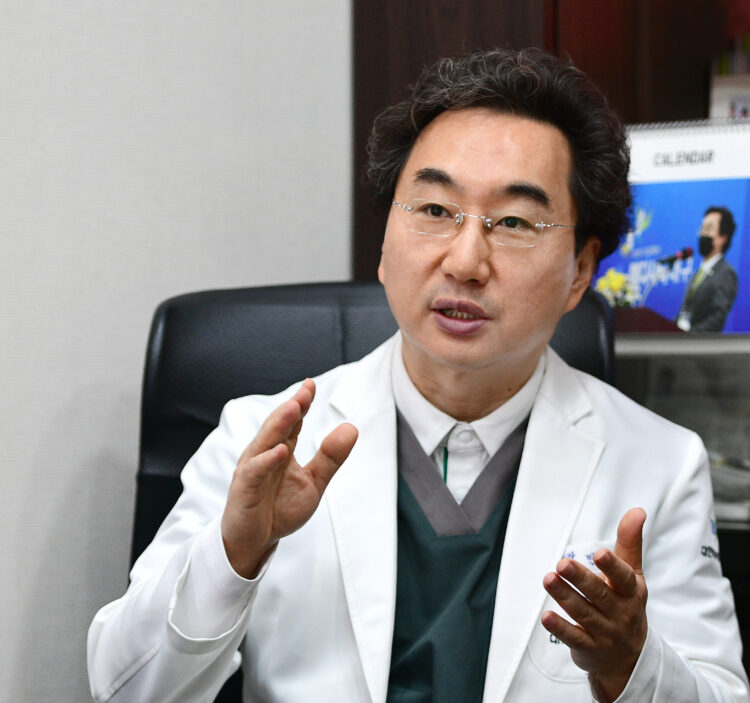
- What kind of organization is the Daegu Medical Association?
“The Daegu Medical Association was a key player in creating the global model for ‘K-quarantine’ during the pandemic. While we may not be as large as organizations in the Seoul metropolitan area, we are grounded in strong cohesion and execution. We are the only domestic association to maintain long-term exchanges with international partners like the Hyogo Prefecture Medical Association in Japan. Through overseas volunteer work in Central and Southeast Asia, local community service, and the regional network of ‘Medicity Daegu,’ we are solidifying a distinctive position nationwide.”
- One of the biggest topics in Daegu’s medical community right now is the World Masters Athletics Championships.
“The Masters Championships is more than an international sports event; it is a critical turning point for Daegu’s future. It is a golden opportunity to leap beyond ‘Healthy City Medicity Daegu’ toward an ‘AI Bio Medicity’ where advanced technologies are concentrated. This event will serve as a global showcase for a model city where sports and advanced medical systems are organically integrated.”
- What specific medical model do you want to implement at this event?
“In a word, a ‘fully integrated medical support system.’ This means three pillars—immediate venue-centered emergency response, real-time linkage among regional hub hospitals, and an AI-based health monitoring framework—operating seamlessly as a single platform. We will demonstrate that it is feasible to implement future medical systems, such as AI-based monitoring linked to wearable devices and personalized medical support built on large-scale biometric data, to protect the 'golden time' in emergencies.”
- Does experience with international events help in building such a system?
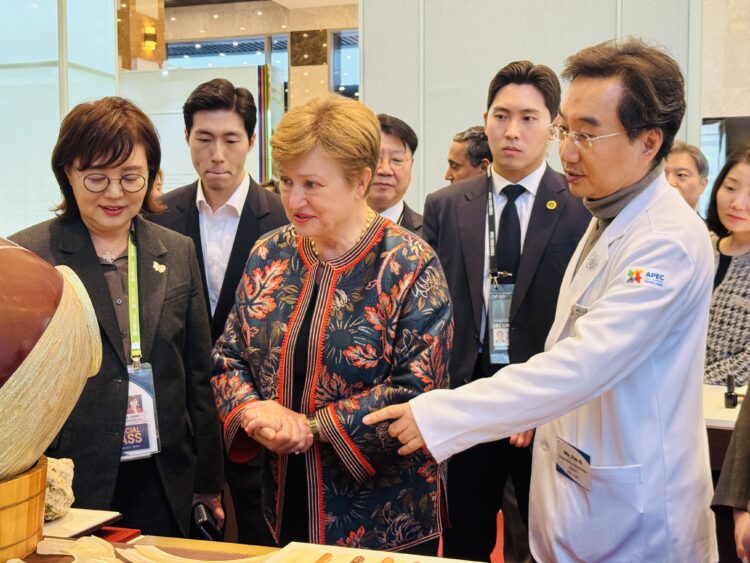
“It is decisively helpful. Specifically, the medical support experience at the 2025 Gyeongju APEC Leaders’ Meeting was an excellent real-world validation for the Daegu–Gyeongbuk medical system. At the time, we oversaw K-beauty and medical convergence services—combining AI diagnostics with anti-aging procedures—for heads of state and economic delegations. We proved our global competitiveness, receiving praise that medicine is not just intuition, but precision science.”
- What is the ultimate goal of medical support for the 2026 event?
“Flawless, zero-defect medical support, just as we demonstrated at Gyeongju APEC. In a dynamic site where tens of thousands gather, the goal is to complete a web-like network where no delay in care occurs. Additionally, because a large inflow of overseas visitors can expose us to variables like infectious diseases, our core focus is preparing a system that anticipates every plausible scenario and responds immediately.”
- People associate infection control with COVID. Didn’t you predict the pandemic early on?
“In January 2020, as I reviewed clinical data from Chinese physicians, I sensed the numbers had a ‘direction’—the classic pattern of an exponential pandemic surge. While the central government dismissed it as a common cold, I urged the Daegu Metropolitan Government to prepare immediately. We cleared out Daegu Dongsan Hospital as the nation’s first dedicated COVID facility. We also monitored 5,300 patients waiting at home and were the first in the world to identify loss of smell as a major early symptom—confirming that data never lies.”
- Regarding K-medical tourism, what strategy would you propose for Daegu’s success?
“We must turn Daegu’s narrative of resilience into a powerful engine to relaunch K-medical tourism, branding the city as synonymous with ‘safe and advanced medical standards.’ We need to restore our global medical networks with overseas hubs, utilize convergence brand strategies that combine academic exchange with sports, and employ digital-based promotion for precise target marketing.”
- What form will the synergy model of ‘K-beauty’ take?
“Daegu possesses world-class technical capabilities in dermatology, plastic surgery, dentistry, Korean medicine, and hair restoration. By connecting these K-beauty assets to treatment-centered medicine for serious diseases, we plan to complete a high-value ‘medical + beauty convergence model’—where health recovery and aesthetics are achieved simultaneously—starting with the World Masters Athletics Championships.”
- Daegu was recently selected as a ‘wellness tourism cluster.’ What is the strategy to grow this sector?
“We must expand the market through ‘all-in-one total healthcare,’ or ‘wellness.’ Daegu has a focal point other regions lack: the ‘Medicity Daegu Council,’ where physicians, dentists, doctors of Korean medicine, pharmacists, and nurses all participate. With university and specialty hospitals concentrated in the city center, accessibility is excellent. By sharing medical data and communicating with the public sector, we can co-develop wellness medical devices. A precision medicine ecosystem supported by AI will become Daegu’s strongest growth engine.”
- How does the recovery of Daegu’s medical tourism industry feel on the ground?
“There are still challenges before a full recovery. Up to 2019, Daegu led the region with over 30,000 international patients, but the pandemic severed the global networks built over a decade. Our high-touch infrastructure—interpreters at Incheon Airport and KTX escorts for visitors from the Middle East and Russia—has been scaled back due to budgets. However, as foreign patient attraction rises again, this is the golden time to restore broken links and reinvest in infrastructure.”
- How would you rate the current level of preparedness in Daegu’s medical community?
“I would say about 75 points. We endured the harsh experience of COVID-19, had our crisis response validated internationally, and strengthened our systems by hosting events like APAAC and APEC. In the remaining time, we must fill in the final 25 points—a phase of intricate tuning to elevate Daegu’s medical system to a perfect global standard.”
- Finally, what are the essential conditions for Daegu to be a true ‘healthy city’?
“The dedication of the medical community, the technological capabilities of industry, administrative support, and citizens’ voluntary participation must interlock like gears. It cannot be achieved through administration or medicine alone. Only when the entire city moves in perfect unison as one organic system will a true Medicity be completed.”