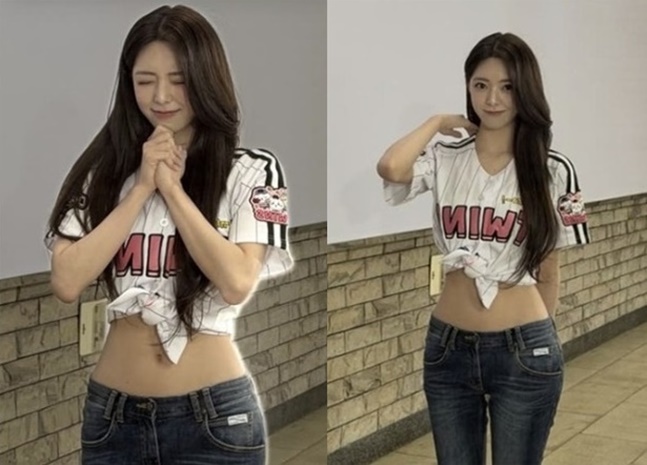
ITZY member Yuna has once again captured the public’s attention with her striking physique. On April 1st, Yuna shared several photos on social media with the caption “lucky charm for victory,” documenting her appearance as the ceremonial first-pitch thrower for the 2026 KBO League game between the LG Twins and the Kia Tigers at Jamsil Baseball Stadium in Seoul.
Sporting a cropped LG Twins jersey and denim jeans, Yuna’s defined “ant waist” and balanced hip line earned her the title of the new “first-pitch goddess.” Online fans praised the look, with comments highlighting her flat abdomen and athletic proportions. Yuna, who released her solo debut album Ice Cream late last month, is currently active with her title track of the same name.
Beyond the aesthetic appeal, a silhouette characterized by a slim waist and wider hips—often referred to as a “Coke-bottle figure”—can serve as a meaningful indicator of a woman’s metabolic health.
The Science of the Waist-to-Hip Ratio (WHR)
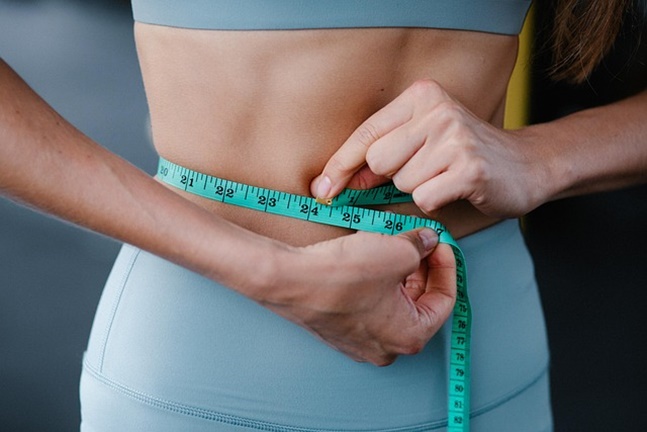
The waist-to-hip ratio (WHR) is a clinical metric calculated by dividing the waist circumference by the circumference of the hips. For women, a WHR between 0.7 and 0.85 is generally associated with a lower risk of cardiovascular disease and type 2 diabetes. This ratio often reflects stable estrogen levels and a healthy hormonal balance.
For instance, a waist measurement of 65 cm divided by a hip measurement of 90 cm yields a ratio of approximately 0.72, which falls within the ideal range. Conversely, the World Health Organization (WHO) notes that a WHR exceeding 0.85 in women correlates with an increased risk of metabolic syndrome.
In Korea, a waist circumference of 85 cm or more in women is clinically defined as abdominal obesity. Even if an individual’s Body Mass Index (BMI) falls within the "normal" range, a high waist circumference can indicate "hidden obesity" or visceral fat accumulation, which significantly raises the risk of chronic illness. To measure accurately, one should stand naturally and measure the narrowest point between the lower ribs and the navel without compressing the abdomen.
Sculpting the Silhouette: Exercise and Nutrition
While pelvic structure is largely determined by genetics, the appearance of a tapered waist and toned hips can be enhanced through targeted strength training.
Core and Oblique Definition: To refine the waistline without losing core strength, exercises like the side plank are essential. Supporting the body on one elbow while maintaining a straight line from head to toe for 30 seconds engages the obliques. Additionally, plank hip dips—rotating the hips from side to side in a standard plank position—effectively target the lateral abdominal muscles.
Gluteal Volume: To create a more pronounced hip line, focus should be placed on the gluteus maximus and medius. Beyond basic squats, reverse lunges and hip thrusts are highly effective. The "donkey kick," performed on all fours by kicking one leg toward the ceiling, specifically strengthens the side of the glutes to create a more defined silhouette.
Nutrition plays a pivotal role in maintaining this balance. A high-protein diet including chicken breast, eggs, tofu, and nuts supports muscle hypertrophy, while limiting processed sugars helps prevent abdominal fat storage. For those looking to optimize their body composition, a regimen consisting of 60% strength training and 40% cardiovascular exercise (such as running or cycling) is recommended to achieve both leanness and functional volume.