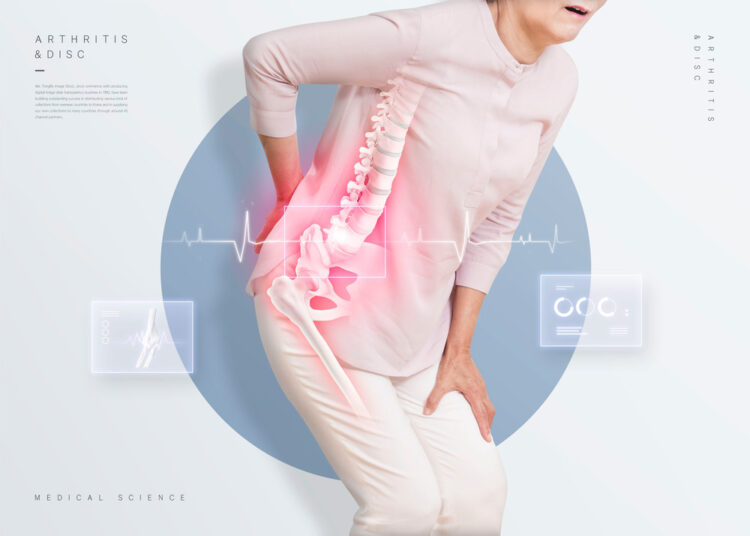
Ms. Choi, a 52-year-old living in Busan, recently noticed a troubling change. While grocery shopping with her elderly mother, she found herself constantly leaning on the shopping cart handle for support. “It feels like my pelvis is about to give out, and my thighs and calves feel heavy,” she explained.
Like many, Ms. Choi assumed her recurring back pain and leg heaviness were signs of a herniated disc. However, after a hospital visit, she received a different diagnosis: lumbar spondylolisthesis.
Why Is a Slipped Vertebra Confused with a Disc Problem?
Spondylolisthesis occurs when a lumbar vertebra slips forward (anteriorly), throwing the spine out of alignment. While the slippage itself is the physical change, the real danger lies in the "downstream effect": the narrowing of the spinal canal, which leads to nerve compression.
While it can occur anywhere along the spine, it is most common in the lower back—specifically at the L4–5 segment in degenerative cases and L5–S1 in cases related to stress fractures. Because the symptoms—low back pain, tingling legs, and discomfort that worsens with prolonged standing—mirror those of a herniated disc, misdiagnosis is common. The telltale sign of spondylolisthesis is often the "shopping cart sign": a patient finds relief only when sitting or bending forward at the waist.
“Some people have a structural defect since youth, while in others, the joints and ligaments weaken with age,” says Seung-hyun Choi, Director of Busan Keun Hospital. “It isn't just a matter of 'tweaking your back'; it is the result of the spine’s support structures gradually compromising over time.”
When Should You Consider Surgery?
A diagnosis does not automatically mandate surgery. Many patients manage the condition through medication, injections, rehabilitation, and lifestyle adjustments. However, the criteria for surgery change if:
Walking distance noticeably decreases.
Leg tingling and pulling sensations become severe.
Neurological abnormalities (weakness or sensory loss) appear.
According to the North American Spine Society (NASS) clinical guidelines, treatment for degenerative spondylolisthesis should be based on both symptoms and functional decline. “What matters most is your current stage,” notes Director Choi. “We must weigh the severity of the pain against imaging findings of stenosis and instability, and whether conservative treatments have failed.”
Endoscopy vs. Fusion: Choosing the Right Approach
The surgical choice depends on two priorities: decompression (relieving the nerves) and stabilization (fixing the unstable segment). While some patients only require decompression, others need fusion surgery to stabilize the spine.
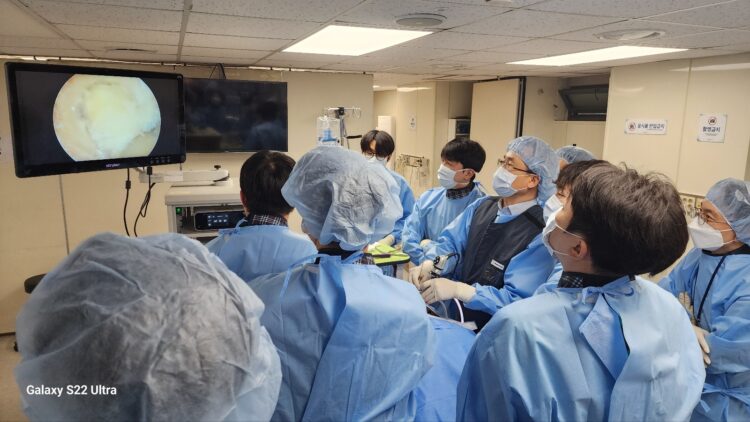
Biportal Endoscopic Spine Surgery (UBE) has emerged as a vital option. “For many cases, we can perform both nerve decompression and fusion using biportal endoscopy,” Director Choi explains. This minimally invasive approach can often reduce recovery time, though the final decision depends on the degree of the slip and the patient's overall health.
Frequently Asked Questions
Q1. Why does spondylolisthesis occur more often in the lower back? It can occur anywhere in the spine, but it is most common in the lumbar spine, where weight-bearing and motion demands are greatest. In adults, spondylolisthesis related to degenerative changes is especially common in this region.
Q2. How is spondylolisthesis different from a herniated disc or spinal stenosis? A herniated disc is primarily a problem of disc material protruding and compressing a nerve. Spondylolisthesis is a structural problem where a vertebra slips forward and becomes misaligned. By contrast, spinal stenosis refers to a narrowed passageway for the nerves. As spondylolisthesis progresses, it often narrows the nerve canal, producing stenosis symptoms as well.
Q3. Why is it harder to walk or stand for a long time? When the nerve passageway in the lower back is narrowed, symptoms worsen during standing or walking. Conversely, sitting or bending forward slightly widens the passageway, providing temporary relief. When this pattern repeats, it is known as neurogenic claudication.
Q4. Do you always need surgery for spondylolisthesis? No. The decision is made by considering pain levels, walking distance, neurological abnormalities, and imaging findings. However, if stenosis is severe, non-surgical treatment is ineffective, and leg weakness or sensory loss persists, surgery should be considered.
Q5. What questions should you definitely ask your doctor before surgery? Ask whether the main cause of your pain is a disc problem or spondylolisthesis, the degree of instability, and whether decompression alone is possible or if fusion is required. It is also important to ask if biportal endoscopy is appropriate for your specific case.
Q6. Can I prevent the condition from worsening without surgery? While you cannot "reverse" the slip without surgery, you can manage the condition through core-strengthening exercises, weight management, and avoiding activities that put excessive strain on the lower back. Regular consultations with a specialist are essential to monitor the degree of instability.
Expert Comment: Choi Seung-hyun, Director of Busan Keun Hospital (Orthopedic Surgery). A graduate of Chungnam National University College of Medicine and former clinical instructor at Sanggye Paik Hospital, Director Choi is a specialist in biportal endoscopic spine surgery (UBE) and frequently conducts live surgical demonstrations for medical professionals across Asia.