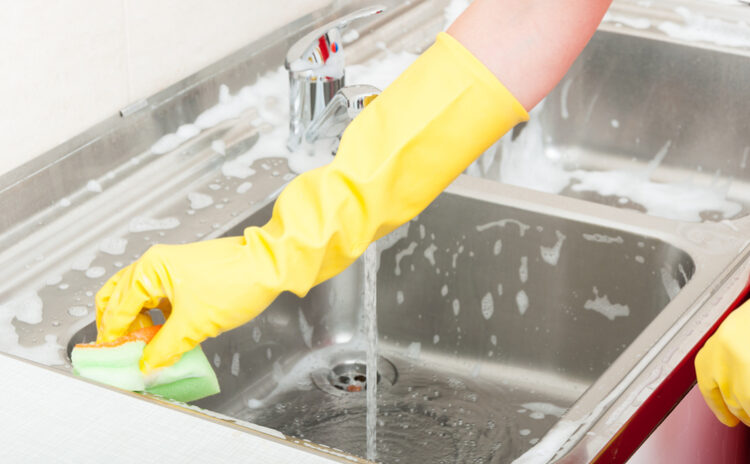
Sinks often end up with white stains even if you wipe them frequently. This happens because magnesium and calcium in tap water remain after the water evaporates, leaving limescale deposits behind. The same can happen on the sink countertop. Countertops made of engineered stone or stainless steel can be especially prone to visible stains and built-up grime. Here’s how to deal with them effectively.
For the sink, one spoonful of ‘this powder’—not baking soda—can make it spotless
Some people sprinkle baking soda to clean the sink. But when baking soda comes into contact with limescale, no chemical reaction occurs. Because both substances are alkaline, there is no acid–base neutralization reaction.
To remove limescale, it’s better to use citric acid. When alkaline limescale meets an acidic substance like citric acid, a chemical reaction occurs. As a result, citric acid dissolves mineral deposits by breaking down calcium carbonate. Dissolve 2–5 g of citric acid in 100 mL of water and pour it into a spray bottle. Mix well so the granules dissolve completely. Spray it evenly over the entire sink, then wait 5–10 minutes for the limescale to start dissolving. Before 15 minutes have passed, gently wipe with a soft cloth and rinse with water.
Citric acid does not harm the sink surface itself, so it can also help maintain shine. Because it is a mild acid with a pH of about 2.2–3.0, it does not corrode stainless steel. If, after using citric acid, you scrub the sink with a soft sponge rather than a steel scouring pad, you can avoid scratches. However, citric acid should not be used on aluminum or marble sinks.
It’s best to use any prepared citric acid solution within a week. Over time, the acidity decreases and the cleaning effect weakens. Cleaning about once a week is appropriate. So it’s a good idea to prepare only the amount you’ll use in a week and use it up promptly. When using a citric acid solution, wear rubber gloves or similar protection to prevent skin contact.
Is baking soda effective for built-up grime on the sink countertop?
Sink countertops are prone to grease and water stains. That’s because oil can splatter while cooking, and water can easily splash during dishwashing. It’s also difficult to rinse a countertop thoroughly under running water. Still, if grease is left behind, the countertop can become sticky and unhygienic.
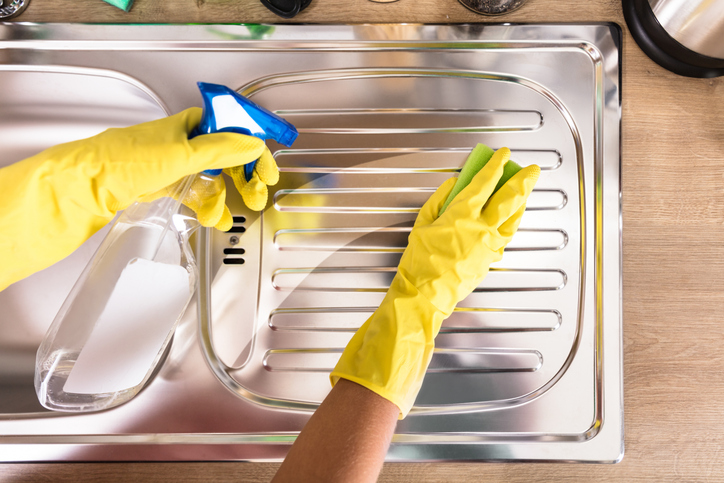
In this case, baking soda is a good choice. Baking soda is effective at removing grease. By contrast, sodium percarbonate can strip the countertop’s shine, so you may need an additional finishing step to restore luster.
The method is simple. Pour hot water over the countertop, then sprinkle baking soda generously. Next, scrub and wipe with a sponge that has dish soap on it. If there isn’t enough water, wet the sponge and wipe gently. Rinsing the sponge and wiping several times will remove the baking soda and detergent. Finally, wipe the entire surface once more to finish.
Stains from liquids such as wine or coffee, or from fruit, can be removed with hydrogen peroxide. Spray hydrogen peroxide on the stained area, leave it for about 5 minutes, then wipe it off with a clean dishcloth. However, be careful: leaving hydrogen peroxide on for too long can dull the countertop’s shine.