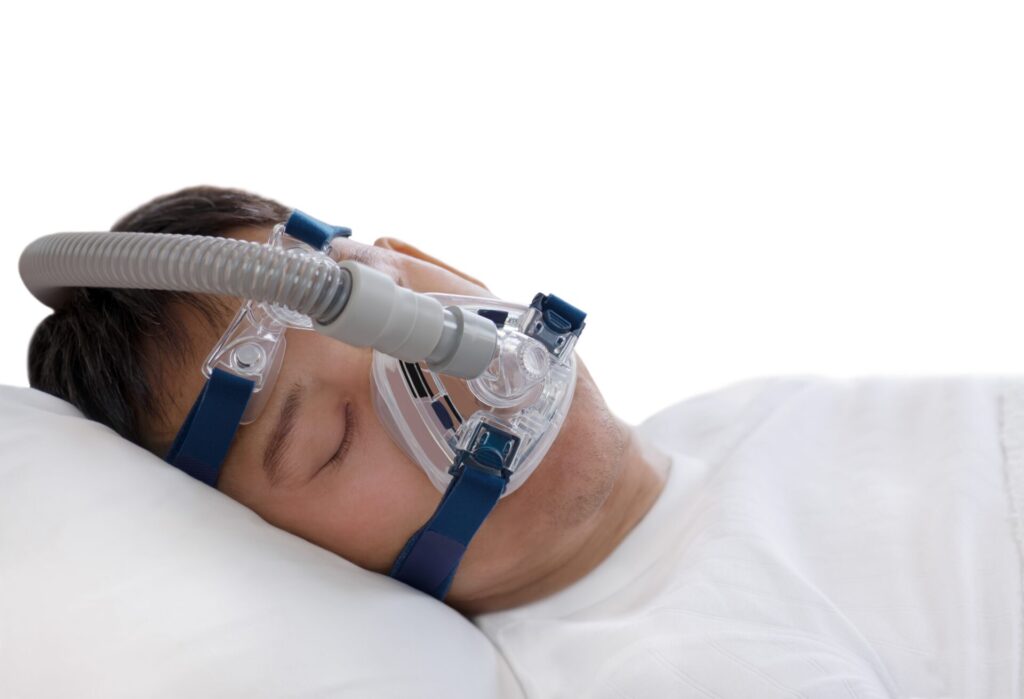
Obstructive sleep apnea (OSA), a condition where breathing repeatedly stops during sleep, is far more than a mere snoring habit. When nocturnal oxygen saturation drops consistently, it can lead to severe daytime drowsiness and impaired concentration, while significantly elevating the risk of hypertension, cardiovascular disease, stroke, and type 2 diabetes.
While the medical community has long relied on mechanical intervention, a groundbreaking study published in the online edition of The Lancet on October 9, 2025, suggests that managing this condition could soon be as simple as taking a pill. The research reports that a small molecule drug called sulthiame significantly reduced episodes of breathing cessation in patients with moderate to severe OSA.
This study arrives at a pivotal moment. As World Sleep Day (March 13) approaches—a global campaign by the World Sleep Society to raise awareness of sleep health—this research draws international attention by suggesting that the traditional, device-centered approach to sleep apnea may be on the verge of a pharmaceutical expansion.
An Oral Alternative to the CPAP Mask
The current gold standard for OSA treatment is Continuous Positive Airway Pressure (CPAP). This involves wearing a pressurized mask during sleep to mechanically prevent the airway from collapsing. While highly effective, many patients find the equipment cumbersome, leading to poor long-term compliance. The research team suggests that sulthiame could finally provide a viable medical alternative for those who struggle with mechanical devices.
Sulthiame was originally developed to treat specific types of childhood epilepsy. Researchers believe the drug works by stabilizing respiratory control and increasing respiratory drive. Essentially, it appears to refine the signals sent from the brain to the respiratory system, ensuring more consistent breathing patterns and reducing the frequency of airway blockages during sleep.
The findings are based on the FLOW study, a multicenter, randomized, double-blind, placebo-controlled Phase 2 clinical trial. Conducted across several European institutions, the trial involved 298 patients with moderate to severe sleep apnea. Participants were divided into a placebo group and three treatment groups receiving low, medium, or high doses of sulthiame once daily. The study was led by first author Professor Winfried Randerath of Bethanien Hospital in Germany, alongside Professor Jan Hedner of the Sahlgrenska Academy at the University of Gothenburg in Sweden.
High Efficacy in Early Trials, Though Larger Studies Loom
The clinical results were striking. Data from the University of Gothenburg revealed that patients in the high-dose sulthiame group experienced up to a 47% reduction in breathing interruptions compared to those taking the placebo. Overnight oxygen levels also showed marked improvement, indicating that the drug successfully disrupted the "airway narrowing–oxygen deficiency" cycle that defines the disorder.
The implications are clear: for the first time, researchers have demonstrated that sleep apnea can be managed by refining internal respiratory signals rather than relying solely on external air pressure. "We have been researching this treatment strategy for a long time, and these results show that sleep apnea can actually be pharmacologically controlled," Professor Jan Hedner stated in a press release.
However, medical experts urge caution. As a Phase 2 trial, the study represents an early success rather than a final product. While reported side effects were generally mild and temporary, larger and longer-term Phase 3 trials are required to confirm the drug's safety and efficacy across a broader demographic.
The medical community is now watching closely to see if the treatment of sleep apnea is truly transitioning from a "CPAP-centered" era to one of "oral medication," with sulthiame potentially serving as the pioneer of this shift.
*Source of the paper: Sultiame once per day in obstructive sleep apnoea (FLOW): a multicentre, randomised, double-blind, placebo-controlled, dose-finding, phase 2 trial. The Lancet, 2025; 406 (10514): 1983 DOI: 10.1016/S0140-6736(25)01196-1