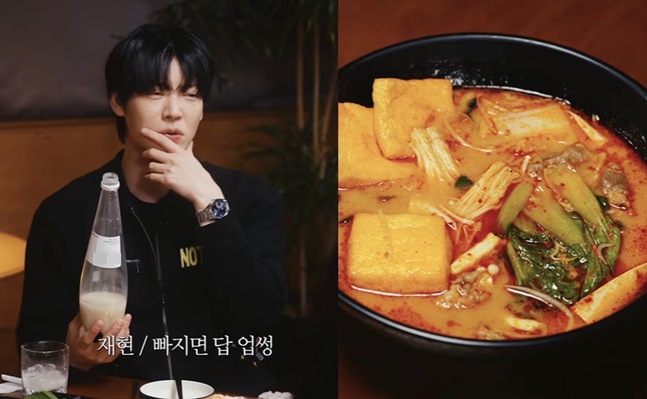
Model and broadcaster Ahn Jae-hyun shared his experience of gaining weight due to food.
On the 10th, a video featuring Ahn Jae-hyun and singer So-you was released on the YouTube channel 'Alddaldalhan Chamgyeon', hosted by singer Myoo and comedian Heo Kyung-hwan.
In the video, when So-you saw the mala soup served as a side dish, she said, "I didn’t understand why people liked mala soup. But it was delicious." Heo Kyung-hwan explained the popularity of mala soup by saying, "These days, mala soup has beaten tteokbokki among elementary school students."
Then Ahn Jae-hyun said, "If you get hooked, there’s no answer. I once gained weight to 86kg after eating mala soup. I was really chubby. I gained weight without any muscle."
Ahn Jae-hyun, who is a model, has maintained a height of 186cm and a weight of 69-70kg. Even he, with his slender physique and light eating habits, gained over 15kg after getting hooked on mala soup. After losing weight again, Ahn Jae-hyun is now maintaining a weight of 80kg while building muscle through exercise.
As Heo Kyung-hwan mentioned, mala soup is currently a favorite food among elementary school students and even made the slender Ahn Jae-hyun gain weight. Is there a way to eat it without gaining too much weight?

Reasons Why Mala Soup Makes You Gain Weight
Mala soup (麻辣烫) is named for its "numbing (麻) and spicy (辣) hot (烫) food" and has captivated the taste buds of the MZ generation as well as elementary school students with its charm of "a numbing spicy flavor that blows stress away." However, just like tteokbokki, eating it too often can lead to weight gain. In fact, complaints about gaining weight from mala soup often appear on online communities and social media (SNS).
A serving of mala soup contains 800-2000kcal, which is 2-3 times that of cup noodles. The oil (chili oil, cooking oil) in the broth, the fat from the bone broth, and sugar cause a spike in calories, while carbohydrates like Chinese glass noodles and corn noodles further promote body fat accumulation. Overeating leads to total calorie intake exceeding consumption, storing excess as fat, and sodium excess causing water retention also exacerbates weight gain.
How to Enjoy It with Fewer Calories
To reduce the calories of your favorite mala soup, first, remove or halve the noodles (glass noodles, corn noodles) and replace them with konjac noodles or tofu noodles. Avoid processed meats (sausages, fish cakes) and choose plenty of vegetables (bok choy, bean sprouts, napa cabbage) and mushrooms (enoki, oyster, shiitake), as well as low-fat proteins (chicken breast, shrimp, tofu, dried tofu) to increase fullness with moisture and dietary fiber while lowering calories. Lotus root and kelp provide a satisfying crunch.
By eating less broth, you can significantly lower calorie intake by up to 50% by reducing oil and sodium consumption. The mala soup broth is high in calories due to chili oil and spices, accounting for 30-50% of the total calories. Eating only 1/3 of the broth or just the ingredients while avoiding the red oil layer on the surface can drastically reduce oil intake. Ordering "light sauce" or "less oil" can also help reduce the amount of mala sauce.
When cooking at home, use water + mala sauce (in small amounts) + vegetable broth instead of bone broth. Finely chop mushrooms and onions, sauté them on low heat, add a little water, and boil to make the broth, then add the mala sauce. This way of cooking can maintain the oil flavor while reducing fat intake by 70%.
Weight Management Tips
Even when eating low-calorie mala soup, limit it to 1-2 times a week, and burn calories with a walk or light exercise afterward. Drink plenty of water while eating mala soup and avoid alcohol and sugary drinks. Eat in the order of vegetables → protein → carbohydrates to stabilize blood sugar. After overeating, waiting until you are hungry again or doing fasting exercises can help prevent yo-yo effects.