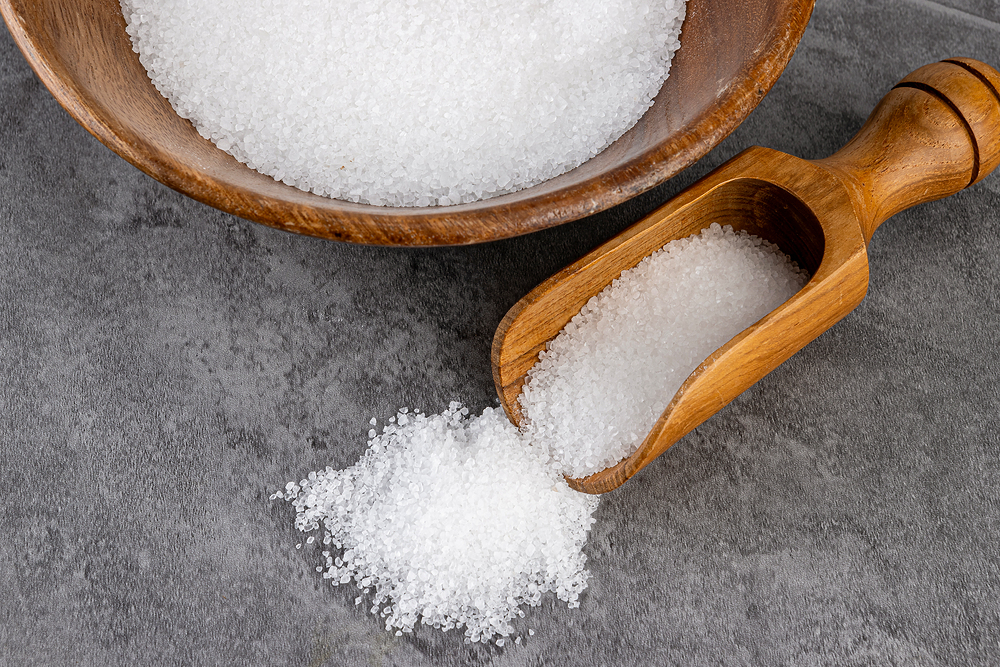
In the 1970s, a group of university students imprisoned for protesting the Park Chung-hee regime found themselves embroiled in a heated debate that had nothing to do with political lines or revolutionary theory. The question at hand: "Why is salt salty?"
The students divided into two fierce camps. The "Particle Faction" argued that the physical salt grains themselves possessed the salty taste. The "Ion Faction" countered that sodium chloride only becomes salty when it dissolves in water and separates into sodium and chloride ions. This conflict escalated until a released student sent a postcard back to the prison with the final verdict: "Fellow students, salt is salty because it transforms into ions." This simple truth dissolved the tension instantly, returning the cell to normalcy.
The Biological Reality of the Salty Sensation
As it turns out, the "Ion Faction" was scientifically correct. When salt (NaCl) meets saliva, it dissociates into sodium (Na+) and chloride (Cl-) ions. It is specifically the sodium ion that triggers our perception of saltiness through receptors on our taste buds called epithelial sodium channels (ENaC). While there is "absolute pitch" in music, there is no "absolute taste"; our tongues are far from precise.
These ENaC channels also allow other ions, such as lithium and potassium, to pass through, which is why they also taste salty. However, they are poor substitutes for the real thing. Lithium chloride was banned as a salt alternative in the 1940s due to toxic side effects like fatigue and nausea. Potassium chloride, while often found in "low-sodium" alternative salts, carries a distinct bitterness and provides only about 60% of the saltiness of sodium. Furthermore, excessive potassium can be dangerous for those with kidney disease, potentially leading to muscle paralysis or heart attacks.
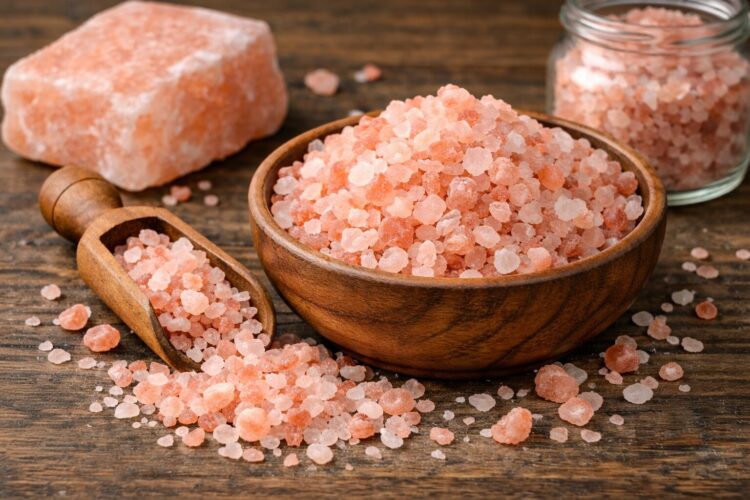
Sea Salt vs. Refined Salt: Debunking the Mineral Myth
In Korea, a deep-seated perception exists that sea salt is inherently superior to refined salt because it is "rich in minerals." The common narrative suggests that factory-produced refined salt is "stripped" of nutrients, while sea salt offers a deep flavor and health benefits. However, this is largely a misunderstanding of chemistry.
Sea salt is famously associated with magnesium, but magnesium chloride is the primary component of brine—the bitter liquid that must be drained from salt to make it palatable. As the brine is removed to eliminate the bitterness, the magnesium goes with it. While sea salt does contain trace amounts of calcium and potassium, the levels are so minimal that they offer no real nutritional benefit. Necessary minerals should be sought from a balanced diet of whole foods, not from our seasoning.
The Case for Purity and Safety
Refined salt is produced by filtering seawater through ion-exchange resins to remove foreign substances, resulting in a consistent NaCl purity of 98–99%. It is clean, predictable, and free of the impurities often found in the open ocean.
In contrast, the traditional production of sea salt does not completely eliminate environmental contaminants. Food engineer Choi Nak-eon points out that sea salt naturally contains significantly more sand particles than refined salt. More pointedly, Professor Emeritus Lee Tae-ho of Pusan National University warns that sea salt may harbor trace heavy metals—such as cadmium, mercury, lead, and arsenic—or environmental hormones that cause endocrine disruption.
"It is a myth that sea salt, containing unknown minerals, is better," Professor Lee asserts. "In conclusion, the purer the salt, the better." Ultimately, there is no substance in the world quite like salt, and no suitable substitute has ever been found. Rather than chasing "healthy" marketing trends, we should simply use a moderate amount of clean, pure salt to enhance the flavor of our food and enjoy the pinnacle of taste.