Singer Yoon Do-hyun revealed how he overcame his panic disorder.
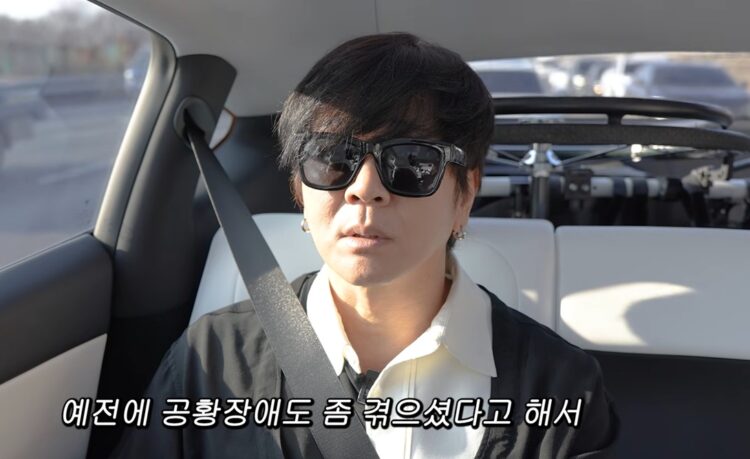
On January 30, Yoon Do-hyun appeared on the YouTube channel 'WERACLE' and talked about his experience with a rare cancer diagnosis and recovery, as well as how he overcame his panic disorder.
The host of WERACLE, Park Wi, said, "Looking at (Yoon Do-hyun's) image, it seems like he wouldn't get hurt because he does rock music, so I was surprised to hear that he experienced panic disorder in the past." Yoon Do-hyun responded, "Extreme stress eventually leads to that (panic disorder). At that time, the company was unstable, and I was betrayed, so while driving, my heart suddenly started racing, and I couldn't drive anymore." He continued, "I felt dizzy, everything turned white, and I couldn't see. When I went to the hospital, I was diagnosed with panic disorder."
Yoon Do-hyun stated that the key to overcoming his panic disorder was skateboarding. He said, "During the conversation with the doctor, I talked about skateboarding, which I usually enjoy, and mentioned that it was scary but fun. The doctor then said that riding a skateboard more diligently for a while could be a good treatment. (In the end) I overcame it with skateboarding."
Yoon Do-hyun added, "Skateboarding can be a dangerous sport, so you have to concentrate. It seems that hyper-focusing is good for our mental health. My goal this year is to skate more than three times a week," he said.
Panic Disorder, Causing 'Extreme Anxiety' in Unexpected Situations
Panic disorder is characterized by sudden and severe feelings of anxiety and restlessness, accompanied by dizziness, chest tightness, cold sweats, and shortness of breath. It is marked by experiencing significant anxiety in situations that one does not expect. Panic attacks can occur suddenly while driving or walking, in situations where one would not typically feel anxious. Panic attacks usually last for less than 10 minutes before disappearing.
Panic symptoms can be divided into three main categories: physical, emotional, and cognitive. Physical symptoms include a racing heart, tightness in the chest, shortness of breath, and trembling hands and feet. Emotional symptoms manifest as anxiety and restlessness. Cognitive symptoms involve thoughts like 'I feel like I'm going to die,' 'I think I'm going crazy,' or 'What if I have another panic attack?' These symptoms can recur, and if one becomes afraid of having a panic attack in specific places, it may interfere with daily life, leading to a suspicion of panic disorder.
However, to accurately diagnose panic disorder, it is essential to first rule out heart and nervous system diseases through tests such as electrocardiograms, thyroid hormone tests, and neurological examinations.
Focusing on Specific Activities Can Also Reduce Excessive Fear Responses
To improve panic disorder, hospitals recommend medication and cognitive therapy. When starting medication treatment, anti-anxiety medications are usually prescribed. Anti-anxiety medications act on a brain neurotransmitter called GABA, inhibiting and calming the brain. Afterward, antidepressants are used for fundamental treatment.
Focusing on a favorite sport, like Yoon Do-hyun, can also help alleviate anxiety. People with high anxiety often exhibit 'attentional bias,' where their attention is excessively focused on danger stimuli. Engaging in a favorite sport can help change this excessive attentional bias and reduce anxiety. Domestic research has also shown that mindfulness and breathing exercises can reduce excessive fear.
Exercise itself can alleviate anxiety. Anxiety occurs when the sympathetic nervous system is overactive and the parasympathetic nervous system is suppressed. Exercise increases heart rate variability and activates the parasympathetic nervous system, allowing one to escape the 'always tense mode.' After exercising, serotonin, a hormone that stabilizes mood, is also released.