If a growing adolescent undergoes knee surgery, their legs may become longer. Conversely, they may grow less or experience unexpected deformities. This is because the position of the small holes drilled into the bone during surgery and the filling materials can stimulate bone growth differently.

Hole Position and Material Influence Growth
When performing anterior cruciate ligament reconstruction or growth plate bone bridge surgery, small holes (osteochondral defects) are created in the bone around the growth plate. Until now, the impact of these holes on bone growth has not been clearly established.
Here, the ‘osteochondral defect’ refers to the small hole created around the growth plate during surgery. Additionally, the growth plate is the cartilage tissue at the end of the bone, where new bone is formed and height increases. Once puberty ends, the growth plate closes, and growth stops.
In response, Professor Park Byung-kyu from Haeundae Paik Hospital and Professor Park Geon-bo from Severance Children's Hospital in Seoul conducted a study titled ‘Bone Growth Stimulation After Lower Limb Surgery in Growing Children’ to clarify this issue. They created holes at distances of 5mm, 10mm, and 15mm from the growth plate in the tibia of growing rabbits, filled them with different materials, and observed the growth changes.
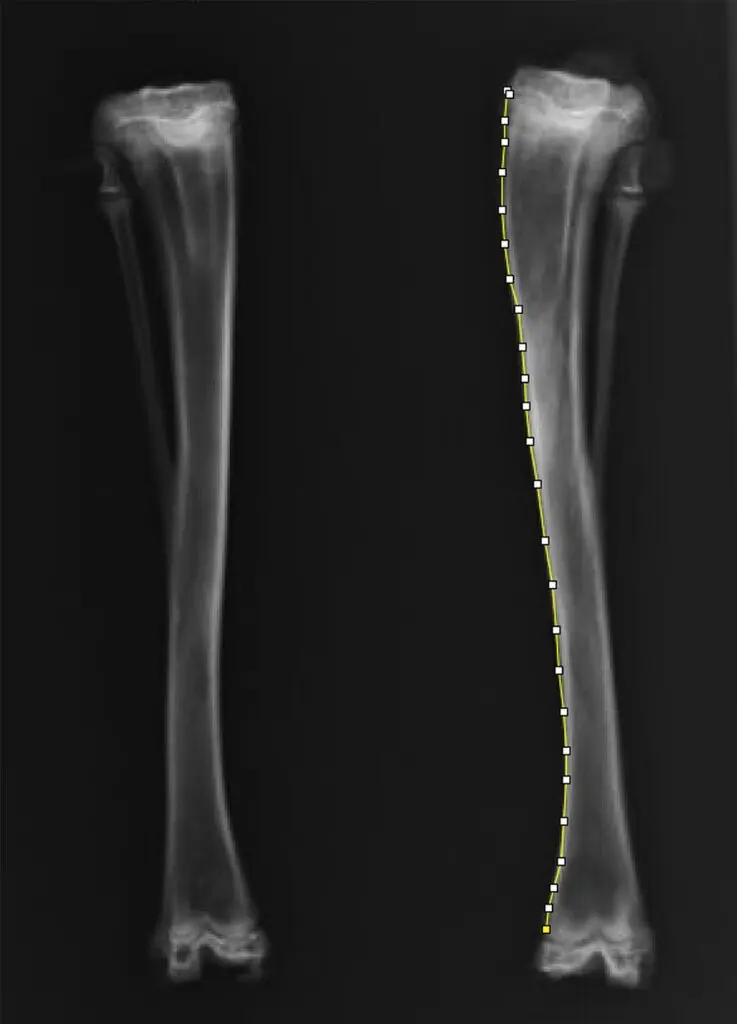
The results were surprising. When a hole was made 10mm away from the growth plate and filled with bone wax, there was ‘overgrowth’ where the bone grew longer than normal, along with a ‘valgus deformity’ where the leg bent outward. In contrast, if the same position was left empty or filled with other materials, only the valgus deformity appeared without any significant change in length.
Professor Park Byung-kyu from Haeundae Paik Hospital stated, “We confirmed that both the position of the hole and the filling material affect bone growth,” and explained, “We scientifically identified the causes of differences in leg length and deformities that occur after surgery in growing patients.”
New Treatment Methods for Growth Regulation Expected
This research does not merely identify the causes of complications. It is considered significant as it opens up the possibility for developing new treatment methods that can regulate bone growth as needed.
In actual clinical settings, it is common for growing children to experience unexpected changes in leg length or bending after knee surgery. With this study revealing the mechanisms, it suggests that it may be possible to prevent these issues or, conversely, intentionally promote growth in patients with congenital leg length differences.
The research team expressed, “The growth impact varies depending on the position and material of the small bone holes created during surgery in growing patients,” and they hope that this can serve as foundational data for finding safer and more effective surgical methods for children in the future.
This research was awarded the ‘Academic Prize’ at the 69th International Conference of the Korean Orthopaedic Association held recently. The academic prize is awarded to only one paper each year in both basic and clinical fields.
In particular, Professor Park Byung-kyu added, “With the recent increase in sports activities among children and adolescents, knee ligament injuries and lower limb fractures are on the rise,” and noted that the experience of treating pediatric patients in the Busan area was a significant impetus for the research. This study was also published in the international journal in the field of orthopaedics ('Bone & Joint Research') last year.