On a summer morning when the scorching heat reached 35°C, students in white shirts gathered in front of a small station in Iwami, Tottori Prefecture. These 27 students from Tottori University School of Medicine and Jichi Medical University set off on a neighborhood field study with faces showing more excitement than nervousness. Their guiding principle for the day: "To become a good community doctor, you must first get to know the community."
Learning community healthcare beyond the classroom, on the ground
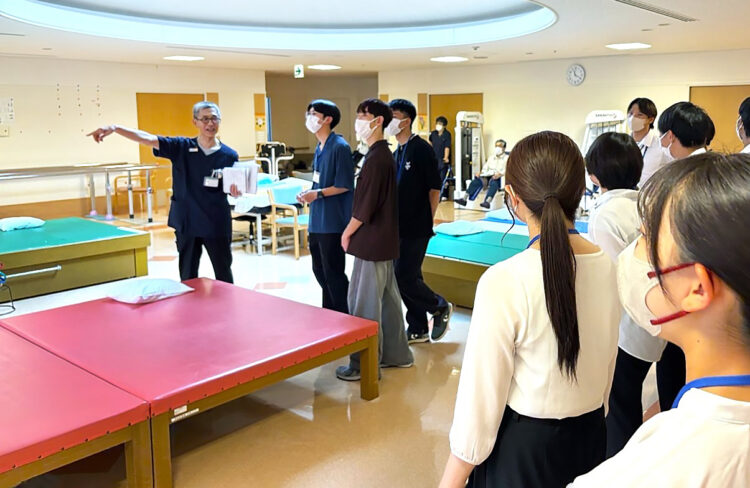
After circling the neighborhood, the students arrived at Iwami Hospital. A senior physician dispatched from the university personally guided them, emphasizing that "a doctor's role is not only to cure illness but also to help patients return to their daily lives after discharge." The students were especially struck by a tatami-style area recreated inside the hospital—a deliberate design choice to help rehabilitation patients adapt to everyday life at home.
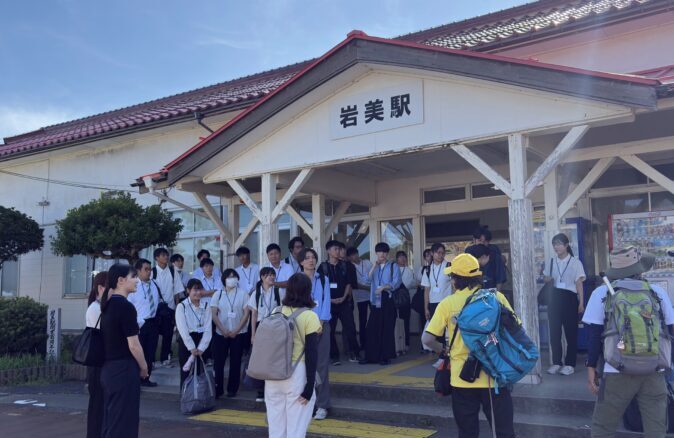
The enthusiasm did not wane even in the afternoon heat. The students' eyes lit up as the senior physician shared his personal experiences from the field.
"Working at such a small hospital, don't you find it hard to study or build a career?" one student asked.
The physician offered a reassuring response: "You don't need to worry. We are regularly connected with university hospitals and hold frequent meetings. We even discuss complex diagnoses remotely over Zoom."
During the final reflection session, a fifth-year student from Tottori University School of Medicine paused before sharing his takeaway. "What you learn in the classroom and what you experience in the field are definitely different," he said, his expression revealing anticipation for his future. "I felt an atmosphere that was close and familiar—more like family or friends than the typical distance between doctor and patient."
One particularly telling anecdote emerged after the interviews. A Jichi Medical University student shared that his high school grades were not what many would consider "medical school material." However, during his interview, he passionately explained his lifelong dream of becoming a pediatrician for the prefecture. His determination and sense of mission ultimately secured his admission—a testament to a system that values "will" as much as test scores.
How sparsely populated Tottori Prefecture attracted community doctors
The contrast with other regions is stark. In Korea, the health center in Buk-myeon, Ulleung County, recently suspended services due to a doctor shortage. Residents there must now take a one-hour bus ride just to get a cold treated or a blood pressure prescription filled. These stories are becoming increasingly common in rural areas where doctors are concentrated in major cities.
However, Tottori Prefecture—Japan's least populous prefecture with only 550,000 residents—tells a different story. Despite its small size, it has 1,740 physicians, or 319 per 100,000 people. This far exceeds Japan's national average of 262. Even in depopulated areas, Tottori maintains one of the highest concentrations of doctors in the country, and the number of physicians in their 20s is actually increasing.
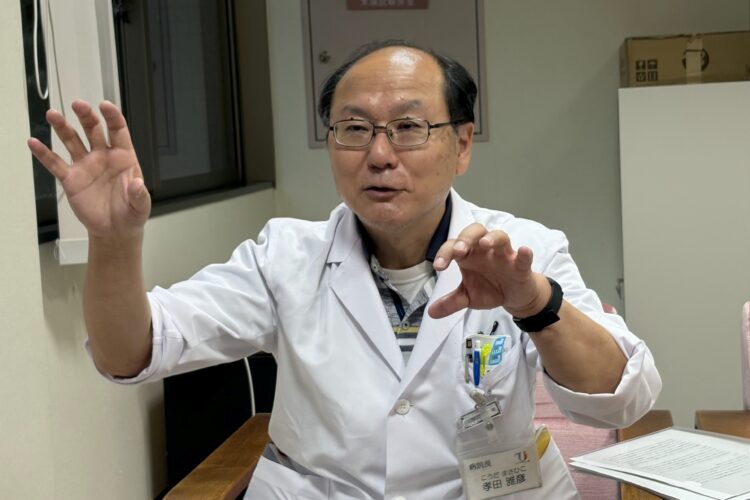
Hino Hospital, a 99-bed general hospital in Hino Town, serves a farming community of just 10,000. Without it, residents would face a 40-minute drive to Yonago City for basic care. On August 20, even after afternoon clinics had ended, the hospital corridors remained busy. In these narrow spaces where staff and patients brush past one another, the term "local Hippocrates" felt entirely appropriate.
Masahiko Goda, director of Hino Hospital, protects local healthcare with a proactive mindset: "If it doesn't exist, we create it." When hiring a pediatric specialist became difficult, he persuaded three neighboring villages to share the costs and jointly employ one. Thanks to this system, where university-dispatched physicians handle everything from vaccinations to infant checkups, local parents can raise their children with confidence.
"We couldn't ignore the community's need for a place to entrust their children," Director Goda said with a shy smile. "We requested staff from the university and created a system where at least one pediatrician is present every day. This is a rare case, even within Japan."
Solidarity through scholarships and support
Beyond patient care, Hino Hospital serves as a training ground. In their fifth and sixth years, Tottori University students rotate through the hospital, learning to view patients within the context of their community. This is made possible by strong administrative support; specialists from 21 different fields are regularly dispatched from university hospitals to provide specialty outpatient services.
Atsushi Tabuchi, an official at the Tottori Prefectural Office, credits the scholarship system for this success. "Scholarship programs have played a major role in increasing the number of young doctors working in the region," he explained.
Japan currently utilizes two main systems: Jichi Medical University, where each of the 47 prefectures supports 2–3 students in exchange for nine years of rural service, and the regional medical special admission system introduced in 2008.
Tottori Prefecture goes a step further with its "Special Training Admission Program." While other prefectures might only send Jichi graduates to the most remote areas, Tottori places its scholarship students in these regions together, employing them as prefectural staff with stable salaries. This unique approach has resulted in a significantly lower dropout rate than in other regions.
It isn’t just about the money. Programs like the "Trinos Seminar" help young physicians find fulfillment and maintain a sense of solidarity. By fostering a community for the doctors themselves, Tottori ensures that those who come to serve actually want to stay.
(Continued in series 4-2)
Interview interpretation and reporting assistance: Interpreter Jo In-sook
This series was supported by the Press Promotion Fund, financed by government advertising fees.