Even among individuals sharing a diagnosis of rheumatoid arthritis or systemic lupus erythematosus, disease progression and treatment responses vary widely. While patient-derived organoids—three-dimensional "mini organs" grown from stem cells—offer immense potential for testing targeted therapies, current models often fail to capture the full complexity of human autoimmune disease.
According to Catholic Medical Center, a joint research team led by researcher Lee Chang-jin and Professors Lim Ye-ri and Ju Ji-hyeon at the Institute for Induced Pluripotent Stem Cell Application, College of Medicine, The Catholic University of Korea, has proposed a comprehensive design strategy to build organoids that more accurately replicate the microenvironment of autoimmune conditions.
Published in the journal Bioengineering & Translational Medicine, the review paper synthesizes existing bioengineering research to establish a framework for modeling complex diseases, including rheumatoid arthritis, systemic lupus erythematosus, and systemic sclerosis.
Recreating Both Cellular Genetics and Immune Microenvironments
Organoids replicate aspects of the structure and function of real human organs. However, growing target tissue from a patient's cells alone leaves a critical gap in modeling autoimmune conditions, where the body's immune system actively attacks its own tissues.
In an active autoimmune response, autoantibodies, circulating immune complexes, and inflammatory cytokines flood surrounding tissues, damaging blood vessels and inducing tissue stiffness (fibrosis). The research team emphasizes that organoid models must incorporate these external factors alongside patient cells to mirror true clinical pathology.
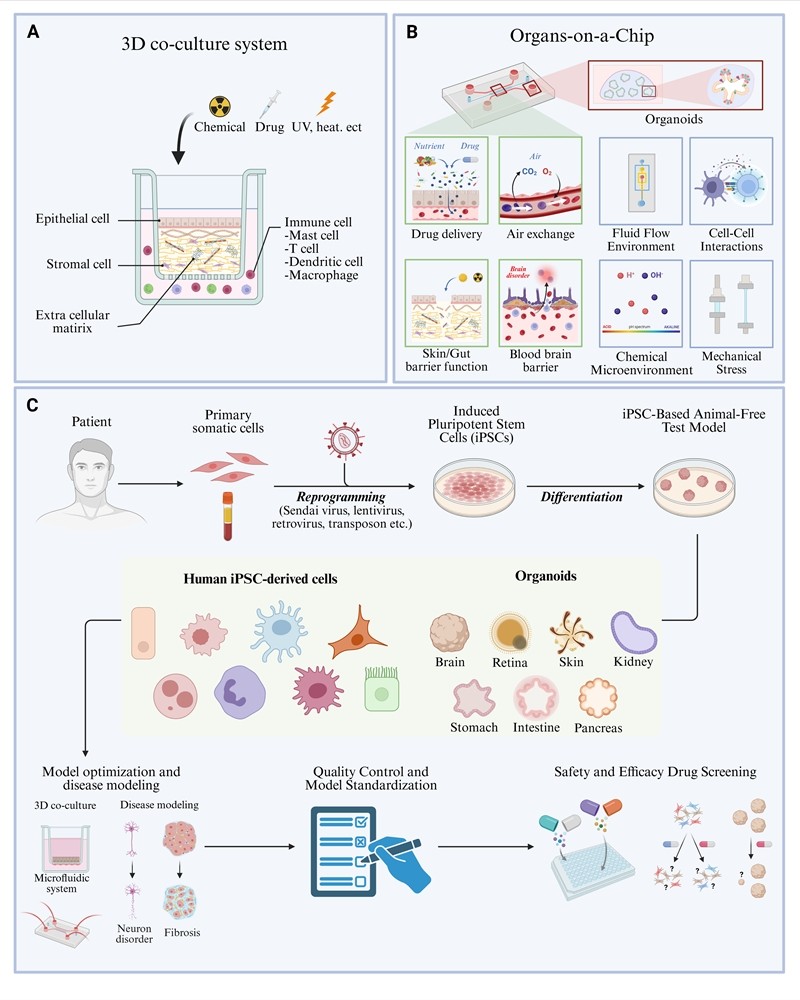
The team's proposed framework follows a systematic approach:
Cellular Reprogramming: Somatic cells or blood samples taken from a patient are reprogrammed into induced pluripotent stem cells (iPSCs).
Organoid Differentiation: The iPSCs are differentiated into target tissue cells and cultured into 3D organoid structures.
Immune Recapitulation: Researchers introduce the patient's own serum, autoantibodies, and inflammatory triggers into the culture system to recreate the disease microenvironment.
Fluidic Integration: Where appropriate, the model integrates "organ-on-a-chip" microfluidics to mimic physiological blood flow and immune cell migration.
Because autoimmune diseases manifest differently across organ systems, the paper highlights tailored requirements for specific conditions. Systemic sclerosis models must prioritize vascular damage and tissue fibrosis. Lupus models need to reflect how autoantibodies and immune complexes disrupt tissue barriers. Meanwhile, rheumatoid arthritis models must capture synovial inflammation followed by cartilage and bone erosion.

Applications in Precision Medicine and Remaining Technical Hurdles
If perfected, these comprehensive organoid systems could transform precision medicine. Clinicians could expose patient-specific organoids to various candidate therapies to determine which drug most effectively suppresses inflammation or prevents tissue destruction before administering treatment to the patient.
Furthermore, these models could accelerate biomarker discovery and serve as human-relevant alternatives to animal testing, which often fails to capture human-specific immune responses. Over the long term, integrating organoid data with genetic profiling and clinical histories could allow clinicians to predict disease trajectories with high precision.
However, the authors emphasize that significant technical hurdles remain before such models enter routine clinical use:
Cellular Maturation: iPSC-derived cells must be matured to reflect adult tissue phenotypes rather than embryonic states.
Sustained Inflammation: Replicating the prolonged, chronic inflammatory environment of autoimmune conditions in vitro remains technically challenging.
Disease Dynamics: Current models struggle to simulate the remitting-relapsing cycles typical of chronic autoimmune diseases.
Standardization: Robust manufacturing standards and evaluation metrics must be established across laboratories to ensure reproducible results.
"In autoimmune diseases, reproducing both the patient's intrinsic cellular characteristics and their unique disease-specific immune environment is essential," the research team noted. "By leveraging patient-derived iPSC organoids, we aim to overcome the limitations of animal models, enable precise drug evaluation, and advance animal-free testing methods."
The study was published online in the journal Bioengineering & Translational Medicine.