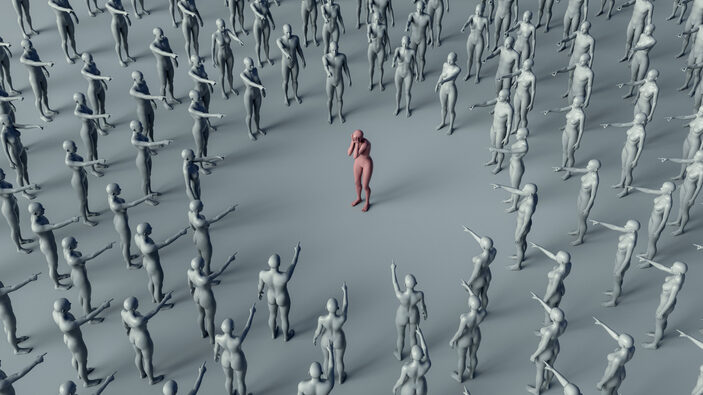
South Korea is in an angry mood. As one social controversy after another erupts, many people are actively searching for ways to blow off steam.
Over the past few months, social flashpoints have repeatedly flared across the country. Starbucks Korea faced a widespread boycott after coming under suspicion that the term "Tank Day"—used during a promotional event—was intended to disparage the May 18 Democratization Movement. The controversy deepened when students from Seoul's Baejae High School used provocative cheer slogans containing "Tank Day" and references to Starbucks directed at Gwangju Jeil High School during the 81st Cheongryonggi National High School Baseball Championship late last month. Following an intense public backlash over regional disparagement and the belittling of the historical democratization movement, Baejae High School issued an official public apology.
Meanwhile, Hong Myung-bo, the head coach of South Korea’s national soccer team, and the Korea Football Association (KFA) bore the brunt of public outrage after the national team's early exit following a poor performance at the 2026 FIFA World Cup. The disappointment quickly snowballed into intense criticism over alleged unfairness in Hong’s appointment process, questionable player selection, and systemic, structural issues within the association itself.
More recently, Woni, a member of the K-pop girl group Rescene, was swept up in an "Ilbe" controversy over her choice of words in a YouTube video. Woni, who is from Geoje, used the Gyeongsang dialect term museopno (meaning "I'm scared"), triggering online accusations that she was using a linguistic style popularized by the far-right website Ilbe Storehouse. As residents of the Gyeongsang region pushed back, defending it as a standard regional dialect used for decades, the online dispute quickly degenerated into regional animosity.
Does Screaming Into the Digital Void Actually Cool Us Down?
These highly publicized incidents share a common thread: public anger rapidly pooled across social media platforms, online community boards, and YouTube comment sections. Thousands of highly charged comments flooded videos discussing the Starbucks boycott, targeted the personal social media accounts of Baejae High School's baseball players, and crashed the KFA’s official website. While the public's anger is not baseless—and citizens' voices calling for institutional change are inherently meaningful—psychological research suggests that venting does not actually resolve anger. Instead, screaming into the digital void can trigger symptoms that damage mental health, such as depression and anxiety, while causing the anger to linger even longer.
Why Blowing Off Steam Can Backfire
In a comprehensive study published in March 2024, a research team at The Ohio State University analyzed 154 studies involving 10,189 participants to evaluate the effectiveness of different anger-management strategies. The researchers categorized strategies into two groups: activities that decrease physical arousal (such as meditation, yoga, deep breathing, counting, and resting) and activities that increase arousal (such as yelling, running, kicking, and hitting a punching bag).
The findings revealed that activities aimed at lowering physiological arousal had a clinically significant effect on regulating anger, with meditation proving to be the most effective. On average, those who meditated had lower anger levels than 94% of the control group. Conversely, high-arousal activities like running or yelling actually increased anger levels. The study concluded that the popular "catharsis theory"—the belief that physically or verbally venting rage makes it disappear—is entirely unsupported by scientific evidence..
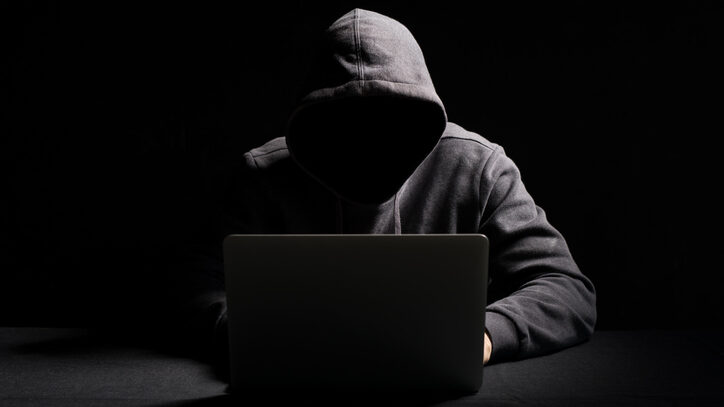
The Vicious Cycle of Online Rumination
This phenomenon is further explained by a joint study published in November 2024 by researchers from Stanford University and MIT. The team monitored 287 participants who were allowed to browse the internet freely for 20 minutes a day, tracking the web pages they visited. Using advanced text analysis, they extracted sentences from these pages and classified the emotions they triggered, such as positivity, negativity, anger, sadness, fear, and joy.
The results showed a direct correlation: the more negative content participants consumed online, the more they experienced symptoms of depression, anxiety, and social withdrawal. When the experiment was repeated over five days, a vicious cycle emerged. Individuals experiencing low moods actively sought out more negative information, causing their mental health to deteriorate further. The researchers repeated the experiment four times with a total of 1,145 participants, yielding identical results.
Psychologists attribute this feedback loop to "rumination." The human brain naturally prioritizes information that matches its current emotional state. On the internet, where algorithms serve highly engaging, negative content, this loop accelerates rapidly.
"There is a growing trend online known as 'cancel culture,' where users collectively condemn a public figure or celebrity over controversial remarks," noted a psychiatrist specializing in mental health at a major university hospital in the Seoul metropolitan area in a telephone interview. "In modern internet slang, it is often described as 'sending someone into a free fall.' This cultural pattern takes highly complex social issues, reduces them to a binary 'good vs. evil' structure, and consumes the resulting outrage as entertainment. Regardless of the ethics of any individual situation, we must ask ourselves whether participating in this collective rage is truly beneficial for our collective mental health."