A short social media video showing a woman seated in the stands at a professional baseball stadium drew attention after topping 8 million views. The clip spread under the nickname “baseball stadium goddess,” but the woman was not real: She was a virtual person created by AI. Many viewers initially assumed she was human and said they were stunned when they learned the truth.
AI-generated images have grown so sophisticated that they can be difficult to distinguish from real photographs. AI models now appear in advertisements and photo spreads, and AI actors are showing up in films.
So will people be able to reliably tell AI-made faces from real ones going forward? And could AI-generated faces even come to seem more “trustworthy” than actual people?
To examine those questions, psychology researchers in the United Kingdom and the United States showed participants AI-generated faces alongside real human faces, then compared how realistic and how trustworthy the images seemed. The findings were recently published in the international academic journal 〈Journal of Vision〉.
The researchers assembled 96 face photos in total: 32 of real people and 64 created by AI. They balanced the images as much as possible by race, gender and age to reduce the chance that any one group’s characteristics would skew the results. Of the 64 AI-generated faces, half were produced using GAN, an artificial intelligence model long treated as a standard for face-generation AI. The other half were produced using DM, a diffusion model representing the latest image-generation technology, which creates human faces or illustrations based on text entered by users.
The team presented the photos in random order to 169 participants. Participants were told to decide whether each photo showed a real person or a virtual image. Average accuracy was 58.4%. The results indicated that people could not reliably distinguish real faces from fake images.
Participants also tended to trust virtual faces more. The researchers recruited a new group of participants and showed them the same face photos, asking them to rate trustworthiness on a scale from 1 (not trustworthy at all) to 7 (very trustworthy). Real human faces received the lowest average score, at 4.03. By contrast, GAN faces scored 4.36, while DM-generated faces scored 4.70, the highest trust rating.
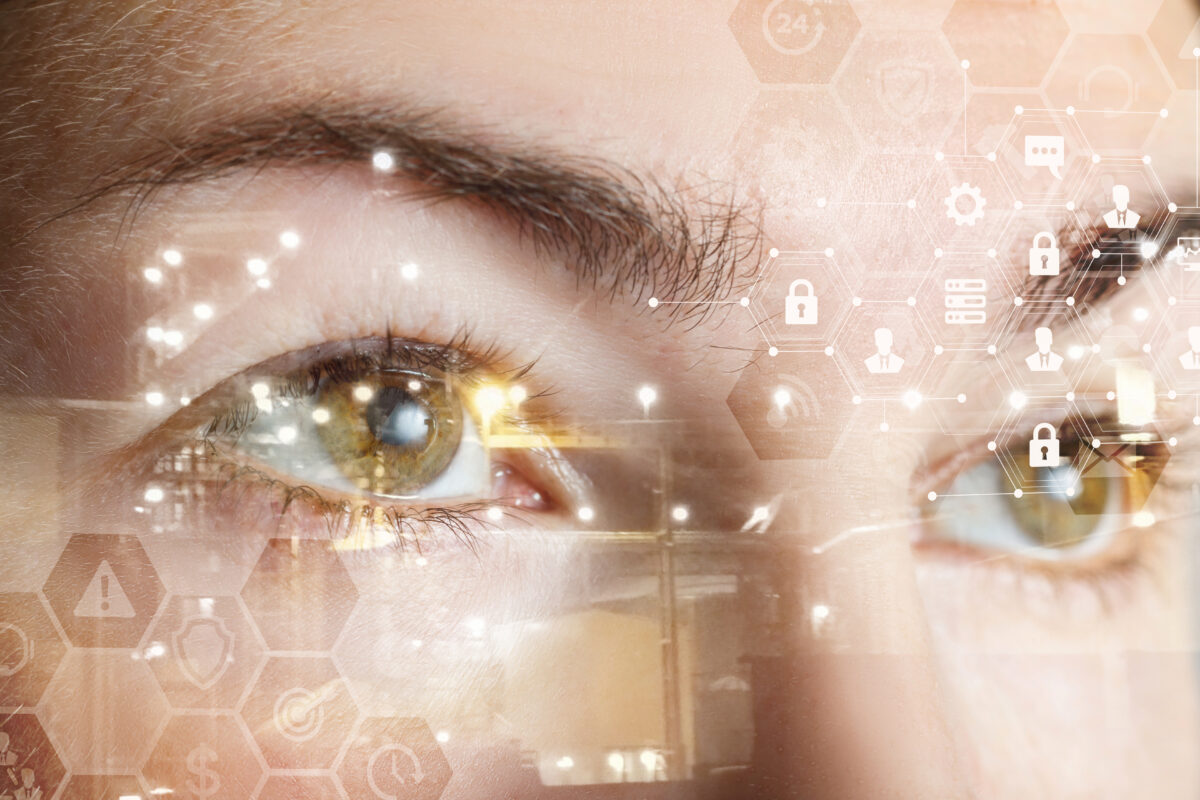
Previous studies show that people form first impressions—such as how trustworthy someone seems and how likable they are—almost unconsciously within about 0.1 seconds of seeing a face. Some studies also report that judgments about traits such as competence or dominance can be made in a very short time.
So why did AI faces earn higher trust ratings?
This study did not pinpoint a direct cause. The researchers said, “However, prior research on face perception has reported findings that faces that are more left-right symmetrical and more average-looking tend to give a more trustworthy impression,” and added that “further research is needed to determine which characteristics of AI faces increased trustworthiness.”
The researchers also said “the processes of judging an image’s realism and its trustworthiness may operate through different psychological mechanisms.” In other words, the criteria people use to decide “which face looks like a real person” and “how trustworthy that face is” may not be the same.
In fact, in this study, participants did not rate faces produced by the latest AI model (DM) as more realistic than faces generated by the older AI model (GAN), yet they still rated DM-generated images as the most trustworthy faces.
The researchers stressed that “AI-generated face images can be misused for spreading political misinformation, identity theft, financial fraud and romance scams,” adding that “it is important to understand the risks posed by the spread of generative AI and to develop response strategies.”