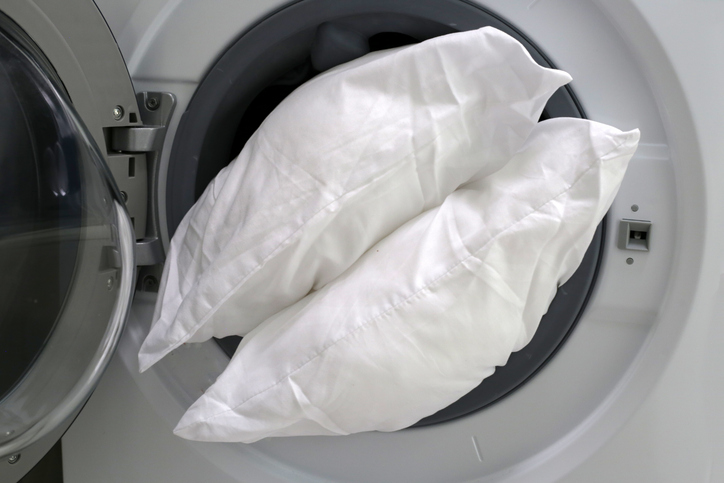
Even if the pillow you rest your head on every night looks immaculate on the outside, the reality deep within the stuffing can be vastly different. Because your face and scalp remain in direct, prolonged contact with your bedding throughout the night, maintaining proper pillow hygiene is a critical yet frequently overlooked component of skin and respiratory health.
The Hidden Microbiology of Your Pillowcase
During sleep, pillow covers rapidly absorb a cocktail of sweat, sebum, and shed dead skin cells. Over time, this microscopic buildup causes fabric yellowing and discoloration. However, the aesthetic damage is the least of your concerns. A landmark study conducted by a research team led by Professor Chun Jong-sik of Seoul National University’s Department of Biological Sciences revealed that unwashed pillows can harbor up to 96 times more bacteria than a standard toilet seat. Sleeping on such an unclean surface can severely trigger or exacerbate atopic dermatitis, acne, and localized skin allergies. Furthermore, inhaling these microbial particles overnight can contribute directly to chronic respiratory conditions such as asthma and allergic rhinitis.
To combat this, clinical hygiene standards recommend washing your pillowcases at least once a week. To effectively break down the fats and mineral salts that comprise human sweat and sebum, the fabric should be laundered in hot water maintained at 40°C or higher. Additionally, incorporating a small amount of distilled white vinegar into the rinse cycle instead of commercial fabric softener can naturally eliminate stubborn odors and dissolve lingering detergent residue. However, consumers should always cross-reference these guidelines with the specific care instructions of their bedding material.
Deep-Cleaning the Pillow Filling Safely
While regular cover care is essential, it is equally vital to sanitize the internal pillow filling. Microscopic organic waste easily seeps through porous woven fabrics, contaminating the core structure of the pillow over time. For washable variants, the filling should undergo a thorough deep-clean at least once every six months.
Generally, pillows stuffed with synthetic polyester or natural cotton fibers can be safely cleaned in standard household washing machines. Utilizing warm water improves dirt and oil extraction, but caution is required during the spin cycle. High-speed spinning and rigorous tumble-drying can cause internal fibers to break apart or permanently clump to one side, ruining the pillow's structural support. To prevent this, opt for a delicate, wool, or specialized bedding cycle that utilizes low-intensity spinning.
When it comes to detergent, less is often more. It is best to use only the recommended amount or slightly less, while adding an extra rinse cycle to the wash. Contrary to the popular belief that more soap guarantees a cleaner wash, dense household items like pillow fillings easily trap thick soapy residues within their fibers. If not rinsed perfectly clean, these chemical remnants will migrate back to your face, causing severe skin irritation and creating a damp, chemical-rich environment where bacteria can rapidly multiply.
Finally, special care must be taken with alternative materials. High-end pillows constructed from natural latex or memory foam are highly sensitive to water and should never be placed in a washing machine. Subjecting these materials to a standard wash cycle can permanently warp their ergonomic shape and tear the structural foam. For these specialized items, users must strictly adhere to the spot-cleaning or dry-care protocols outlined on the manufacturer's product label.