“Lately, I keep forgetting appointments.” “They keep repeating what they just said.”
When memory lapses in a parent become noticeable, families almost instinctively fear the worst: dementia.
According to data from the National Institute of Dementia, as of 2025, approximately 984,600 South Koreans aged 65 and older were living with dementia—roughly one in ten older adults. This figure is projected to surpass 2 million by 2039 and eclipse 3 million by 2050, with annual management costs already exceeding 22.6 trillion won.
However, the paradigm of Alzheimer’s treatment is undergoing a fundamental shift. Rather than merely managing symptoms, medical professionals are now utilizing antibody therapies designed to slow the disease's progression. Introduced to clinical practice in South Korea in May 2024, the treatment is rapidly gaining traction. The Catholic University of Korea Seoul St. Mary’s Hospital announced Tuesday that it had surpassed 200 cases of Alzheimer's antibody treatments as of May 2026.
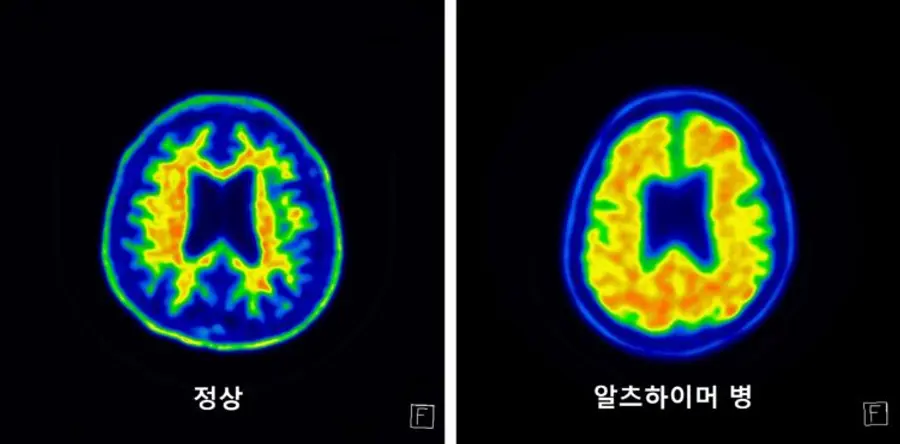
Yet, experts emphasize that this is not a miracle cure, nor is it suitable for every dementia patient. The therapy targets a highly specific window: slowing progression in patients with mild cognitive impairment or mild Alzheimer’s disease whose accumulation of amyloid beta protein has been definitively confirmed.
Buying Time: Why Slowing Progression Matters
Antibody therapy cannot restore lost memories; its primary goal is to put a brake on the disease. Lecanemab, a leading anti-amyloid antibody treatment currently used in South Korea, demonstrated significant efficacy in its Phase 3 clinical trials. It reduced clinical decline by approximately 27% over 18 months compared to a placebo, measured via the Clinical Dementia Rating-Sum of Boxes (CDR-SB) scale.
While it does not eradicate the pathology, buying extra time for patients—allowing them to visit the hospital independently and converse cohesively with their loved ones—holds immense practical and emotional value for early-stage patients and their families.
Finances, however, remain a steep hurdle. Because lecanemab is not yet covered by South Korea's national health insurance, patients must bear the full cost of treatment, which runs into tens of millions of won annually. Fortunately, private insurers have recently introduced products covering lecanemab, gradually easing the financial strain on families.
A Collaborative Approach to Narrow Eligibility
Because eligibility is so restrictive, identifying the right candidates and managing potential side effects requires a robust, integrated hospital infrastructure.
While neurology has traditionally anchored dementia diagnosis and care in South Korea, Seoul St. Mary’s Hospital has adopted a distinct, multidisciplinary model. Here, the departments of neurology and psychiatry operate independent prescribing systems. This ensures that regardless of whether a patient first presents to neurology or psychiatry for cognitive decline, they receive the same standard of specialized treatment and long-term follow-up. This core team works closely with radiology, nuclear medicine, laboratory medicine, and nursing to manage everything from diagnosis to dosing and safety monitoring.
The hospital's current care network spans neurology professors Yang Dong-won, Yoon Bora, and Lee Hyuk-je, alongside psychiatry professors Lee Chang-wook, Kang Dong-woo, and Byun Ki-hwan. This multi-departmental approach is essential for navigating the meticulous safety protocols required by the therapy.
Managing the Risks of ARIA
Lecanemab is administered via intravenous infusion every two weeks. The most critical adverse reaction requiring vigilance is amyloid-related imaging abnormalities (ARIA), which can manifest as brain swelling or microbleeds. ARIA occurs in roughly 21% of treated patients. However, clinical data shows that symptomatic ARIA occurs in only 3% of cases, and severe instances requiring hospitalization account for just 0.7%.
In the vast majority of cases, routine brain magnetic resonance imaging (MRI) scans detect ARIA before symptoms even develop, allowing clinicians to manage the condition safely by adjusting the dosage. Because severe complications are rare but possible, thorough pre-treatment risk assessments and access to advanced MRI interpretation and neurological response teams are mandatory.
Insights from 200 Clinical Cases
Seoul St. Mary’s milestone is also fueling critical clinical research. The hospital's neurology research team recently analyzed patient and caregiver perceptions of new Alzheimer’s treatments, developing tailored communication indicators that won consecutive awards at major domestic and international conferences. Concurrently, the psychiatry research team is investigating amyloid and tau protein biomarkers, APOE genetic variations, and predictive models for dementia progression.
"Our dementia specialists meticulously review each case to determine eligibility, and so far, serious side effects have been exceptionally rare among our patients," said neurology professor Yang Dong-won. "We have observed that patients treated at an earlier stage—with lower initial amyloid buildup—see the protein cleared much faster. In some cases, the amyloid was entirely cleared after nine months of treatment."
Psychiatry professor Kang Dong-woo added, "The introduction of anti-amyloid immunotherapy marks a paradigm shift from treating symptoms to targeting the underlying pathology of Alzheimer’s disease. Reaching 200 cases reflects our accumulated real-world experience in administering this therapy safely and systematically. We will continue leveraging advanced diagnostics to pioneer precision medicine tailored to each individual patient."
Ultimately, the 200-case milestone represents 200 precise clinical judgments. It underscores the rigorous process of vetting candidates and managing side effects on a case-by-case basis. Because antibody therapy is highly time-sensitive, medical professionals emphasize that seeking a medical evaluation the moment memory lapses feel "a little off" remains the single most critical step in preserving cognitive health.