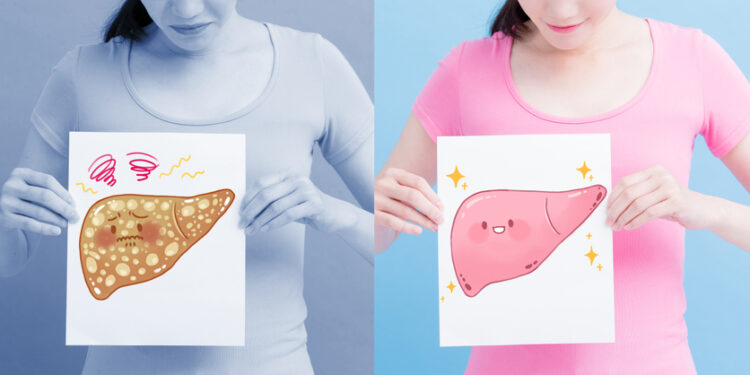
Fatty liver disease has emerged as a pervasive chronic health issue in South Korea. The condition occurs when excessive fat builds up in the liver, clinically defined as fat accounting for at least 5% of the organ's total weight. While roughly 30% to 40% of South Korean adults are projected to have fatty liver disease, the condition is changing how clinicians view metabolic health.
Although fatty liver is traditionally associated with heavy alcohol consumption, it frequently develops in individuals who drink minimally or not at all. Driven primarily by underlying factors like obesity or diabetes, this non-alcoholic variant is formally known as metabolic dysfunction-associated steatotic liver disease (MASLD). Left untreated, MASLD can progress to chronic liver disease or liver cancer, while significantly increasing the risk of cardiovascular complications.
Now, a groundbreaking long-term study has revealed that as the severity of an individual's depressive symptoms worsens, their risk of developing MASLD climbs accordingly.
Worsening Depressive Symptoms Linked to Elevated Liver Risks
A research team at Kangbuk Samsung Hospital investigated the relationship between depression and fatty liver disease by tracking a massive cohort of 170,981 adults. The participants underwent comprehensive health screenings at the hospital’s centers in Seoul and Suwon between March 2011 and October 2023, with each receiving at least one subsequent follow-up examination.
Following the participants for an average of 5.4 years, the researchers discovered that the risk of developing fatty liver disease climbed steadily alongside the severity of depressive symptoms across both genders. However, the upward trend was dramatically more pronounced among women.
The study categorized participants using standard clinical questionnaire scores designed to screen for depression. Scores below 8 represented the normal group, scores from 8 to 15 indicated mild depressive symptoms, and scores of 16 or higher denoted the high-risk depressive symptoms group.
The data revealed that men with mild symptoms faced a 3% higher risk of developing fatty liver disease compared to the normal baseline, while men in the high-risk group saw a 6% increase. For women, the escalation was substantially steeper: those with mild symptoms had a 5% higher risk, while women in the high-risk category experienced an 18% surge.
The most striking escalation occurred among young women under the age of 45. Within this demographic, individuals suffering from high-risk depressive symptoms faced a full 20% higher risk of developing MASLD.
How Depression Disrupts Hormonal and Immune Regulation
The researchers pointed to clear clinical evidence showing that depression inflicts profound, measurable changes on physical biology.
"Depression does not stop at psychological distress," explained Professor Kim Eun-soo of the Department of Psychiatry at Kangbuk Samsung Hospital. "It is a systemic illness that disrupts the body’s hormone secretion and immune networks, ultimately threatening overall physical health."
Individuals suffering from depression often exhibit blunted secretion of serotonin—a vital neurotransmitter in the brain that regulates emotions, sleep, and appetite—which frequently triggers anxiety and insomnia. Conversely, the primary stress hormone, cortisol, is routinely oversecreted. When cortisol remains chronically elevated due to prolonged stress, immune defenses decline and metabolic pathways are disrupted.
Highlighting the clinical shift this study represents, Professor Son Won of the Department of Gastroenterology at Kangbuk Samsung Hospital noted, "Historically, medical warnings regarding fatty liver risks have focused primarily on postmenopausal women, who lose the metabolic protection of female hormones. However, this data proves that even young, premenopausal women can become metabolically vulnerable if they are dealing with severe depression."